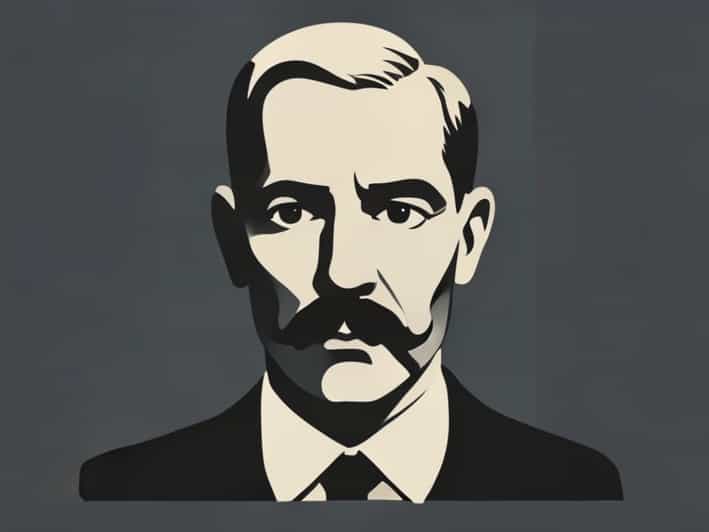
George Orwell’s novel1984is widely regarded as one of the most influential dystopian works of the 20th century, offering a stark portrayal of totalitarianism, surveillance, and individual freedom under constant threat. Over decades, readers, scholars, and artists have explored its themes, reinterpreting the narrative in various media. One such contemporary engagement is the work of Xavier Coste, who has drawn inspiration from Orwell’s masterpiece to explore modern social, political, and artistic ideas. Understanding the intersection of1984and Xavier Coste’s interpretations provides a fresh perspective on the enduring relevance of Orwell’s work and its cultural resonance in contemporary thought and creative expression.
The Enduring Legacy of George Orwell’s 1984
Published in 1949,1984presents a chilling vision of a society dominated by oppressive government control, pervasive surveillance, and the manipulation of truth. Orwell’s novel introduces concepts such as Big Brother, doublethink, and thoughtcrime, which have become part of the modern lexicon when discussing authoritarianism. The narrative follows Winston Smith, a low-ranking member of the Party, who navigates the dangers of a society that monitors every action and thought. The enduring appeal of1984lies in its exploration of power, identity, and freedom, themes that remain relevant in the age of digital surveillance, misinformation, and political polarization.
Key Themes in 1984
The novel addresses several profound themes that resonate across generations
- Surveillance and PrivacyOrwell envisioned a world where individuals are constantly watched, a concept increasingly relevant in the digital era.
- Manipulation of TruthThe Party’s control over information highlights the fragility of objective reality in the hands of authority.
- Individual vs. StateWinston’s struggle illustrates the tension between personal freedom and societal conformity.
- Language and ThoughtThe creation of Newspeak demonstrates how language can be used to limit thought and enforce ideology.
These themes form the backbone of Orwell’s warning against unchecked political power, offering a lens through which modern society can examine its own structures and tendencies.
Xavier Coste’s Engagement with 1984
Xavier Coste is a contemporary artist, writer, and thinker who has engaged with Orwell’s1984to reinterpret its themes through modern contexts. Coste’s work often emphasizes visual and conceptual exploration, combining elements of literature, political commentary, and digital media. By drawing on Orwellian motifs, he examines how contemporary society mirrors the novel’s concerns, particularly in areas such as information control, technology, and social behavior.
Artistic Interpretation
In Coste’s visual and multimedia projects, the influence of1984is evident through the use of imagery associated with surveillance, authoritarian structures, and digital intrusion. Coste employs these motifs to evoke critical reflection on how individuals navigate environments shaped by technology, media, and institutional power. Through his work, audiences are prompted to reconsider the boundaries between freedom, observation, and self-expression in the contemporary world.
Literary and Conceptual Exploration
Beyond visual art, Xavier Coste also engages with1984on a literary level, analyzing the philosophical and social implications of Orwell’s narrative. He explores parallels between the Party’s control in the novel and modern phenomena such as algorithm-driven information filtering, mass data collection, and online echo chambers. Coste’s work serves as a bridge connecting Orwell’s mid-20th-century insights to 21st-century concerns, highlighting the relevance of1984in debates over privacy, truth, and social responsibility.
Modern Relevance of 1984 and Coste’s Interpretation
The collaboration of ideas between Orwell and contemporary interpreters like Xavier Coste underscores the timelessness of1984. Today, the novel’s themes resonate in discussions about government surveillance, corporate data collection, and the influence of social media. Coste’s reinterpretations emphasize that Orwell’s vision is not a distant cautionary tale but a framework for understanding ongoing societal shifts.
Digital Surveillance and Privacy
Coste’s work often draws attention to the parallels between Orwell’s telescreens and today’s digital monitoring tools. Smartphones, webcams, and social media platforms can all be seen as modern equivalents, capturing data and influencing behavior. By highlighting these connections, Coste encourages reflection on consent, autonomy, and ethical responsibility in a world increasingly mediated by technology.
Information Control and Media
Another area of contemporary resonance is the manipulation of information. Orwell’s concept of Newspeak and historical revisionism is echoed in modern discussions about misinformation, fake news, and algorithmic content curation. Coste examines how these mechanisms shape perceptions, behaviors, and beliefs, drawing attention to the subtle ways that societal narratives can be controlled or influenced.
The Intersection of Literature, Art, and Social Commentary
Xavier Coste’s engagement with1984illustrates the intersection between literature, art, and social commentary. By translating Orwellian themes into visual and conceptual forms, Coste makes complex ideas accessible to broader audiences. His work demonstrates that literature is not confined to books but can inform artistic expression, public debate, and cultural critique. This interdisciplinary approach enriches the interpretation of1984and reinforces the novel’s significance in contemporary discourse.
Educational and Cultural Impact
Coste’s interpretations also have educational value, helping students, readers, and audiences understand the relevance of Orwell’s themes in practical, modern contexts. Workshops, exhibitions, and digital projects inspired by1984provide opportunities for critical thinking about societal structures, personal freedoms, and ethical dilemmas. These initiatives highlight the ongoing cultural impact of Orwell’s work, ensuring that its lessons remain alive in public consciousness.
The connection between George Orwell’s1984and Xavier Coste’s contemporary interpretations demonstrates the enduring relevance of dystopian literature. Orwell’s exploration of surveillance, information control, and individual autonomy resonates strongly in the modern era, particularly in the context of digital technologies and social media. Xavier Coste builds on these ideas, offering artistic and conceptual reflections that make Orwell’s themes tangible and relevant today. By examining the interplay between the classic text and contemporary reinterpretations, audiences can gain a deeper understanding of societal challenges, ethical considerations, and the importance of safeguarding personal freedoms in an increasingly complex world. This synthesis of literature and contemporary insight underscores why1984remains a vital text and why Coste’s work continues to illuminate its significance in new and compelling ways.