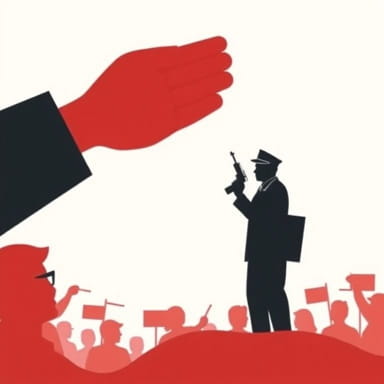
Following the violent 1973 military coup in Chile, which overthrew democratically elected President Salvador Allende, General Augusto Pinochet established a brutal dictatorship that lasted until 1990. During Pinochet’s rule, thousands of people were subjected to political repression, torture, forced disappearance, and execution. The question of how many people died under Pinochet is not just a matter of numbers it is a window into the pain, fear, and injustice experienced by an entire nation during one of the darkest chapters in Chilean history.
The 1973 Coup and the Beginning of the Repression
On September 11, 1973, General Pinochet led a military junta that seized power in Chile. The overthrow of Allende’s left-wing government was supported by sectors of the Chilean military, conservative elites, and some foreign interests. Almost immediately after the coup, mass arrests were conducted. Stadiums were converted into makeshift prisons, and suspected political dissidents were rounded up by the thousands.
This marked the start of a coordinated campaign of systematic repression. The regime established a secret police known as the DINA (Dirección de Inteligencia Nacional), which was later replaced by the CNI (Central Nacional de Informaciones). These organizations played a major role in the surveillance, abduction, and torture of suspected opponents of the regime.
Documented Deaths and Disappearances
Determining the exact number of people who died under Pinochet has been a long and painful process involving years of investigation and multiple official reports. Over time, several national commissions were created to document the abuses and provide some form of justice and reparation to the victims.
Rettig Report (1991)
The first major attempt to document the atrocities came with the Rettig Report, issued by the National Commission for Truth and Reconciliation in 1991, just after Chile’s return to democracy. This report documented:
- Over 2,000 cases of confirmed political executions.
- Approximately 1,102 cases of people who disappeared and whose fates remain unknown.
The Rettig Commission took testimonies from families and survivors but only counted cases where it found sufficient evidence of government responsibility. As a result, many believe the real figures are higher.
Valech Report (2004 and 2011)
Another significant investigation came with the Valech Report, named after Bishop Sergio Valech. Released in two parts, the reports focused primarily on cases of political imprisonment and torture. They documented:
- Over 28,000 cases of torture and imprisonment for political reasons.
- Updated numbers of confirmed deaths and disappearances to around 3,200.
These reports shed light on the brutal mechanisms of control used by the dictatorship, especially during the first five years of military rule.
Unconfirmed Victims and Ongoing Investigations
While the official number of confirmed deaths and disappearances under Pinochet stands at about 3,200, many human rights organizations argue that the true number could be much higher. Limitations in record-keeping, the destruction of evidence by the regime, and the fear of speaking out have all contributed to underreporting.
New forensic investigations and testimony continue to emerge even decades later. Bodies have been exhumed from mass graves, and families still seek closure for the fate of missing loved ones. The full human cost of Pinochet’s dictatorship may never be entirely known, but the efforts to uncover the truth remain ongoing.
The Role of Operation Condor
Pinochet’s regime was not isolated in its repression. It was a key participant in Operation Condor, a secret collaboration among South American dictatorships namely those in Argentina, Brazil, Uruguay, Paraguay, and Bolivia to eliminate political enemies across borders. Intelligence was shared, and coordinated assassinations were conducted. One of the most infamous cases was the 1976 car bomb assassination of former Chilean ambassador Orlando Letelier in Washington, D.C.
Participation in Operation Condor further expanded the scope of violence and death associated with Pinochet’s regime. Chilean agents participated in transnational campaigns that targeted exiles and political opponents abroad.
The Legacy of State Terror
The deaths that occurred under Pinochet’s regime were not just numbers they were acts of political terror aimed at silencing dissent. Victims included not only armed revolutionaries, but also students, teachers, union leaders, artists, and even bystanders caught in the wrong place at the wrong time.
Pinochet often justified the repression as necessary for the protection of Chile against communism and civil disorder. However, international human rights organizations, including Amnesty International and Human Rights Watch, documented widespread violations of international law.
Impact on Chilean Society
The trauma from this era continues to affect Chilean society. Generations of families were torn apart. Survivors live with the physical and psychological scars of torture. Many still struggle for recognition and justice.
Efforts to bring those responsible to justice have gained traction over time. Although Pinochet died in 2006 without facing trial for his crimes, many of his collaborators have been prosecuted and imprisoned.
Controversy and Continued Debate
Despite overwhelming evidence of human rights abuses, Pinochet remains a controversial figure in Chilean history. Some Chileans view him as a strongman who saved the country from economic collapse and leftist revolution. Others see him as a tyrant who left behind a legacy of trauma, division, and state-sanctioned murder.
The question of how many people died under Pinochet is still politically sensitive. Debates about memorialization, justice, and historical memory continue to shape the country’s political landscape. Schools, museums, and public spaces often serve as battlegrounds over how to remember this era.
The known number of people who died under Pinochet around 3,200 represents a conservative estimate of a much larger tragedy. Behind each statistic is a story of a life cut short, a family shattered, and a society traumatized. The process of uncovering the truth has been slow and painful, but it continues to this day. Understanding the true cost of Pinochet’s rule is essential not only for historical accountability but also for ensuring that such violations are never repeated in Chile or elsewhere.