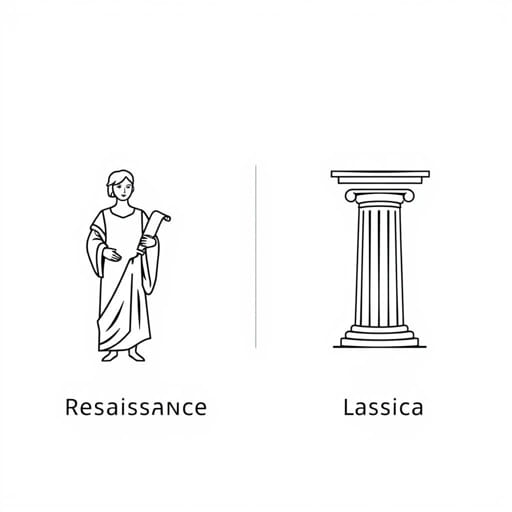
The concepts of Renaissance and Classicism are often linked because they both draw inspiration from ancient Greek and Roman civilizations. However, despite this shared foundation, each movement reflects a unique set of values, artistic expressions, historical contexts, and intellectual pursuits. Understanding the difference between Renaissance and Classicism requires examining the cultural, philosophical, and artistic aims that defined these two important periods in Western history. This exploration helps illuminate how each movement shaped literature, architecture, visual art, and human thought in distinct yet influential ways.
Historical Background
The Renaissance Period
The Renaissance, which means rebirth in French, emerged in Italy in the late 14th century and spread throughout Europe by the 16th century. It marked the transition from the medieval period to the modern age. The Renaissance was a cultural revival of classical antiquity, but it brought with it a new focus on humanism, individualism, and empirical inquiry.
Artists, scientists, and philosophers during the Renaissance sought to reconcile classical knowledge with contemporary experience. The printing press, rediscovery of ancient manuscripts, and exploration of the world contributed to this intellectual flowering. Figures such as Leonardo da Vinci, Michelangelo, and Galileo are central to the Renaissance ethos.
The Rise of Classicism
Classicism refers more broadly to an aesthetic and cultural movement that emphasizes the values and principles found in ancient Greek and Roman art and literature. It had multiple revivals, but it is most associated with the 17th and 18th centuries, particularly during the Enlightenment. Classicism is based on order, clarity, harmony, and rational structure.
In art, architecture, and literature, Classicism advocated for balance, proportion, and restraint. It was a reaction against the perceived excesses of Baroque and Rococo styles and was deeply rooted in the ideals of symmetry, simplicity, and moral seriousness, as seen in the works of Nicolas Poussin and Johann Winckelmann.
Core Philosophical Differences
Humanism vs. Rationalism
Renaissance thinkers emphasized humanism the belief in human potential, creativity, and individual expression. The human experience, emotion, and personal achievement were central themes in Renaissance literature and art.
Classicism, on the other hand, focused on rationalism and universal truths. It sought to uncover eternal principles that govern beauty, ethics, and reason. The Classicist mindset valued intellectual discipline and viewed art as a medium to express timeless ideals rather than personal sentiment.
Curiosity vs. Order
Renaissance art and science were driven by curiosity and exploration. Perspective, anatomy, and nature were subjects of intense study. The Renaissance spirit celebrated innovation, experimentation, and breaking from tradition.
Classicism leaned more toward preserving structure and reinterpreting ancient ideals within strict frameworks. It emphasized mastery over chaos and the idealization of form through strict adherence to established rules and proportions.
Artistic Characteristics
Renaissance Art
- Naturalistic representation of human figures and landscapes
- Use of linear perspective to create depth
- Focus on individual subjects and portraits
- Emphasis on realism, emotion, and dynamic movement
- Religious and mythological themes infused with human emotion
Famous Renaissance artworks include Leonardo da Vinci’s The Last Supper, Michelangelo’s David, and Raphael’s The School of Athens. These works represent not only technical excellence but also a philosophical embrace of the human condition.
Classical Art
- Emphasis on symmetry, proportion, and harmony
- Idealized figures that represent moral or philosophical ideas
- Calm, restrained compositions with balanced elements
- Limited emotional range in expression
- Themes often include heroism, virtue, and the nobility of reason
Classicism can be seen in the neoclassical sculptures of Antonio Canova and the paintings of Jacques-Louis David, such as The Oath of the Horatii. These works embody dignity, moral clarity, and structured beauty.
Literature and Thought
Renaissance Literature
Writers during the Renaissance expanded the possibilities of language and explored psychological complexity and personal experience. William Shakespeare, Dante Alighieri, and Erasmus brought characters to life with depth, flaws, and emotions. Literature was seen as a mirror to the human soul and society’s transformations.
Classicist Literature
Classicist literature, found in the works of Voltaire, Racine, and Alexander Pope, favored restraint and moral instruction. It valued poetic form, rhetorical precision, and adherence to classical genres. The literature was not primarily a vehicle for emotional exploration but for communicating reason, order, and universal truths.
Architecture and Design
Renaissance Architecture
Renaissance architecture, as seen in the buildings of Filippo Brunelleschi and Leon Battista Alberti, revived ancient Roman techniques while innovating in space, light, and structure. Domes, columns, and pilasters were integrated with mathematical precision but also with artistic freedom.
Classical Architecture
Classicist architecture adhered more rigidly to the rules of ancient building, especially the orders of columns (Doric, Ionic, Corinthian). The Pantheon-inspired designs of 18th-century neoclassical buildings reflect symmetry, monumentality, and purity of form. Architects such as Andrea Palladio heavily influenced neoclassical standards that endure in government buildings today.
Scientific and Cultural Influence
Renaissance as the Birth of Modern Science
The Renaissance was a cradle for modern science. Figures like Copernicus, Kepler, and Galileo revolutionized the understanding of the universe. The scientific method, observation, and experimentation were emphasized, moving away from blind adherence to authority.
Classicism as a Moral and Educational Guide
Classicism contributed to education and governance by promoting clarity, logic, and ethical ideals. Enlightenment thinkers used classical models to build arguments about democracy, justice, and human rights. The movement influenced not just art and architecture but also legal systems and political philosophy.
Key Differences Summarized
| Aspect | Renaissance | Classicism |
|---|---|---|
| Time Period | 14th16th century | 17th18th century (mainly) |
| Main Focus | Humanism and individual expression | Order, balance, and reason |
| Art Style | Realistic, dynamic, emotive | Idealized, harmonious, restrained |
| Architecture | Inspired by antiquity but innovative | Strict adherence to classical form |
| Philosophy | Curiosity, progress, discovery | Discipline, rationality, moral clarity |
While both Renaissance and Classicism honor the legacy of classical antiquity, they do so with differing intentions and outcomes. The Renaissance is more about rediscovering and building upon the past with innovation and personal expression, whereas Classicism is about upholding the structure, discipline, and ideals of ancient models. Appreciating the difference between Renaissance and Classicism allows for a richer understanding of Western cultural history and its continuing influence in modern aesthetics, education, and philosophy.