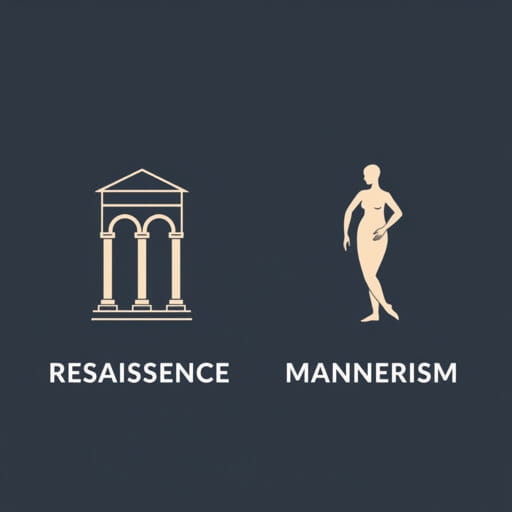
The Renaissance and Mannerism are two influential art movements that played a significant role in shaping European art history. While both styles emerged during the same general period, they reflect very different artistic philosophies, techniques, and cultural values. The Renaissance emphasized harmony, balance, and naturalism, while Mannerism embraced complexity, exaggeration, and intellectual elegance. Understanding the difference between Renaissance and Mannerism is essential for appreciating the evolution of Western art and how societal shifts influenced creative expression during the 15th and 16th centuries.
Historical Context of the Renaissance and Mannerism
The Renaissance: A Return to Classical Ideals
The Renaissance, meaning ‘rebirth,’ began in Italy around the 14th century and spread across Europe through the 15th and 16th centuries. It marked a renewed interest in the art, philosophy, and sciences of ancient Greece and Rome. This era saw a revival of humanism, where artists focused on the human form, realism, and the natural world. Renaissance art was deeply rooted in balance, symmetry, and rational perspective, aiming to reflect the perfection of nature and humanity.
Mannerism: A Response to the High Renaissance
Mannerism emerged in the early 16th century, following the peak of the High Renaissance. It was a period of artistic experimentation and sophistication, driven by a desire to move beyond the conventional standards set by Renaissance masters like Michelangelo, Leonardo da Vinci, and Raphael. Mannerist artists intentionally distorted proportions, used unusual perspectives, and focused on elegance and complexity rather than clarity and realism. This movement developed partly in response to the political and religious instability of the time, such as the Reformation and the Sack of Rome in 1527.
Artistic Techniques and Styles
Renaissance Artistic Principles
Renaissance artists emphasized technical precision and a naturalistic representation of subjects. Their approach involved scientific observation and the use of mathematical principles in art.
- Linear perspective: Creating the illusion of depth on a flat surface through vanishing points
- Chiaroscuro: The use of light and shadow to add volume and realism
- Anatomical accuracy: Detailed study of the human body for realistic depiction
- Symmetry and balance: Harmonious composition was key to beauty
Mannerist Artistic Features
Mannerism broke away from the harmony of the Renaissance. Instead, it favored ambiguity, tension, and stylization.
- Elongated forms: Human figures often had exaggerated limbs and unnatural poses
- Artificial colors: Use of vivid, sometimes clashing colors for emotional impact
- Complex compositions: Crowded, layered, and often confusing spatial arrangements
- Unusual perspectives: Distorted spatial relationships and unsettling viewpoints
Rather than aiming for realistic representation, Mannerist artists sought to demonstrate their skill and creativity through unconventional design and intellectual refinement.
Thematic Differences
Renaissance Subject Matter
Renaissance art was centered on themes of humanism, nature, religion, and classical mythology. Artists portrayed biblical stories, historical figures, and mythological scenes with clarity and reverence. The emphasis was on the dignity and potential of mankind.
- Idealized human figures inspired by Greco-Roman sculpture
- Balanced, serene compositions with moral or spiritual undertones
- Depictions of everyday life in realistic environments
Mannerist Subject Matter
While Mannerist art continued to explore religious and mythological themes, it introduced greater emotional intensity and symbolic ambiguity. There was often a sense of theatricality or drama in the scenes.
- Figures with exaggerated emotions and dramatic gestures
- Unnatural landscapes and settings
- Symbolic and sometimes obscure allegorical meanings
In Mannerism, the focus was less on narrative clarity and more on visual sophistication and intellectual challenge.
Notable Artists and Works
Key Renaissance Artists
- Leonardo da Vinci: Known for ‘The Last Supper’ and ‘Mona Lisa’
- Michelangelo: Famous for the Sistine Chapel ceiling and the statue of David
- Raphael: Renowned for ‘The School of Athens’ and his harmonious Madonnas
- Sandro Botticelli: Celebrated for ‘The Birth of Venus’ and ‘Primavera’
Key Mannerist Artists
- Jacopo Pontormo: Known for ‘The Deposition from the Cross’ with its emotional intensity
- Parmigianino: Created ‘Madonna with the Long Neck,’ a classic example of Mannerist elongation
- Rosso Fiorentino: Emphasized bizarre compositions and bold colors
- El Greco: His dramatic use of color and form influenced later Baroque and Expressionist styles
While Renaissance artists sought to reflect ideal beauty and order, Mannerist artists embraced tension and artistic freedom.
Architectural and Sculptural Differences
Renaissance Architecture and Sculpture
Renaissance architecture drew inspiration from Roman forms, using columns, domes, arches, and symmetrical layouts. It emphasized rationality and order. In sculpture, naturalism, anatomical precision, and emotional restraint were valued.
- Filippo Brunelleschi: Architect of Florence’s famous dome
- Donatello: Created lifelike bronze and marble sculptures such as ‘David’
Mannerist Architecture and Sculpture
Mannerist architects played with classical forms, bending the rules of proportion and symmetry. Unexpected elements, such as false perspectives or decorative exaggerations, were common. In sculpture, figures became more twisted and expressive.
- Giulio Romano: Known for the Palazzo del Te with its playful architectural elements
- Benvenuto Cellini: His ‘Perseus with the Head of Medusa’ combined elegance with drama
Mannerism introduced a new level of theatricality and ornamentation that challenged Renaissance norms.
Cultural and Philosophical Influence
Renaissance art reflected a confident and optimistic view of the world, where humans were seen as rational and capable of understanding nature and the divine. Humanism was central, and education, science, and art were all tied to a belief in human potential.
Mannerism, in contrast, emerged during a more uncertain time. The clarity and balance of the Renaissance were replaced by emotional complexity and ambiguity. Mannerism can be seen as a reaction to the perfection of Renaissance ideals, showing that art could also explore irrationality, tension, and the subjective experience.
The difference between Renaissance and Mannerism lies in their artistic goals, stylistic choices, and cultural attitudes. Renaissance art emphasized balance, harmony, and idealized beauty grounded in classical traditions and humanism. Mannerism broke away from those ideals, embracing complexity, elegance, and expressive distortion. By comparing these two movements, we gain insight into how art can both reflect and challenge the spirit of its time, evolving through innovation, experimentation, and response to changing social and historical conditions.