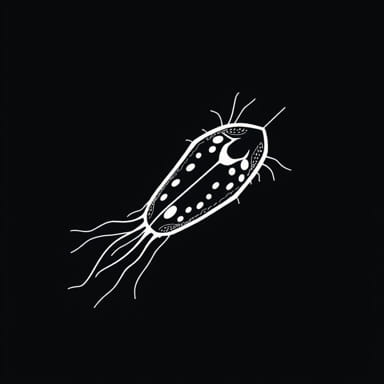
The biological drawing of a paramecium plays an important role in helping students and researchers understand this microscopic organism. As a single-celled protist, the paramecium has a complex internal structure that is best understood through detailed and accurate visual representation. A good scientific drawing of a paramecium focuses on accuracy, labeling, proportion, and clarity, making it easier to study its functions and anatomy. Whether used in classrooms, textbooks, or laboratory manuals, such drawings are essential tools for learning and teaching about protozoa.
Understanding Paramecium Structure
Paramecium is a genus of unicellular ciliates, commonly studied in biology due to their relatively simple structure yet fascinating behaviors. It moves using tiny hair-like structures called cilia and has specialized organelles that support basic life functions. In any biological drawing of a paramecium, the most important components must be included to reflect its functional biology.
Key Features to Include in a Paramecium Drawing
A proper paramecium diagram should highlight the following major parts:
- Pellicle The outer membrane that gives the paramecium its shape and structure.
- Cilia Short hair-like projections covering the body, used for movement and feeding.
- Oral groove A funnel-like indentation on one side where food ptopics enter.
- Gullet A tube-like structure that directs food into the cell.
- Food vacuoles Spherical structures where food is digested.
- Macronucleus A large nucleus responsible for controlling everyday cell functions.
- Micronucleus A smaller nucleus involved in reproductive processes.
- Contractile vacuoles Organs that help expel excess water from the cell.
- Cytoplasm The jelly-like fluid inside the cell where organelles are suspended.
- Trichocysts Defensive organelles that can be ejected when the paramecium is threatened.
Each of these components should be properly labeled in a biological drawing, with lines pointing to the correct location. Labeling must be done with neat, straight lines, usually on one side of the page to maintain a clean layout.
Scientific Drawing Guidelines
Creating a biological drawing of paramecium requires attention to detail and certain scientific conventions. These ensure the drawing is both scientifically accurate and easy to interpret for viewers.
Important Drawing Rules
When making a biological drawing, follow these basic rules to ensure it meets scientific standards:
- Use a sharp pencil and plain white paper for clarity and precision.
- Do not add color unless specifically instructed to do so in a biology class.
- All labels should be written horizontally and neatly, using capital letters for clarity.
- Lines should not cross each other and must clearly point to the correct structures.
- Ensure the drawing is large enough to show all major parts without crowding.
- Maintain the correct proportion of parts as seen under a microscope.
- Always include a title at the top such as Biological Drawing of Paramecium.
Even though paramecium is microscopic, a drawing should be at least 1015 cm in length to make space for all details and labels.
Purpose of Paramecium Drawing in Biology
Biological drawings are not simply for decoration; they serve an educational purpose. Through the process of drawing and labeling, students gain a deeper understanding of cell structure and the roles of various organelles. In the case of paramecium, the drawing emphasizes how a single-celled organism can carry out all the basic life functions such as movement, digestion, reproduction, and excretion.
Learning Through Visual Representation
Visual learning is particularly effective in biology, where internal structures are often invisible to the naked eye. A well-labeled paramecium drawing helps students:
- Identify and memorize different parts of the cell.
- Understand how each organelle contributes to the survival of the organism.
- See the relationship between form and function in cell biology.
- Prepare for examinations and lab practicals where diagrams may be assessed.
These visual aids make abstract concepts more concrete, especially for learners who benefit from visual reinforcement.
Paramecium as a Model Organism
Paramecia are commonly used in classrooms and labs to demonstrate basic cellular processes such as osmoregulation, locomotion, and phagocytosis. A biological drawing of a paramecium supports these lessons by giving a reference image that clearly shows where and how these processes take place.
Paramecium in Education
Many biology curricula include the study of protists, and the paramecium is one of the best examples. In secondary schools and introductory university courses, students may be asked to observe the organism under a microscope and then produce a labeled drawing. This experience links theory with observation and develops important scientific skills:
- Microscope usage and slide preparation
- Accurate observation and attention to detail
- Scientific labeling and recording of data
- Comparison of various microorganisms
In more advanced studies, paramecia can also be used to explore genetic expression, cell signaling, and evolutionary biology.
Challenges in Drawing Paramecium
While drawing a paramecium may seem simple at first, students often face difficulties with proportion, labeling, and representing microscopic features. Cilia, for example, must be drawn as very fine structures and evenly distributed. It’s also important to avoid overcrowding the drawing with too much detail that could make it confusing or messy.
Tips for Improving Your Drawing
To create a more effective biological drawing of paramecium, consider the following tips:
- Practice sketching the overall outline several times before adding internal structures.
- Refer to actual microscope images to match real-life proportions.
- Use light lines at first and darken them only after the structure is accurate.
- Double-check spelling and placement of all labels.
Improving your drawing skills takes time, but each attempt helps you better understand biological structures and their organization.
The biological drawing of paramecium is more than just an art project it is a foundational skill in biological sciences. Through accurate diagrams, students and researchers can explore the complexity of single-celled life and gain insight into fundamental processes such as movement, digestion, and reproduction. By following the proper techniques and understanding what features to include, learners can create clear and informative illustrations that deepen their understanding of cell biology. Whether used in exams, labs, or teaching materials, a detailed paramecium drawing remains a valuable educational resource for anyone studying microorganisms and the incredible world of protists.