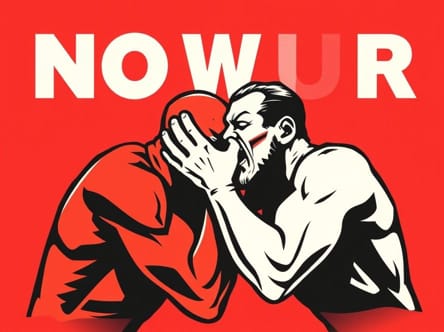
Professional wrestling is filled with iconic moves that leave fans wondering whether they actually cause pain or if they are simply part of the performance. Among those moves, the Crippler Crossface stands out as one of the most notorious submission holds in wrestling history. First made famous by Chris Benoit, the move gained attention not only for its effectiveness in storytelling but also for the intense reaction it generated from audiences and wrestlers alike. This leads many people to ask does the Crippler Crossface really hurt, or is it simply an illusion created for entertainment?
What Is the Crippler Crossface?
The Crippler Crossface is a wrestling submission hold designed to look both painful and inescapable. The move is performed by trapping the opponent’s arm between the legs, then pulling back on their head and face while locking the hands around the opponent’s chin. This combination twists the upper body, neck, and shoulder in ways that appear very uncomfortable.
While wrestling is choreographed, the mechanics of the Crippler Crossface involve real pressure points. That means even though the move is applied in a controlled way, it can still cause pain if the wrestler does not cooperate or if the hold is executed too tightly.
Why the Move Looks So Painful
The Crippler Crossface is one of those submission holds that looks painful because it manipulates natural weak spots in the body. The move targets multiple areas at once
- The neck– pulling back on the chin puts strain on the cervical spine.
- The shoulder– with the arm trapped, the joint is twisted at an unnatural angle.
- The face and jaw– pressure around the chin and mouth makes it look like the opponent is being wrenched backward.
When an opponent sells the move correctly by grimacing or trying to resist, it creates the impression of extreme pain. This visual drama is what makes the Crippler Crossface such a convincing submission hold in the world of professional wrestling.
Does the Crippler Crossface Really Hurt?
The answer is yes and no. Like most wrestling moves, the Crippler Crossface is designed to be safe when performed by trained professionals. However, that does not mean it is completely painless. Wrestlers often admit that certain submission holds, including the Crossface, put legitimate strain on the body.
The amount of pain depends on several factors. If the move is applied lightly, the opponent may only feel mild discomfort. But if the wrestler applies too much force, or if the opponent’s body is not flexible enough, the pain can be very real. In extreme cases, improper application could even risk injury to the neck, shoulder, or jaw.
The Science Behind the Pain
To understand why the Crippler Crossface can hurt, it helps to look at the mechanics of the human body. The neck is designed to move in specific ranges of motion, and forcing it backward or twisting it beyond those limits can cause strain on the muscles and ligaments. Meanwhile, trapping the arm immobilizes the shoulder joint, making it difficult to resist the pull on the head.
This combination of restricted movement and applied pressure is what makes the Crossface effective as both a visual storytelling tool and a legitimate source of discomfort.
Comparisons to Other Submission Holds
The Crippler Crossface is often compared to other famous wrestling submission holds such as the Sharpshooter, the Figure-Four Leglock, and the Armbar. Each of these moves targets different parts of the body, but they share one thing in common they look painful because they exploit the body’s natural weaknesses.
What makes the Crossface unique is its focus on the upper body, particularly the neck and shoulders. While the Sharpshooter works on the legs and lower back, the Crossface attacks areas that are much more sensitive, making it appear even more dangerous.
Wrestlers’ Perspectives on the Crossface
Many wrestlers who have taken the Crippler Crossface have commented on its real-life effects. Some describe it as uncomfortable but manageable, while others admit that it can hurt if the move is applied too tightly. Professional wrestlers are trained to withstand pain and perform safely, but even they acknowledge that certain holds push the boundaries between performance and reality.
Because of this, the Crossface has earned a reputation as one of the more legitimate-looking submission holds in wrestling. The reactions from wrestlers, combined with the visual intensity of the move, make fans believe in its power.
Risks of the Crippler Crossface
While the move is generally safe in the hands of trained performers, there are risks associated with it. These include
- Neck strain– pulling too hard on the chin can overstretch the neck muscles.
- Shoulder injuries– trapping the arm can cause discomfort or damage if the opponent has pre-existing issues.
- Jaw pain– the pressure around the mouth and chin can cause soreness.
- Spinal risk– in rare cases, improper application could lead to serious injury.
This is why such moves are only performed by professionals who know how to apply and absorb them safely. Attempting the Crippler Crossface outside of wrestling training is strongly discouraged.
Psychological Impact on Fans
The effectiveness of the Crippler Crossface is not just physical but also psychological. Fans watching the move often believe in its pain because of how it looks and how opponents react to it. The grimaces, screams, and dramatic attempts to reach the ropes all contribute to the illusion. In many cases, fans suspend disbelief, convinced that the opponent is truly suffering.
This emotional response is exactly what wrestling aims to achieve. The Crippler Crossface has been used in many high-stakes matches, adding drama and tension by making it seem like victory is inevitable once the hold is locked in.
Modern Use of the Crossface
Even though Chris Benoit made the Crippler Crossface famous, other wrestlers have used variations of the move over the years. Superstars such as Daniel Bryan and Sasha Banks have incorporated different styles of the Crossface into their arsenals, showing its lasting influence in wrestling.
Each variation may look slightly different, but the core principle remains the same trap the arm, apply pressure to the head, and make the opponent appear helpless. The continued use of the move proves that it is not only effective for storytelling but also still respected among wrestlers and fans alike.
Can the Crippler Crossface Be Legitimate in Combat?
Outside of professional wrestling, the mechanics of the Crippler Crossface do have some basis in legitimate grappling and submission techniques. While it is not commonly used in martial arts like Brazilian Jiu-Jitsu, the principle of controlling the head and arm to create pressure is a real combat concept. In a real fight, applying force in this manner could absolutely cause pain and potentially serious injury.
This explains why even in wrestling, where moves are controlled, the Crossface has a reputation for being dangerous. Its roots in real grappling mechanics make it more believable than purely theatrical moves.
So, does the Crippler Crossface really hurt? The simple answer is yes, it can. While professional wrestlers apply the move in a way that minimizes injury, the mechanics of the hold involve real pressure on the neck, shoulders, and jaw. This makes it uncomfortable at best and potentially dangerous if done incorrectly. Fans perceive it as painful because of its visual intensity and the reactions of the wrestlers, but the reality is that there is truth behind the performance. The Crippler Crossface remains one of wrestling’s most iconic submission holds, remembered for its impact on both the body and the storytelling of professional wrestling.