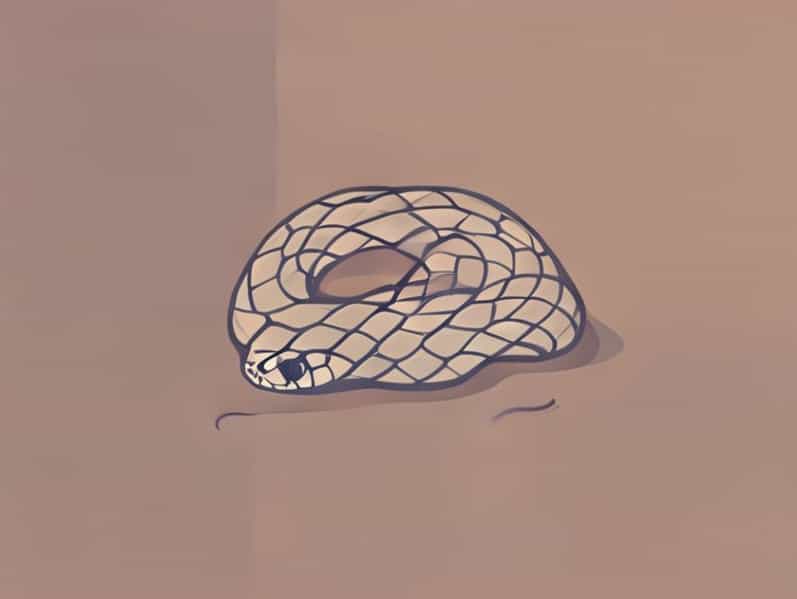
When observing snakes in the wild or in captivity, many people wonder whether snakes crawl or slither. This question may seem simple, but it opens up an interesting discussion about snake locomotion and the unique anatomy that allows these reptiles to move efficiently without limbs. Understanding how snakes move requires examining their muscular structure, scales, and the various techniques they use to navigate different surfaces. Exploring whether snakes crawl or slither also sheds light on the broader aspects of reptilian movement, adaptation, and survival in diverse habitats.
Defining Crawl and Slither
Before determining whether snakes crawl or slither, it is important to define what these terms mean. Crawling generally refers to movement that involves dragging the body along a surface, often with the aid of limbs, as seen in many insects, reptiles, and small mammals. Slithering, on the other hand, specifically describes the smooth, gliding motion of legless creatures, particularly snakes. Slithering involves the coordinated contraction and relaxation of muscles along the snake’s body, combined with the interaction of belly scales and friction against surfaces to propel forward.
Crawl vs. Slither in Movement
- CrawlingOften involves limbs or appendages that grip and push against a surface.
- SlitheringRelies on muscular undulation and contact with the ground to generate movement.
Given these definitions, snakes are more accurately described as slithering rather than crawling. Although some people may casually say snakes crawl, this term does not capture the specialized mechanics of snake locomotion.
How Snakes Slither
Snake movement is facilitated by a highly flexible backbone made up of numerous vertebrae and ribs, along with strong, segmented muscles that allow precise control over their body. Snakes use four primary modes of locomotion lateral undulation, sidewinding, concertina, and rectilinear movement. Each mode is adapted to different environments, such as smooth floors, sand, trees, or underground burrows.
Lateral Undulation
Lateral undulation is the most common form of snake movement. It involves the snake forming a series of S-shaped curves and pushing against irregularities in the ground or vegetation. The snake generates forward motion by alternately contracting muscles along its body and using friction points against surfaces. This motion allows snakes to move quickly and efficiently across a variety of terrains.
Sidewinding
Sidewinding is a specialized movement used by desert-dwelling snakes. It minimizes contact with hot sand and reduces energy expenditure. During sidewinding, the snake lifts sections of its body off the ground while other parts push laterally, creating a sideways motion that leaves distinctive tracks. This method demonstrates the snake’s ability to adapt its slithering technique to environmental challenges.
Concertina Movement
In narrow tunnels or on vertical surfaces, snakes use concertina movement. They anchor parts of their body against a surface and extend or contract other parts to move forward. Concertina motion resembles inching forward and is slower than lateral undulation but provides stability in tight spaces. This mode shows how slithering can vary in speed and form depending on situational requirements.
Rectilinear Movement
Large snakes, such as pythons and boas, often use rectilinear movement, a straight-line crawling-like motion. Here, the snake moves by alternately lifting sections of its belly scales and contracting muscles, pushing itself forward incrementally. While this may look similar to crawling, it is still considered a form of slithering because it relies on muscular undulation rather than limbs.
Snake Anatomy and Locomotion
Snakes’ bodies are uniquely suited for slithering. Their elongated form, lack of limbs, and overlapping scales on the underside enable them to grip surfaces effectively. Muscles run longitudinally and laterally along the body, allowing precise control of each segment. By coordinating muscle contraction with scale friction, snakes generate forward motion, change direction, and even climb trees or swim. The absence of limbs differentiates snake slithering from crawling, which typically involves appendages for movement.
Role of Scales in Slithering
Ventral scales, the specialized scales on the underside of a snake, play a critical role in slithering. They create friction against surfaces, allowing the snake to push and pull itself forward. This friction is essential for lateral undulation and rectilinear movement. Without ventral scales, snakes would struggle to move efficiently on most surfaces, highlighting the evolutionary adaptation that enables legless locomotion.
Common Misconceptions Do Snakes Crawl?
Many people describe snakes as crawling because they move close to the ground. However, this description is misleading. Crawling generally implies dragging the body without specialized mechanics or using limbs. Snakes, in contrast, exhibit sophisticated forms of slithering that allow for speed, precision, and adaptability. Using the term crawl may simplify understanding for casual observers but does not accurately represent the complexity of snake locomotion.
Why People Say Snakes Crawl
- Snakes move low to the ground, giving the appearance of crawling.
- People often equate any slow, ground-level movement with crawling.
- Lack of familiarity with snake biology leads to the use of generalized terms.
Despite these reasons, biologists and herpetologists prefer slither to describe snake movement, as it accurately reflects the biological and mechanical processes involved.
Adaptations Supporting Slithering
Snakes have evolved numerous adaptations that make slithering efficient. Flexible vertebrae allow bending in multiple directions, while strong muscles provide power for propulsion. Scales and skin texture enhance grip and reduce friction in water or on smooth surfaces. Some snakes have even developed prehensile tails for climbing. These adaptations illustrate that slithering is a highly specialized, versatile form of movement distinct from crawling.
Environmental Adaptations
- Desert snakes use sidewinding to conserve energy and avoid hot surfaces.
- Tree-dwelling snakes utilize lateral undulation combined with prehensile gripping.
- Aquatic snakes adjust their slithering motion to swim efficiently in water.
snakes do not crawl in the conventional sense; they slither. Slithering is a unique and highly efficient form of locomotion that involves coordinated muscle contractions, specialized scales, and flexible bodies. While the term crawling may be used colloquially, it does not accurately capture the mechanisms and adaptations that allow snakes to move, climb, and swim effectively. By understanding the difference between crawling and slithering, observers can better appreciate the remarkable evolutionary adaptations that make snakes such versatile and fascinating creatures. Whether moving across sand, forest floor, or tree branches, slithering demonstrates the snake’s remarkable ability to navigate its environment with precision and efficiency.