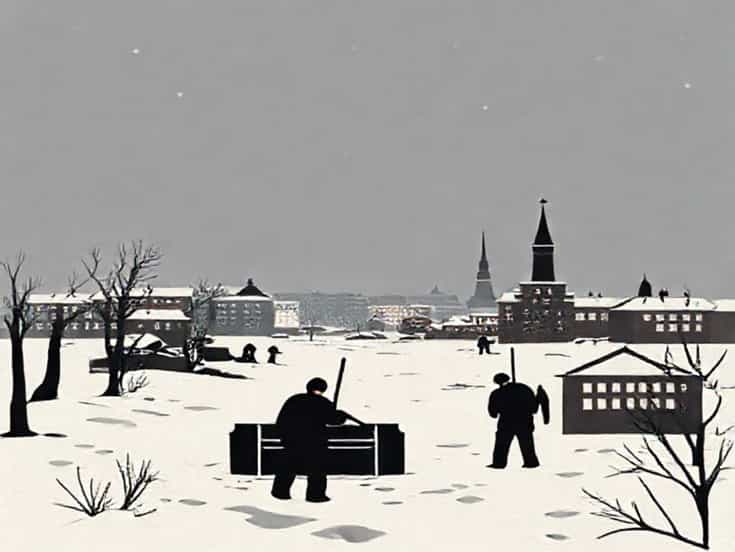
The Siege of Leningrad stands as one of the most harrowing events of World War II, a prolonged military blockade that subjected the city’s inhabitants to unimaginable hardship and suffering. Several novels have captured the intensity, despair, and resilience of those who lived through this devastating period, blending historical fact with the deep emotional and psychological experiences of civilians and soldiers alike. These novels offer readers a profound insight into the human condition under extreme circumstances, exploring themes of survival, hope, loss, and endurance. By engaging with literature centered on the Siege of Leningrad, readers gain a deeper understanding of the historical significance of the event, as well as the personal narratives that illuminate the broader human impact of war.
Historical Background of the Siege of Leningrad
The Siege of Leningrad, lasting from September 8, 1941, to January 27, 1944, was a prolonged blockade imposed by Nazi Germany during its campaign against the Soviet Union. Over 872 days, the city endured starvation, bombardment, and extreme cold, leading to the deaths of over a million civilians. The blockade cut off food, water, and essential supplies, creating a humanitarian crisis that tested the limits of human endurance. Novels set during this period often depict not only the physical hardships faced by the inhabitants but also the psychological toll of living under constant threat and deprivation. Authors use these narratives to humanize the historical events, transforming statistics into vivid stories of struggle and survival.
Notable Novels on the Siege
Several novels focus on the Siege of Leningrad, each providing a unique perspective. One prominent example isLeningrad 900 Daysby Harrison Salisbury, which combines historical research with personal accounts to illustrate the sheer magnitude of the suffering and resilience of the population. Fictional novels, such asA Novel About Leningradby Olga Berggolts, offer intimate portrayals of families, children, and soldiers navigating the hardships of the blockade. Through the use of diary entries, letters, and first-person narratives, these novels convey the daily reality of hunger, fear, and the constant presence of death, allowing readers to connect emotionally with the historical events.
Thematic Exploration
Novels about the Siege of Leningrad often explore recurring themes that resonate with readers across cultures and generations. Themes of survival are central, illustrating the lengths to which individuals will go to preserve life in the face of extreme adversity. Hunger, cold, and disease are portrayed not only as physical challenges but also as metaphors for the deprivation of hope and normalcy. Other themes include resilience and community, as stories frequently depict neighbors helping one another, sharing meager resources, and maintaining cultural and spiritual practices despite the surrounding horrors. Through these themes, the novels highlight the human capacity for endurance, compassion, and ingenuity under extraordinary circumstances.
Character Development
One of the strengths of novels about the Siege of Leningrad is their focus on character development. Authors often create complex, multi-dimensional characters who embody the fears, hopes, and struggles of ordinary citizens. Children, elderly individuals, soldiers, and medical personnel are frequently central figures, providing diverse perspectives on the impact of the siege. Through detailed portrayals of characters’ daily lives, relationships, and emotional struggles, readers gain insight into how extreme conditions shape behavior, moral choices, and personal identity. The depiction of inner thoughts, memories, and aspirations adds depth to the narrative, making the historical events more tangible and relatable.
Writing Style and Narrative Techniques
Writers addressing the Siege of Leningrad employ various narrative techniques to convey the intensity of the experience. Some use first-person narratives or diary formats to immerse readers in the immediate perspective of those living through the blockade. Others utilize multiple perspectives, switching between civilians, soldiers, and political figures to provide a broader understanding of the siege’s complexity. Symbolism and imagery are frequently used to evoke the harsh realities of starvation, freezing temperatures, and bombardment, while moments of tenderness and hope are interspersed to highlight resilience. These stylistic choices enhance the emotional impact of the novels and ensure that readers are not only informed but also deeply moved by the stories.
Impact on Historical Understanding
Novels about the Siege of Leningrad contribute significantly to historical understanding by complementing factual accounts with personal narratives. While history books provide dates, statistics, and military strategies, novels bring to life the human experience behind these facts. Readers gain a sense of the daily struggles, ethical dilemmas, and psychological challenges faced by individuals, which might otherwise be abstracted in traditional historical accounts. By presenting history through the lens of storytelling, these novels foster empathy and a more nuanced comprehension of the siege’s impact on both individual lives and broader society.
Educational and Cultural Relevance
These novels are valuable resources in educational settings, offering students a compelling entry point into the study of World War II and Soviet history. Teachers often use them to complement textbooks, as they provide vivid depictions of civilian life, social structures, and cultural resilience during wartime. Additionally, they serve as a means of preserving cultural memory, ensuring that the experiences of those who endured the siege are not forgotten. Through literature, the stories of courage, suffering, and human perseverance continue to reach new generations, emphasizing the importance of remembrance and historical reflection.
Novels about the Siege of Leningrad provide a powerful lens through which readers can explore one of the most devastating events of the 20th century. By blending historical accuracy with emotional depth, these works illuminate the extraordinary human experiences of starvation, survival, and resilience. Through carefully crafted narratives, vivid character portrayals, and thematic exploration, these novels help readers connect with history on a personal level, fostering empathy and understanding. Whether for educational purposes, personal enrichment, or cultural preservation, novels about the Siege of Leningrad remain essential literary contributions, ensuring that the lessons and stories of this tragic period continue to resonate with audiences worldwide.