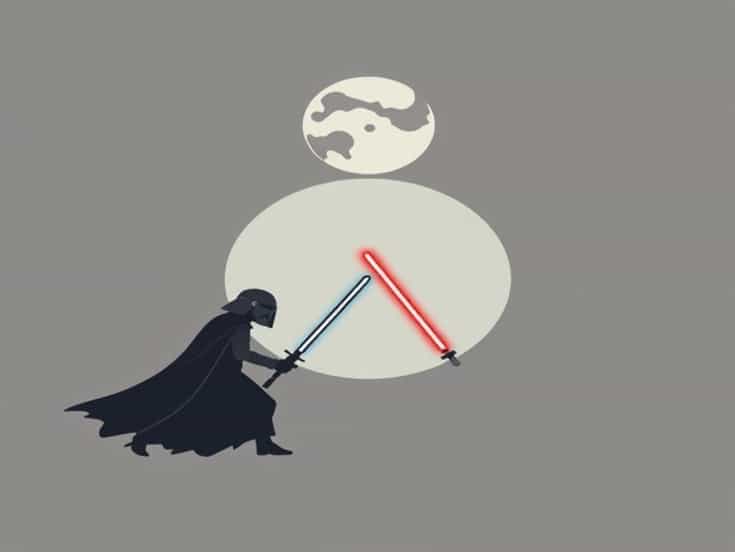
The legendary duel between Obi-Wan Kenobi and General Grievous is one of the most memorable moments in the Star Wars saga. Taking place during the events of Star Wars Episode III Revenge of the Sith, this confrontation showcases both the tactical brilliance of Obi-Wan and the terrifying mechanical might of Grievous. The battle occurred on the planet Utapau, a world known for its vast sinkholes and wind-blown terrain. This setting provided the perfect stage for a lightsaber duel that combined strategy, acrobatics, and the contrast between human intuition and machine precision.
The Planet Utapau The Battlefield of Destiny
Utapau, located in the Outer Rim Territories, is a remote and rugged planet characterized by its enormous sinkholes and underground cities. These massive holes, carved by erosion over millennia, became the home of the native Pau’ans and Utai species. While the surface is barren and wind-swept, the deep sinkholes host bustling trade ports and hidden military bases. When General Grievous fled to Utapau after the Republic’s attacks on the Separatists, he chose it for its isolation and defensibility.
The planet’s unique landscape added to the cinematic drama of the Obi-Wan versus Grievous duel. The fight unfolded across hangar decks, mechanical platforms, and narrow catwalks suspended over dizzying drops. The vastness of the sinkhole city created a sense of scale that amplified the tension of their confrontation, while the eerie lighting and mechanical noise reinforced the feeling of a climactic showdown between good and evil.
General Grievous The Cyborg General of the Separatists
General Grievous was a fearsome warlord, part biological and part machine. Once a Kaleesh warrior, he was rebuilt into a cyborg by the Sith Lord Count Dooku to serve as the Supreme Commander of the Droid Army. His body was equipped with four mechanical arms capable of wielding multiple lightsabers simultaneously trophies taken from Jedi he had slain. Grievous’ fighting style was fast, aggressive, and unrelenting, designed to overwhelm his opponents through speed and intimidation.
However, beneath his armor and cybernetic enhancements, Grievous still had organic organs, including lungs that made his infamous wheezing sound. This weakness played a crucial role during the duel with Obi-Wan Kenobi. Despite his mechanical strength, Grievous lacked the spiritual discipline and connection to the Force that gave the Jedi their edge in battle.
Obi-Wan Kenobi’s Mission on Utapau
Sent by the Jedi Council, Obi-Wan Kenobi arrived on Utapau to capture or eliminate General Grievous and bring an end to the Clone Wars. Disguised and supported by his loyal clone troops, he landed secretly and met with the local governor, who revealed the presence of Grievous in the lower levels of the city. Obi-Wan’s calm and calculated approach contrasted sharply with Grievous’ brutal tactics, setting the tone for their impending clash.
After locating Grievous’ position, Obi-Wan made his iconic leap from the rafters, dropping into the center of the Separatist stronghold and greeting his opponent with the line, Hello there. This simple phrase became one of the most beloved quotes in Star Wars history, symbolizing Obi-Wan’s confidence and composure even in the face of danger.
The Epic Duel Begins
The lightsaber battle between Obi-Wan Kenobi and General Grievous was unlike any other duel in the series. Grievous began by igniting four lightsabers, rotating his mechanical arms in a terrifying display of speed and precision. Obi-Wan, relying on his mastery of Form III (Soresu), a defensive lightsaber combat style, remained calm and patient. Rather than matching Grievous’ aggression, he waited for openings and exploited them with precision strikes.
The choreography of the fight highlighted the philosophical differences between the two warriors. Grievous represented chaos, power, and hatred for the Jedi, while Obi-Wan embodied control, balance, and the calmness of the Force. Despite Grievous’ intimidating offense, Obi-Wan methodically disarmed him literally by cutting off one arm after another until the general was forced to flee.
The Chase Across Utapau
After losing his lightsabers, Grievous escaped across the planet on his wheel bike, while Obi-Wan pursued him atop his varactyl mount, Boga. The chase sequence through the rocky terrain and narrow walls of the sinkhole city showcased the intensity of the battle and the contrast between the natural and mechanical worlds. The pursuit ended in a final confrontation on a dusty platform outside the city, where Obi-Wan and Grievous engaged in a brutal hand-to-hand struggle.
Using his quick thinking, Obi-Wan managed to grab Grievous’ blaster and fired multiple shots into the general’s exposed organs, finally destroying the cyborg’s core systems. With this victory, Obi-Wan ended the reign of one of the most dangerous threats to the Jedi Order and the Republic.
Symbolism of the Battle
The duel between Obi-Wan and Grievous on Utapau is more than just a physical fight; it symbolizes the broader conflict between the light and dark sides of the Force, between humanity and machinery, and between wisdom and arrogance. Grievous, a creature of mechanical enhancement and hatred, represents the loss of humanity in pursuit of power. Obi-Wan, guided by faith in the Force and his moral center, represents the resilience of the human spirit.
Furthermore, this battle foreshadowed the rise of Darth Vader, another cyborg warrior consumed by rage and mechanical transformation. Obi-Wan’s victory over Grievous served as both a triumph and a warning of what was to come in the galaxy’s future.
Impact on the Star Wars Universe
The death of General Grievous marked a turning point in the Clone Wars. With the Separatist leadership in disarray, Chancellor Palpatine consolidated more power, paving the way for the rise of the Galactic Empire. Obi-Wan’s mission, while successful in military terms, unknowingly contributed to the political downfall of the Republic. The victory was short-lived, as Order 66 would soon bring devastation to the Jedi Order and the galaxy itself.
- It marked the end of the Separatist military command structure.
- It demonstrated Obi-Wan’s unmatched mastery of defensive combat techniques.
- It deepened the tragic irony of the Jedi’s eventual downfall.
Legacy of Utapau and the Duel
Utapau’s significance in the Star Wars universe extends beyond just being a battleground. It serves as a visual metaphor for the state of the galaxy beautiful yet scarred, ancient yet technologically complex. The confrontation between Obi-Wan and Grievous is remembered as one of the defining moments that set the stage for the Empire’s rise and the beginning of the dark era that followed.
For fans, this battle stands out for its choreography, setting, and emotional weight. Obi-Wan Kenobi’s victory on Utapau embodies the triumph of skill and patience over raw power and chaos. It remains a timeless lesson within the lore of Star Wars that true strength lies not in domination or fear, but in discipline, courage, and faith in something greater than oneself.
The duel between Obi-Wan Kenobi and General Grievous on Utapau is a masterpiece of storytelling within the Star Wars saga. It blends stunning visuals, complex character dynamics, and deep symbolism into one unforgettable sequence. Set against the backdrop of a crumbling galaxy, this encounter represents the final blaze of Jedi heroism before the shadow of the Empire fell. Even years later, the echoes of Hello there and the fall of Grievous continue to resonate as a defining moment in cinematic history.