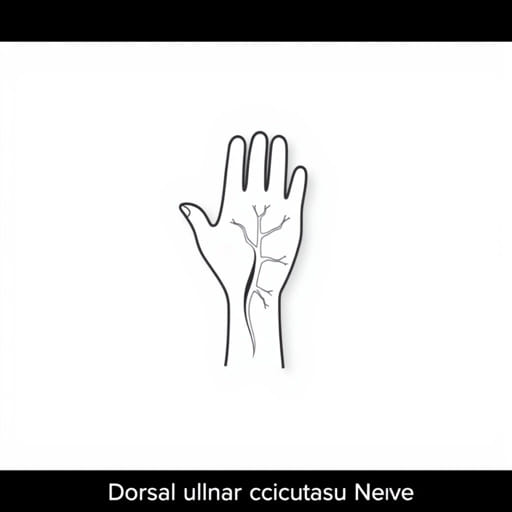
The dorsal ulnar cutaneous nerve is a small but vital branch of the ulnar nerve that provides sensory innervation to the skin on the dorsal side of the hand, particularly over the ulnar aspect. Despite its size, this nerve plays a critical role in transmitting sensory information, including touch, pain, and temperature. It is especially important in clinical contexts, such as nerve entrapment syndromes and surgical procedures involving the forearm and wrist. Understanding the anatomy, course, and clinical relevance of the dorsal ulnar cutaneous nerve is essential for healthcare professionals, anatomists, and anyone interested in the complex neural network of the upper limb.
Origin and Pathway
Branch of the Ulnar Nerve
The dorsal ulnar cutaneous nerve arises from the ulnar nerve, which is one of the major peripheral nerves of the upper limb. The ulnar nerve itself originates from the medial cord of the brachial plexus, carrying fibers from the C8 and T1 nerve roots. As it travels down the arm, the ulnar nerve gives off several branches, including the dorsal ulnar cutaneous branch.
Course of the Nerve
This cutaneous branch typically separates from the main ulnar nerve in the distal third of the forearm. After branching off, it passes posteriorly, traveling beneath the flexor carpi ulnaris muscle. It then becomes superficial by piercing the deep fascia just proximal to the wrist, usually on the ulnar side. From there, it continues along the dorsal aspect of the wrist and hand.
Once on the surface, the nerve divides into smaller branches that spread over the skin of the hand. These branches are distributed mainly over the medial side of the dorsum of the hand and fingers.
Areas of Sensory Innervation
Dorsal Hand and Fingers
The dorsal ulnar cutaneous nerve supplies sensation to the:
- Ulnar half of the dorsum of the hand
- Dorsal aspect of the fifth digit (little finger)
- Dorsal side of the fourth digit (ring finger), usually the medial half
- Occasionally, a portion of the third digit (middle finger) if there’s overlap or variation
The exact pattern of sensory innervation can vary between individuals, with some overlap from branches of the superficial radial nerve and the median nerve. However, the dorsal ulnar cutaneous nerve consistently covers the medial portion of the dorsal hand and fingers.
Anatomical Variations
Like many peripheral nerves, the dorsal ulnar cutaneous nerve can display anatomical variations in its origin, course, and distribution. These differences are usually benign but become significant in surgical planning and diagnosis of nerve-related conditions. For example, in some individuals, the nerve may branch higher or lower than expected, or it may contribute more extensively to adjacent sensory territories. Knowledge of these variations helps prevent inadvertent nerve damage during procedures.
Clinical Relevance
Entrapment and Compression
Though less common than entrapments of the main ulnar nerve at the elbow (cubital tunnel syndrome) or wrist (Guyon’s canal syndrome), the dorsal ulnar cutaneous nerve can still be compressed or irritated. Causes may include:
- Repetitive wrist movements
- Direct trauma to the ulnar side of the forearm or wrist
- Wristbands or tight straps applying pressure to the superficial nerve
- Fractures or dislocations near the ulna or carpal bones
Symptoms of dorsal ulnar cutaneous nerve entrapment typically include numbness, tingling, or burning sensations over its area of innervation. Unlike ulnar nerve entrapment in the elbow or wrist, motor function is usually preserved because this nerve is purely sensory.
Injury and Surgical Risks
This nerve is particularly vulnerable during surgical procedures involving the ulnar side of the wrist or distal forearm. Common interventions that risk damaging the dorsal ulnar cutaneous nerve include:
- Ulnar shortening osteotomy
- Carpal bone surgeries
- Insertion of ulnar-side wrist arthroscopy portals
- Soft tissue repairs near the extensor carpi ulnaris tendon
Injury to the nerve can result in sensory disturbances or chronic neuropathic pain. Surgeons must be aware of its superficial course and ensure careful dissection and retraction during relevant procedures.
Diagnosis and Testing
To assess the function of the dorsal ulnar cutaneous nerve, clinicians can perform light touch and pinprick tests along the dorsoulnar hand. Electrophysiological studies, such as nerve conduction studies or electromyography, may help confirm nerve damage or entrapment. These tests are especially useful when differentiating between proximal ulnar nerve lesions and more distal sensory-only involvement.
Role in Reconstructive Surgery and Nerve Grafts
In certain surgical cases, the dorsal ulnar cutaneous nerve may be harvested as a donor for nerve grafting, particularly when other more robust sensory nerves are not available. Due to its sensory-only nature and relatively accessible location, it can be used to bridge nerve gaps in other parts of the body. Harvesting this nerve, however, results in a loss of sensation in its normal distribution area, which must be discussed with patients preoperatively.
Protective Measures and Ergonomic Awareness
For individuals prone to nerve irritation due to occupational or recreational activities, protective strategies can help prevent dorsal ulnar cutaneous nerve compression:
- Avoid wearing tight wristbands or gear over the ulnar side of the wrist
- Use ergonomic tools that reduce pressure on the forearm
- Take regular breaks from repetitive wrist movements
- Use padding or support when engaging in sports like cycling or racquet sports
Early recognition of symptoms and ergonomic adjustments can prevent chronic nerve irritation or injury.
Summary of Key Features
- Originates from the ulnar nerve in the distal forearm
- Supplies sensation to the dorsoulnar aspect of the hand and fingers
- Purely sensory, with no motor function
- Vulnerable to compression and surgical injury
- Important in nerve testing and reconstructive procedures
The dorsal ulnar cutaneous nerve, while small and often overlooked, serves an essential function in the sensory innervation of the hand. Its role in transmitting sensation from the dorsoulnar surface of the hand makes it clinically significant in cases of nerve injury, entrapment, or surgery. Anatomical knowledge of its course, variations, and relationship to surrounding structures is invaluable for clinicians, surgeons, and therapists. By understanding the dorsal ulnar cutaneous nerve’s function and vulnerability, medical professionals can enhance diagnosis, avoid iatrogenic injury, and improve outcomes in upper limb care.