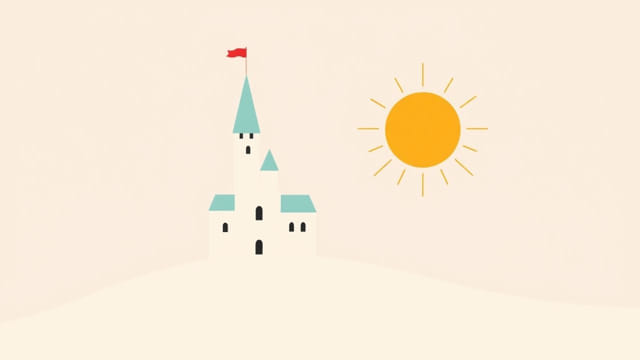
Castle and Sun by Paul Klee stands as one of the most iconic and visually striking works in modern art. With its geometric forms, vibrant colors, and dreamlike quality, the painting continues to inspire discussions about abstraction, symbolism, and the childlike imagination. The composition feels both architectural and fantastical, blending elements of cityscapes, castles, and celestial forms. This artwork is not just visually appealing it carries deeper artistic and emotional significance that reflects Klee’s unique approach to painting and design.
Background on Paul Klee
A Modernist with a Unique Voice
Paul Klee was a Swiss-German painter born in 1879. Known for his experimental style, Klee was a leading figure of early 20th-century modernism. He combined elements from several movements Expressionism, Cubism, and Surrealism but always managed to maintain a style that was distinctly his own. His works are characterized by playful shapes, whimsical lines, and symbolic color choices.
Klee was also a teacher at the Bauhaus school, where he influenced generations of artists. He believed deeply in the connection between music and visual art, often describing painting as a visual melody. His theories on color and form were complex but guided by an instinctive sense of rhythm and emotion.
Exploring Castle and Sun
Geometric Composition and Visual Rhythm
Castle and Sun is constructed primarily using rectangles, triangles, and circles arranged in a structured yet imaginative way. The composition resembles a city or castle rising under a glowing sun, using simple shapes to evoke a powerful architectural presence. Klee often played with balance and asymmetry, and this piece is a prime example of how minimalism and abstraction can still convey complex ideas.
The painting uses a grid-like structure that mimics both the layout of a city and the abstract framework of a musical score. There is a clear hierarchy of shapes, with taller vertical elements suggesting towers, and a central circle symbolizing the sun possibly also interpreted as a spiritual or imaginative center.
Use of Color
Klee’s use of color in Castle and Sun is vibrant yet controlled. He uses warm reds, oranges, and yellows that radiate energy, contrasting with cooler blues and greens that suggest shadow or depth. Each geometric block seems to hold its own personality, its own emotional tone, yet contributes to the harmony of the whole composition.
This thoughtful color placement is part of what gives the painting its dreamlike quality. The viewer may not recognize specific details but is drawn into an emotional response, evoked by the abstract interplay of hue and shape.
Interpretation and Symbolism
The Castle as a Symbol
The idea of a castle evokes protection, fantasy, power, and isolation. In Klee’s hands, it becomes something more a metaphor for the human mind, imagination, or even the soul. The geometric shapes can be interpreted as levels of consciousness, layers of thought, or stages of creative evolution.
Rather than presenting a literal castle, Klee encourages viewers to build their own mental structures. His art invites personal interpretation and introspection, leaving room for multiple emotional and intellectual readings.
The Sun as Energy and Unity
The sun in this painting is a dominant circular form, radiating from the top or center of the structure. It may represent enlightenment, creativity, or a unifying source of life. Many interpretations see the sun as a central symbol in Klee’s visual language, connecting the grounded forms of the castle with a higher, spiritual presence.
Childlike Simplicity
Despite the painting’s sophistication, there’s an undeniable childlike innocence to Castle and Sun. Klee believed in the power of tapping into a child’s way of seeing the world. He once said, A drawing is simply a line going for a walk. This playful, exploratory spirit is embedded in the structure of the painting, which looks like something that could emerge from a child’s imagination but shaped with deep thought and control.
Klee’s Artistic Philosophy Reflected in the Work
The Balance of Intellect and Emotion
Paul Klee was not only an artist but also a theorist. He wrote extensively about the principles of design, the movement of lines, and the psychological power of colors. Castle and Sun reflects his balance between analytical structure and emotional freedom. The painting is methodical in its layout yet resonates with feeling and mystery.
Spiritual and Philosophical Themes
Though not overtly religious, Klee’s work often explored spiritual and existential questions. Castle and Sun may suggest an ascent toward knowledge or a higher self, depicted through ascending forms and the presence of a celestial body. The castle might also symbolize the self, standing tall under the influence of a greater cosmic force.
Impact and Legacy of Castle and Sun
Influence on Modern Design
Klee’s focus on shape, form, and color has had a lasting influence not only on painting but on graphic design, architecture, and education. His work is frequently cited in design theory and visual communication. The simplicity of Castle and Sun has made it a favorite example in textbooks and art classes exploring the power of abstraction.
Continued Popularity
Among Klee’s vast body of work, Castle and Sun remains one of his most reproduced and studied pieces. Its accessibility both in visual clarity and emotional depth makes it a frequent entry point for those new to abstract art. It also appeals to children and adults alike, each finding their own meaning in the color and form.
- It’s used in early education to introduce basic geometric forms.
- Design students study it to understand visual hierarchy and balance.
- Art therapists reference it as an example of emotionally resonant abstraction.
Castle and Sun by Paul Klee stands as a masterpiece of modern art, inviting viewers to explore a world built from simple shapes and colors but filled with profound emotional and intellectual depth. Its geometric beauty, symbolic potential, and playful spirit continue to inspire generations. Whether seen as a castle, a mind, a city, or a dream, the painting invites each viewer to bring their own story and in doing so, fulfills Klee’s belief that art does not reproduce the visible but makes visible what lies within.