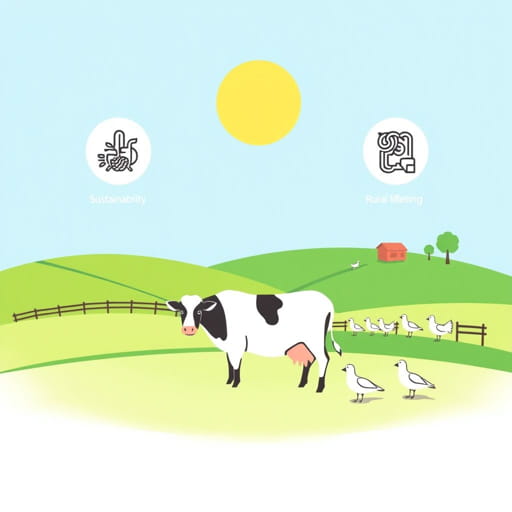
Across the globe, animal husbandry has long been recognized as a vital component of agriculture and rural development. This practice, which involves the breeding and care of animals such as cows, goats, sheep, poultry, and pigs, supports both economic and nutritional needs in various societies. It plays a key role in food production, labor, and income generation, especially in communities where crop farming alone cannot sustain livelihoods. Understanding the benefits of animal husbandry allows us to appreciate its multifaceted contributions to sustainability, health, and economic growth.
What Is Animal Husbandry?
Animal husbandry refers to the science and art of managing farm animals for products such as milk, eggs, meat, wool, and leather. It includes not only feeding and breeding animals but also ensuring their health and productivity through proper care and scientific methods. This age-old agricultural practice is essential for both subsistence and commercial farming, supporting millions of households worldwide.
Economic Benefits of Animal Husbandry
One of the most significant advantages of animal husbandry is its contribution to the economy. It provides a steady source of income for farmers, helps stabilize rural economies, and reduces poverty in underdeveloped regions.
Income Generation
- Products such as milk, eggs, meat, wool, and leather can be sold locally or commercially, providing daily or seasonal income to farmers.
- Small-scale animal farming allows even landless individuals to earn a living through backyard poultry or goat farming.
Employment Opportunities
- Animal husbandry creates employment not only for farmers but also for veterinarians, feed suppliers, transporters, and butchers.
- In rural areas, livestock farming often supports entire communities with jobs related to animal care and processing.
Support to Agriculture
- Livestock such as oxen and buffaloes are used for plowing fields, transporting goods, and other labor-intensive tasks.
- Animal manure is a valuable source of organic fertilizer, enhancing soil fertility and reducing the need for chemical inputs.
Nutritional Benefits of Animal Husbandry
Animal husbandry contributes significantly to human nutrition by providing a diverse range of food items rich in proteins, vitamins, and minerals. These products form a critical part of balanced diets across the world.
High-Quality Protein
- Meat, eggs, and dairy products are excellent sources of high-quality protein essential for body growth and repair.
- In developing countries, where plant-based diets dominate, animal products help prevent protein-energy malnutrition.
Micronutrients
- Dairy and meat products contain vital micronutrients such as calcium, iron, vitamin B12, and zinc, which are crucial for development and immunity.
- Animal-derived food supports brain development in children and helps reduce deficiencies in adults.
Environmental Benefits of Animal Husbandry
When practiced sustainably, animal husbandry can also contribute positively to the environment. It promotes recycling, reduces waste, and supports biodiversity.
Use of Animal Waste
- Animal dung is used as organic fertilizer, improving soil health and promoting crop growth.
- In many parts of the world, biogas plants use animal waste to produce clean, renewable energy for cooking and lighting.
Land Use Efficiency
- Livestock can graze on lands unsuitable for crop farming, making use of marginal lands and converting grass into valuable products.
- This reduces pressure on arable land and supports food production in less fertile regions.
Biodiversity Support
- Traditional animal husbandry encourages the preservation of local breeds, contributing to genetic diversity.
- These breeds are often more resilient to local diseases and environmental conditions.
Social and Cultural Benefits
Animal husbandry is deeply woven into the social and cultural fabric of many communities. Beyond its economic value, it plays a role in festivals, customs, and family traditions.
Wealth and Security
- In many rural areas, livestock is considered a form of wealth and social status, often used for dowries or as savings during emergencies.
- Animals can be sold or traded quickly in times of need, providing financial security.
Cultural Significance
- Animals are part of rituals, religious ceremonies, and festivals in various cultures.
- Events such as cattle fairs and bullock races reflect the deep connection between humans and livestock.
Community Development
- Animal husbandry programs often include cooperative farming and women’s self-help groups, fostering community bonding.
- Shared resources like veterinary services or grazing lands promote collaboration and mutual support.
Educational and Scientific Advancements
The field of animal husbandry has also driven research and innovation. It is central to veterinary sciences, genetics, nutrition, and sustainable agriculture.
Advancements in Breeding
- Selective breeding and artificial insemination have led to the development of high-yielding breeds.
- This ensures better productivity and disease resistance in livestock.
Veterinary Science
- Animal husbandry promotes the growth of veterinary education, improving animal health and public safety.
- It also supports research in zoonotic diseases and vaccine development.
Training and Skill Development
- Farmers receive training in modern animal care practices, improving their livelihoods and knowledge.
- Educational institutions now offer specialized courses in animal husbandry and dairy science.
Contribution to Food Security
Animal husbandry is essential in achieving food security goals worldwide. It ensures a steady supply of nutritious food and balances seasonal fluctuations in crop production.
Year-Round Food Supply
- Unlike many crops that depend on seasonal rains, animal products like milk and eggs can be produced throughout the year.
- This provides consistent nutrition and reduces hunger during off-season periods.
Diversification of Diet
- Animal husbandry complements agriculture by offering dietary variety, improving public health.
- It also reduces dependency on a single food source, making diets more resilient to climate or economic shocks.
Animal husbandry offers numerous benefits that go far beyond simple food production. Economically, it empowers farmers and rural communities with income and job opportunities. Nutritionally, it supplies high-quality proteins and essential micronutrients. Environmentally, when managed responsibly, it supports sustainability, soil health, and renewable energy. Culturally, it enriches lives and brings people together. Its scientific and educational value also contributes to innovation and knowledge sharing. In a world facing increasing challenges in agriculture, nutrition, and climate, the role of animal husbandry remains critical and valuable. Embracing and improving this practice is essential for building resilient and prosperous communities.