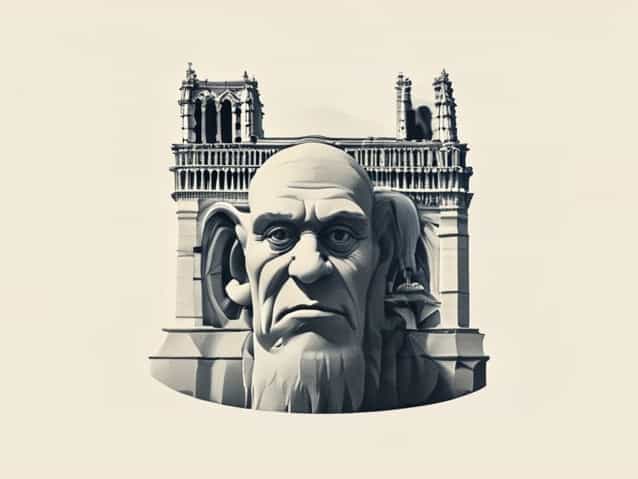
The term Gobbo di Notre Dame immediately brings to mind one of the most iconic and tragic characters in classic literature-Quasimodo. Known as the Hunchback of Notre Dame in English, Quasimodo is a central figure in Victor Hugo’s masterpiece, Notre-Dame de Paris, published in 1831. His story is one of isolation, love, and humanity set against the backdrop of medieval Paris. The phrase itself, which translates from Italian as the hunchback of Notre Dame, captures the physical and emotional essence of Quasimodo’s character. He is both feared and pitied, representing how society treats those who are different.
Who Is Quasimodo?
Quasimodo is the bell-ringer of the great cathedral of Notre Dame in Paris. From birth, he is described as physically deformed-hunched back, with a twisted face and one eye almost closed. His appearance leads the people of Paris to call him Gobbo di Notre Dame or simply the Hunchback. Despite his frightening looks, Quasimodo possesses a gentle soul, deep emotions, and remarkable strength. His entire life revolves around the cathedral, where he finds both sanctuary and imprisonment.
Victor Hugo created Quasimodo not merely as a symbol of deformity, but as a representation of the misunderstood and marginalized individuals in society. His deformity contrasts with his inner goodness, making him one of literature’s most poignant figures. Through Quasimodo, Hugo explores the themes of beauty, compassion, and social rejection.
The Meaning of Gobbo di Notre Dame
The phrase Gobbo di Notre Dame emphasizes Quasimodo’s role as the outcast of Paris. The word gobbo in Italian literally means hunchback, but it also carries emotional weight. It implies not only physical deformity but also the burden of being different. Notre Dame, the great cathedral, serves as both his home and his prison. Its towering bells are his companions, and its walls protect him from a world that mocks and fears him.
In many adaptations, both literary and cinematic, the title Gobbo di Notre Dame has become synonymous with Quasimodo himself. It is a name that captures his duality-his strength and his suffering, his ugliness and his purity. Even though society calls him a monster, the story reveals that the real cruelty lies in the hearts of those who judge him.
Quasimodo’s Life in the Cathedral
Quasimodo was abandoned as a baby and adopted by Claude Frollo, the archdeacon of Notre Dame. Frollo raises him within the cathedral, away from the cruelty of the outside world. As he grows up, Quasimodo becomes responsible for ringing the cathedral’s massive bells, which eventually cause him to lose much of his hearing. Despite his isolation, he finds beauty and meaning in the rhythm of the bells and the architecture around him.
Notre Dame itself becomes a character in the story. For Quasimodo, it is his entire universe-his shelter, his playground, and his prison. He climbs its towers, hides among its gargoyles, and feels a connection to its stones. Hugo’s description of Quasimodo’s bond with the cathedral is deeply symbolic; it shows how even those shunned by the world can find comfort and identity in a place of silence and solitude.
The Symbolism of the Bells
The bells of Notre Dame are essential to Quasimodo’s life. They are both his joy and his curse. Their sound fills his world, even as it isolates him from others. The bells symbolize his heart-loud, passionate, and misunderstood. Each time they ring, they remind him of his duty and his loneliness. They also reflect Victor Hugo’s admiration for the cathedral as a masterpiece of Gothic architecture, representing the soul of Paris itself.
Quasimodo’s Relationship with Esmeralda
One of the most moving parts of the story is Quasimodo’s love for Esmeralda, a beautiful and kind-hearted gypsy girl. Unlike others, Esmeralda shows him compassion, even when others mock or attack him. Her simple act of kindness during his public humiliation awakens deep feelings of gratitude and love within him. Quasimodo’s devotion to Esmeralda becomes the driving force of his life.
However, their relationship is not one of romance in the traditional sense. Quasimodo loves Esmeralda selflessly, without expecting anything in return. He protects her from danger, even when it means defying his master, Frollo. Through his love, Quasimodo shows the purest form of affection-one that transcends appearance and desire. His actions reveal that true beauty lies within the soul, not the body.
Tragic Ending
The story of the Gobbo di Notre Dame is not a happy one. Despite Quasimodo’s efforts, Esmeralda faces a tragic fate due to the cruelty and corruption of society. Her death devastates Quasimodo, who realizes that the only person who ever saw his humanity is gone. In the end, he disappears from the cathedral, only to be found later embracing Esmeralda’s lifeless body. The two die together, united in death as they never could be in life. This heartbreaking conclusion cements Quasimodo’s place as one of the most tragic heroes in literature.
Symbolism in Quasimodo’s Character
Quasimodo represents more than just a deformed man-he embodies themes that remain relevant today. His character symbolizes
- Inner BeautyDespite his outward ugliness, Quasimodo’s soul is pure, compassionate, and capable of deep love.
- IsolationHis life in the cathedral reflects the loneliness experienced by those society rejects.
- Faith and HumanityThe contrast between Quasimodo’s kindness and the cruelty of others highlights moral hypocrisy.
- Tragic InnocenceQuasimodo’s love for Esmeralda is untainted by selfishness, showing the pain of unrequited affection.
These themes make the Gobbo di Notre Dame an enduring symbol of compassion and understanding. Quasimodo’s story reminds readers to look beyond appearances and recognize the humanity in everyone.
Quasimodo in Popular Culture
Since Victor Hugo’s novel was published, the story of Quasimodo has been adapted countless times for stage, film, and animation. Each version portrays him in a slightly different light, but the essence of the Gobbo di Notre Dame remains the same-a misunderstood outcast seeking love and acceptance. Perhaps the most famous adaptation is Disney’s 1996 animated film, The Hunchback of Notre Dame, which introduced Quasimodo to a new generation. While it softened some of the novel’s darker themes, it preserved the message of inner beauty and kindness.
In Italian-speaking countries, the name Gobbo di Notre Dame continues to evoke strong imagery of tragedy and beauty intertwined. It has become a cultural shorthand for anyone who is judged by their appearance but possesses a noble heart.
Modern Interpretations
Modern audiences often view Quasimodo through a psychological lens. He is seen as a victim of societal rejection and emotional abuse. His attachment to the cathedral can be interpreted as a coping mechanism-a way to find meaning in isolation. Today, discussions about inclusion, empathy, and diversity often reference characters like Quasimodo to emphasize the importance of compassion for those who are different.
The tale of the Gobbo di Notre Dame, or Quasimodo, continues to resonate because it speaks to universal human emotions-love, loneliness, and the desire to be accepted. His deformity makes him an outcast, but his actions make him a hero. Through his suffering and devotion, Victor Hugo reminds readers that true beauty is not found in physical perfection but in the kindness of one’s soul. The story of Quasimodo remains timeless, urging every generation to look beyond the surface and see the heart within. In the echo of Notre Dame’s bells, we still hear his pain, his courage, and his undying humanity.