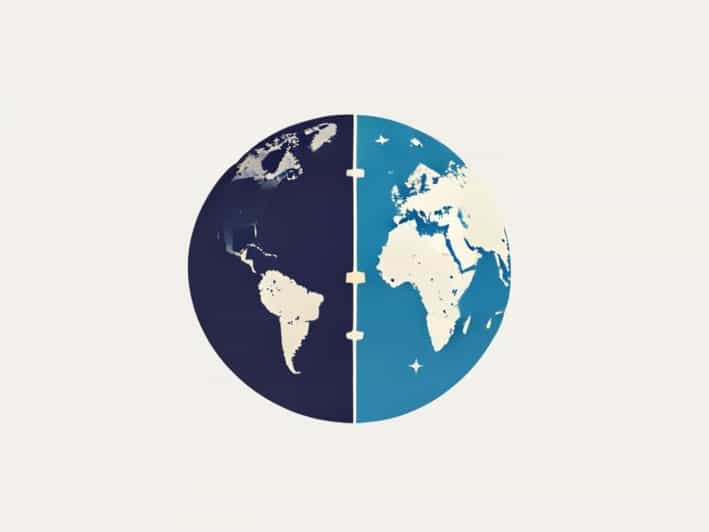
The Earth is divided into two halves known as the Northern Hemisphere and the Southern Hemisphere, each with unique characteristics that influence climate, seasons, biodiversity, and human activities. Understanding the differences between these two hemispheres is essential for a wide range of disciplines, including geography, meteorology, ecology, and even culture. While the Equator serves as the primary boundary separating the Northern and Southern Hemispheres, the effects of this division extend far beyond a simple line on a map, influencing weather patterns, ocean currents, agricultural cycles, and even the way people experience holidays and seasonal changes around the world.
Geographical Division
The Northern and Southern Hemispheres are divided by the Equator, an imaginary line located at 0 degrees latitude. Everything north of the Equator belongs to the Northern Hemisphere, while everything south falls within the Southern Hemisphere. The Northern Hemisphere contains the majority of the Earth’s landmass, including continents such as North America, Europe, and most of Asia, along with parts of Africa. The Southern Hemisphere, by contrast, is dominated by oceans, with continents such as South America, Australia, and portions of Africa and Antarctica.
Land and Water Distribution
- Northern HemisphereContains roughly 68% of the world’s land area, resulting in a higher population density and more developed nations.
- Southern HemisphereDominated by oceans, with about 81% of its area covered by water, which influences its climate and weather systems.
Climate Differences
The distribution of land and water between the hemispheres has a profound impact on climate. The Northern Hemisphere experiences more extreme temperature variations because land heats and cools faster than water. Consequently, summers can be very hot and winters extremely cold in many northern regions. The Southern Hemisphere, with its larger oceanic areas, tends to have more moderate temperatures and less pronounced seasonal extremes.
Seasonal Variations
One of the most noticeable differences between the hemispheres is the timing of the seasons. Seasons are opposite between the two hemispheres due to the tilt of the Earth’s axis. For instance
- When it is summer in the Northern Hemisphere (June to August), it is winter in the Southern Hemisphere.
- Spring in the Northern Hemisphere (March to May) corresponds to autumn in the Southern Hemisphere.
- This seasonal contrast affects agriculture, tourism, and cultural events in both hemispheres.
Ocean Currents and Weather Patterns
Ocean currents and atmospheric circulation differ significantly between the hemispheres, shaping local climates and influencing global weather. The Coriolis effect, caused by Earth’s rotation, makes winds and currents rotate clockwise in the Northern Hemisphere and counterclockwise in the Southern Hemisphere. This difference affects oceanic gyres, storm formation, and precipitation patterns worldwide.
Examples of Hemisphere-Specific Phenomena
- The Northern Hemisphere often experiences more cyclonic storms and hurricanes in regions like the Atlantic and Pacific Oceans.
- The Southern Hemisphere sees fewer hurricanes but experiences cyclones in areas such as the Indian Ocean and South Pacific.
- Monsoon patterns in South Asia are influenced by Northern Hemisphere landmass heating, while Southern Hemisphere weather is moderated by large oceanic areas.
Biodiversity and Ecosystems
The distribution of land and water also affects biodiversity. The Northern Hemisphere, with extensive landmasses, hosts diverse temperate and polar ecosystems, including forests, grasslands, and tundra. The Southern Hemisphere, dominated by oceans and tropical regions, supports unique marine ecosystems, rainforests, and distinct wildlife such as kangaroos, penguins, and a variety of marine mammals. These differences have implications for conservation, agriculture, and human settlement patterns.
Species Adaptation
Species in each hemisphere have adapted to the specific climate and environmental conditions. For example
- Northern Hemisphere animals, like polar bears, are adapted to cold climates and seasonal fluctuations.
- Southern Hemisphere wildlife, like koalas and penguins, have evolved to survive in diverse habitats ranging from tropical forests to icy Antarctic regions.
Human Population and Culture
Most of the world’s human population resides in the Northern Hemisphere, which includes major economic, political, and cultural centers. This concentration of population has influenced global trade, technological development, and cultural exchange. The Southern Hemisphere, while less densely populated, offers rich cultural diversity and traditions, often shaped by indigenous communities and colonial history. Seasonal differences also affect holidays and celebrations, such as Christmas occurring during summer in the Southern Hemisphere and winter in the Northern Hemisphere.
Economic Implications
The distribution of population and resources between hemispheres affects global economics. The Northern Hemisphere, with extensive industrialization and urban centers, dominates manufacturing, finance, and technological innovation. Meanwhile, the Southern Hemisphere, with abundant natural resources and oceans, plays a crucial role in agriculture, fisheries, and energy production.
Astronomical and Navigational Differences
Observing the sky also reveals differences between the hemispheres. The Northern Hemisphere features prominent constellations such as the Big Dipper and Polaris, the North Star, while the Southern Hemisphere offers views of the Southern Cross and other southern celestial features. Navigators, astronomers, and even casual stargazers notice these distinctions, which have historically influenced exploration and navigation routes.
Daylight Variation
Daylight hours vary more extremely in the Northern Hemisphere due to the larger landmass and greater range of latitudes. In polar regions, summer days can last for nearly 24 hours, while winter nights are similarly prolonged. The Southern Hemisphere experiences these variations too, but the presence of extensive oceans moderates extreme temperatures and daylight effects in coastal areas.
Understanding the differences between the Northern and Southern Hemispheres provides valuable insights into climate, biodiversity, human activity, and cultural practices. The Northern Hemisphere, with its vast landmasses, experiences more extreme temperature fluctuations, hosts the majority of the human population, and is home to diverse ecosystems shaped by temperate and polar climates. The Southern Hemisphere, dominated by oceans, enjoys milder climates, unique ecosystems, and distinctive cultural experiences shaped by seasonal contrasts and geographical isolation. Recognizing these differences helps us appreciate the complex interactions between geography, climate, life, and human societies, highlighting the ways in which location profoundly shapes the environment and human experience across the globe.