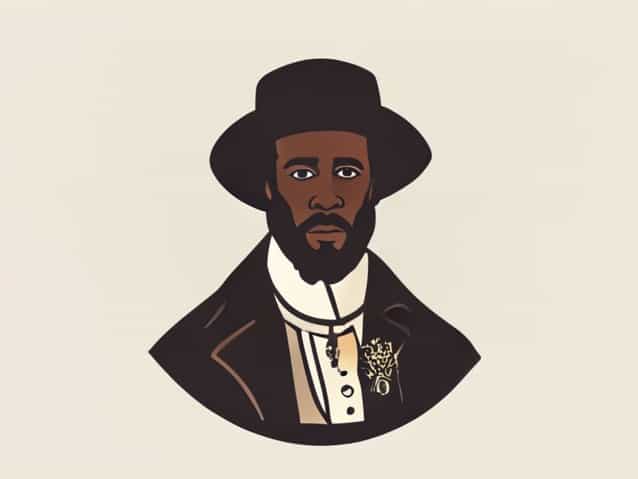
In the story of the American Revolution, certain names stand out as symbols of courage and sacrifice, and Crispus Attucks is one of them. He is remembered as the first person killed in the Boston Massacre of 1770, an event that sparked outrage and pushed the colonies closer to open rebellion against British rule. Yet many people still wonder, what did Crispus Attucks do to become such a powerful figure in history? By exploring his life, his actions on that fateful night, and his legacy, we can better understand why Attucks is celebrated as a hero of freedom.
The Life of Crispus Attucks Before the Boston Massacre
Before the events that made him famous, Crispus Attucks lived a life that reflected the diversity and struggle of colonial America. He was of mixed heritage, believed to be of African and Native American descent. Born around 1723 in Massachusetts, Attucks likely grew up in a society where slavery and racial discrimination shaped everyday life. Some accounts suggest that he may have been enslaved during his early years before eventually gaining his freedom.
After gaining independence from bondage, Attucks worked as a sailor and a laborer. He spent much of his time at sea, which gave him not only a livelihood but also exposure to the political tensions between Britain and its colonies. As a sailor, he was familiar with the grievances many workers had against British authorities, especially regarding taxes and restrictions imposed on trade.
Boston in 1770 Tensions Rising
By the late 1760s, Boston was a city on edge. British troops had been stationed in the city to enforce laws and taxes that many colonists opposed, such as the Townshend Acts. The presence of soldiers created constant friction with local residents. Colonists felt their freedoms were being trampled, while British soldiers often resented their postings and competed with locals for work and resources.
This tense environment set the stage for the confrontation that would eventually make Crispus Attucks a central figure in American history. Workers, sailors, and everyday citizens increasingly clashed with soldiers, and the smallest spark could ignite violence.
The Night of the Boston Massacre
On March 5, 1770, tensions exploded in what became known as the Boston Massacre. A crowd of colonists gathered near the Customs House, taunting and throwing objects at a group of British soldiers. Among the crowd was Crispus Attucks, who had arrived with a group of sailors and laborers. Accounts differ on the exact sequence of events, but Attucks was at the front line of the confrontation.
As the situation escalated, British soldiers opened fire into the crowd. Crispus Attucks was the first to fall, shot and killed instantly. Four other colonists also died that night, but Attucks’s death stood out as the moment that transformed a protest into a symbol of resistance. His presence at the front of the crowd, unarmed and defiant, marked him as both a victim and a leader in the eyes of many colonists.
What Did Crispus Attucks Do That Made Him a Hero?
Crispus Attucks’s role in the Boston Massacre was significant not because he carried a weapon or delivered a speech, but because he embodied the spirit of resistance. By standing at the forefront of the protest, he demonstrated courage in the face of danger. His actions sent a message that ordinary people-workers, sailors, and individuals of diverse backgrounds-were willing to risk everything for liberty.
What did Crispus Attucks do that mattered most? He became a martyr. His death galvanized public opinion against British authority. The Boston Massacre was widely publicized in newspapers and pamphlets, and Attucks was often mentioned by name. For many colonists, his sacrifice symbolized the cost of oppression and the need to fight back.
The Funeral and Immediate Impact
After the massacre, the victims, including Crispus Attucks, were given a public funeral in Boston. Thousands of people attended, turning the event into a powerful demonstration of unity against British rule. Attucks, a man of African and Native American heritage, was honored alongside white colonists, a rare moment of solidarity across racial lines in colonial America.
The funeral itself was a political statement. It showed that the community viewed the victims not just as casualties but as martyrs for freedom. For Attucks in particular, it was a recognition that his life and death carried significance far beyond the streets of Boston.
Legacy of Crispus Attucks in the American Revolution
Although he did not live to see independence, Crispus Attucks’s role in the American Revolution cannot be overstated. His death became a rallying point for those demanding change. Leaders of the revolution, such as Samuel Adams and Paul Revere, used the Boston Massacre as propaganda to highlight British cruelty and to unite the colonies in resistance.
Attucks’s image was later celebrated in speeches, writings, and art as the first casualty of the American struggle for independence. His mixed heritage also made him an important figure for African Americans and Native Americans, showing that the fight for freedom included people from all walks of life.
Crispus Attucks and African American History
For African Americans, Crispus Attucks represents one of the earliest examples of Black resistance in American history. At a time when slavery was still legal and widespread, his actions and sacrifice challenged stereotypes and reminded people that individuals of African descent were part of the nation’s founding struggle. He became an enduring symbol during later movements for abolition and civil rights, often invoked as proof of Black contributions to American freedom.
How Historians View Crispus Attucks
Historians debate some aspects of Crispus Attucks’s life, particularly his early years and whether he was enslaved or free when he moved to Boston. Despite these uncertainties, scholars agree that his role in the Boston Massacre was crucial. His decision to stand at the front of the crowd made him the most visible casualty, and his death carried symbolic weight that far exceeded his individual story.
Modern historians often emphasize his role as a working-class hero. He was not a wealthy landowner or a famous politician but an ordinary laborer who became extraordinary through sacrifice. This perspective helps us see the Revolution as not only a movement of elites but also one shaped by everyday people.
Why Crispus Attucks Still Matters Today
Crispus Attucks’s story continues to inspire discussions about freedom, equality, and courage. His legacy reminds us that history is shaped by individuals who may not hold power but who take bold actions in pivotal moments. His place in history also highlights the contributions of marginalized groups to America’s founding struggles.
Schools, monuments, and organizations across the United States bear his name, ensuring that new generations learn about his sacrifice. Each time his story is told, it reinforces the idea that the pursuit of liberty has always been a collective effort, built on the bravery of diverse individuals.
So, what did Crispus Attucks do? He stepped forward on a night of rising tensions, faced British soldiers, and gave his life in the name of liberty. By doing so, he became the first casualty of the American Revolution and a symbol of resistance that still resonates today. His death was not just an isolated tragedy but a turning point in history that helped ignite the flames of independence. Crispus Attucks’s story is a reminder that courage, even in ordinary individuals, can change the course of a nation.