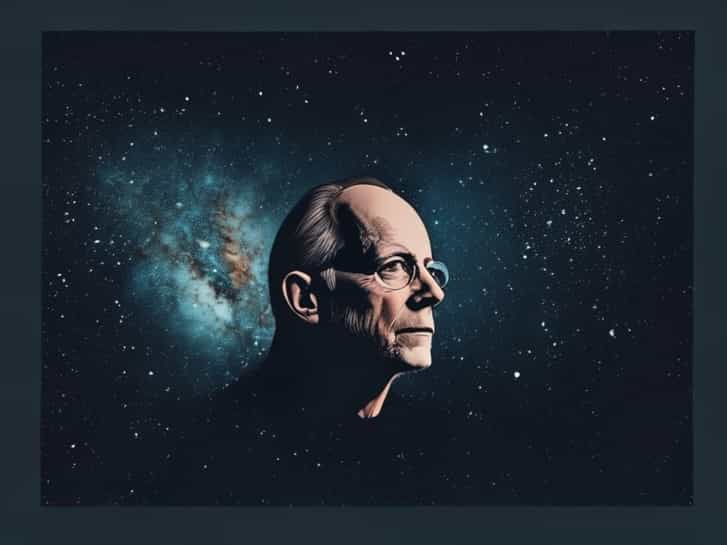
The vastness of the universe is a concept that challenges human imagination, and few scientists have explained it to the public as clearly and calmly as Brian Cox. Known for his ability to translate complex physics into understandable ideas, Brian Cox often invites audiences to step back from everyday concerns and consider their place in the cosmos. When he speaks about the immense scale of the universe, he does not do so to overwhelm, but to inspire curiosity, humility, and wonder. His reflections help people see the universe not as distant and abstract, but as deeply connected to human existence.
Brian Cox and His Approach to the Universe
Brian Cox is widely recognized for combining scientific accuracy with poetic language. When discussing the vastness of the universe, he avoids technical overload and instead focuses on perspective. His approach is grounded in physics, yet shaped by storytelling.
Rather than presenting the universe as a cold and empty space, he emphasizes its dynamic nature. Galaxies are moving, stars are being born and dying, and time itself flows in ways that stretch far beyond human experience.
Making the Vast Feel Accessible
One of Brian Cox’s strengths is his ability to make immense distances and timescales feel understandable. By comparing cosmic events to familiar experiences, he helps audiences grasp just how large the universe really is.
This accessibility is key to why his discussions about the universe resonate with a wide audience.
The Scale of the Universe
When Brian Cox speaks about the scale of the universe, he often begins with Earth’s place in it. Earth is a small planet orbiting an average star in a galaxy that contains hundreds of billions of stars. That galaxy, the Milky Way, is just one among hundreds of billions of galaxies.
This layered perspective highlights how vast the universe truly is. Distances are measured not in kilometers, but in light-years, the distance light travels in a year.
Understanding Cosmic Distances
Brian Cox explains that even the nearest stars are so far away that human travel to them remains impossible with current technology. Light from distant galaxies can take billions of years to reach us, meaning we see them as they were long ago.
This idea connects space and time, showing that looking into the universe is also looking into the past.
Time and the Universe
The vastness of the universe is not only about space, but also about time. Brian Cox often emphasizes cosmic time scales to show how brief human existence is in comparison.
The universe is approximately 13.8 billion years old. Human history occupies only a tiny fraction of that timeline. This contrast can feel unsettling, but Cox presents it as a source of perspective rather than insignificance.
Cosmic Time Versus Human Time
By placing human life within the broader timeline of the universe, Brian Cox encourages reflection. Our concerns, while important to us, exist within a much larger story.
This realization can lead to a deeper appreciation of the present moment.
The Beauty of Scientific Understanding
Brian Cox often highlights that understanding the universe scientifically does not remove its beauty. Instead, knowledge enhances wonder. Knowing how stars form or how galaxies evolve adds depth to the experience of observing the night sky.
He argues that science and awe are not opposites. They support each other.
From Equations to Emotion
Although physics relies on mathematics, Cox translates equations into ideas that evoke emotion. When he speaks of atoms forged in ancient stars, he connects human existence to cosmic processes.
This perspective reinforces the idea that humans are part of the universe, not separate from it.
Human Significance in a Vast Universe
A common question arises when discussing the vastness of the universe if the universe is so large, do humans matter? Brian Cox addresses this concern directly.
He suggests that meaning is not reduced by scale. Instead, human consciousness gives the universe a way to understand itself.
Small but Not Meaningless
While humans are physically small compared to the cosmos, our ability to observe, question, and understand gives us significance. Brian Cox emphasizes that awareness itself is remarkable.
This idea reframes smallness as part of a larger, meaningful picture.
The Search for Life Beyond Earth
The vastness of the universe also raises the possibility of life beyond Earth. Brian Cox often discusses how the enormous number of stars and planets increases the likelihood that life may exist elsewhere.
This does not diminish Earth’s importance. Instead, it highlights how precious and rare life might be.
Perspective on Earth
Seeing Earth as a small, fragile world in a vast universe can encourage responsibility. Brian Cox often points out that Earth is currently the only place known to support life.
This awareness can inspire care for the planet.
Technology and Expanding Human Vision
Modern telescopes and space missions have expanded our understanding of the universe. Brian Cox frequently acknowledges the role of technology in revealing cosmic vastness.
From space telescopes to ptopic accelerators, human tools extend our senses far beyond natural limits.
Seeing the Invisible
Advanced instruments allow scientists to detect radiation, ptopics, and structures that are invisible to the naked eye. This reveals a universe far richer and more complex than previously imagined.
Cox uses these discoveries to show that exploration is ongoing.
Emotional Impact of Cosmic Perspective
Brian Cox does not ignore the emotional impact of contemplating the universe. Feelings of awe, humility, and curiosity are natural responses to vastness.
Rather than dismissing these emotions, he treats them as important parts of human experience.
Wonder as a Scientific Motivation
Wonder drives exploration. Brian Cox often suggests that curiosity about the universe is a fundamental human trait.
This curiosity has led to scientific progress and deeper understanding.
Key Ideas Often Emphasized
- The universe is vast beyond everyday comprehension
- Space and time are deeply connected
- Scientific understanding enhances wonder
- Human life gains meaning through awareness
- Earth is precious within a vast cosmos
Brian Cox on the vastness of the universe offers more than scientific facts. It provides a way of thinking about existence that balances humility with meaning. By explaining the immense scale of space and time in accessible language, he helps people see themselves as part of a much larger story. The universe may be vast, but through understanding, curiosity, and awareness, humans find their place within it. This perspective does not make life smaller; it makes it richer, more connected, and more profound.