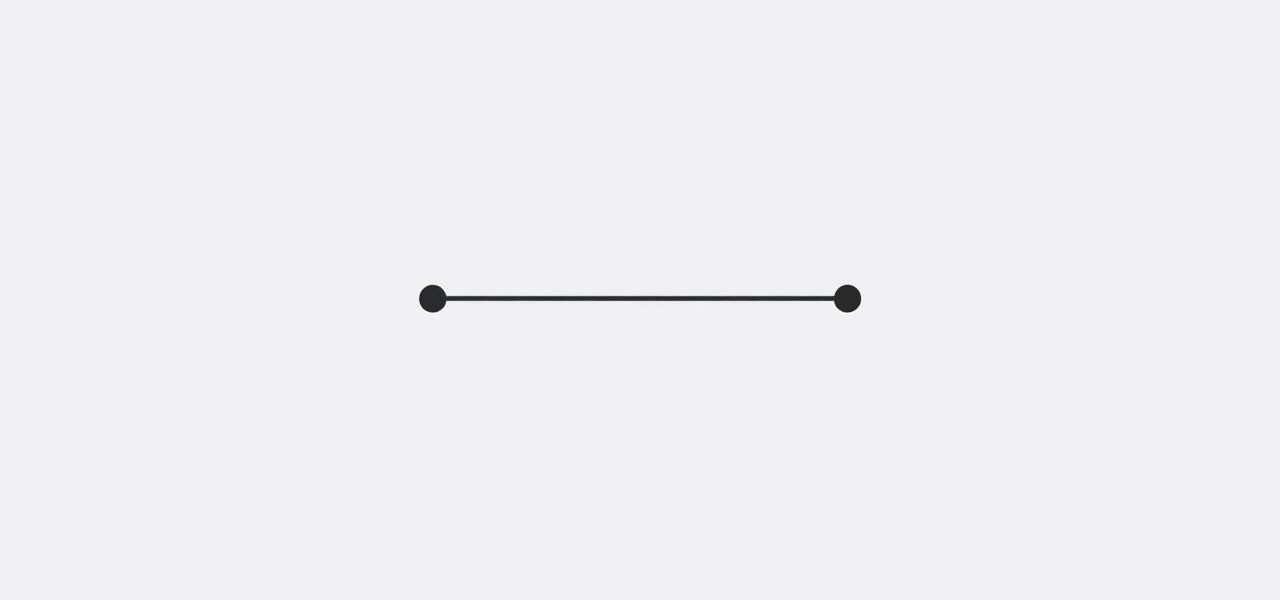
Drawing a line segment is a fundamental concept in geometry that helps build a strong foundation for more advanced mathematical ideas. A line segment is a part of a line that has two fixed endpoints and a definite length, unlike a line that extends infinitely in both directions. Understanding how to draw a line segment accurately is essential for students, engineers, and anyone dealing with geometric design. In this topic, we will explore what a line segment is, the tools required to draw it, and the correct methods to create one step by step.
What is a Line Segment?
A line segment is a straight path that connects two points and has a measurable length. It is different from a line, which extends endlessly, and from a ray, which has one endpoint and extends infinitely in the other direction. The two endpoints of a line segment define its exact position and length. For example, if the endpoints are labeled A and B, then the segment is represented as AB or BA.
Properties of a Line Segment
- It has two fixed endpoints.
- It is the shortest distance between two points.
- The length can be measured in units like centimeters, inches, or meters.
Tools Needed to Draw a Line Segment
Before learning the steps, it is important to have the right tools. Here is a list of basic tools required for drawing a precise line segment:
- A ruler or a straightedge for accuracy.
- A pencil for drawing.
- A compass (optional) for advanced constructions involving equal lengths.
Steps to Draw a Line Segment
Follow these simple steps to draw a line segment accurately:
- Step 1: Take a ruler and place it on the paper in a horizontal or vertical position as needed.
- Step 2: Mark two points, which will be the endpoints of your line segment. For example, label them A and B.
- Step 3: Connect the two points using a straight line drawn with the ruler.
- Step 4: Write the length of the segment if specified and label it as AB.
Example of Drawing a Line Segment of Specific Length
If the question asks you to draw a line segment of 6 cm, here is what you need to do:
- Place the ruler on the paper.
- Mark a point at 0 cm and label it as A.
- Mark another point at 6 cm and label it as B.
- Join A and B using the ruler to create the line segment AB.
Things to Keep in Mind
- Ensure the ruler is steady for an accurate straight line.
- Use a sharp pencil for clarity.
- Always measure from the zero mark on the ruler, not from the edge.
Applications of Line Segments
Line segments are not only essential in geometry but also play an important role in real-life applications. Some common uses include:
- In architectural drawings to represent walls and boundaries.
- In engineering diagrams for accurate measurements.
- In design and art for creating geometric patterns.
Difference Between Line, Line Segment, and Ray
Understanding the difference between these three is crucial for geometry:
- Line: Extends infinitely in both directions without endpoints.
- Line Segment: Has two fixed endpoints and a definite length.
- Ray: Has one endpoint and extends infinitely in one direction.
Measuring a Line Segment
Once you have drawn a line segment, you may need to measure its length. Use a ruler and align it properly with the segment. Read the measurement from the zero mark to the endpoint for accuracy.
Why is Accurate Measurement Important?
Precision in drawing and measuring line segments is important because any small error can lead to incorrect results in calculations, especially in geometry, engineering, and construction. For students, accuracy ensures good grades and a proper understanding of concepts.
Line Segment in Coordinate Geometry
In advanced mathematics, a line segment can also exist on a coordinate plane. The length of the line segment between two points (x₁, y₁) and (x₂, y₂) is calculated using the distance formula:
Length = √((x₂ – x₁)² + (y₂ – y₁)²)
This formula is widely used in analytical geometry, physics, and computer graphics.
Activities to Practice Drawing Line Segments
To master drawing line segments, here are some simple exercises:
- Draw line segments of lengths 2 cm, 4 cm, and 7.5 cm.
- Draw and label three different line segments: PQ, RS, and XY.
- Practice measuring existing line segments in your textbook diagrams.
Benefits of Learning to Draw Line Segments
- Builds foundational skills for geometry.
- Improves precision and attention to detail.
- Prepares students for advanced topics like triangles, polygons, and coordinate geometry.
Drawing a line segment may seem like a basic skill, but it is an essential building block for higher-level mathematics and real-world applications. By understanding its definition, properties, and the correct method to draw it, learners can develop confidence in geometry. Regular practice and accurate measurement are key to mastering this concept. Whether you are a student, a teacher, or a professional, the ability to draw a line segment accurately will always be useful in both academic and practical fields.