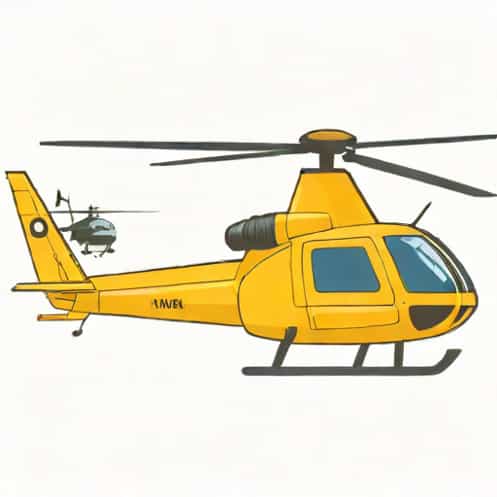
In modern aviation, the terms chopper and helicopter are often used interchangeably, yet there are subtle distinctions that enthusiasts, pilots, and general audiences may find interesting. Understanding these differences requires exploring the origins of the terms, their cultural usage, technical definitions, and practical applications. While both refer to rotorcraft capable of vertical takeoff and landing, nuances in design, functionality, and context can differentiate a chopper from a standard helicopter.
Origins of the Terms
The word helicopter originates from the Greek words helix, meaning spiral, and pteron, meaning wing. It was first coined in the early 20th century to describe aircraft with rotary wings capable of vertical lift. The term emphasizes the technical and engineering aspects of the aircraft, often used in formal contexts, aviation manuals, and official documentation.
On the other hand, chopper is a colloquial term that emerged in popular culture, particularly in the mid-20th century. It is often associated with military operations, law enforcement, and action movies, conveying a sense of speed, agility, and sometimes ruggedness. While all choppers are technically helicopters, not all helicopters are referred to as choppers in everyday language.
Design Differences
From a technical perspective, there is no strict mechanical distinction between a chopper and a helicopter, as both feature main rotors and tail rotors. However, the term chopper is often applied to helicopters that have undergone modifications or are designed for specific functions. For example, in military contexts, choppers might be armed, equipped for troop transport, or modified for reconnaissance missions.
Structural Features
- Standard HelicoptersTypically designed for civilian transport, medical evacuation, or commercial use. They prioritize stability, passenger comfort, and reliability.
- ChoppersOften customized for tactical purposes, emergency services, or entertainment media. They may feature additional equipment like winches, mounted guns, or specialized avionics.
- AppearanceChoppers are sometimes described as sleeker, more compact, or mean-looking in popular imagery, but this is largely subjective and culturally influenced.
Functionality and Usage
Function plays a crucial role in distinguishing between the two terms. Helicopters are versatile aircraft used in a variety of settings, from urban air transport and tourism to medical emergencies and search-and-rescue missions. Choppers, in popular and military contexts, often emphasize mobility, speed, and specialized missions.
Civilian vs. Military Applications
- Civilian HelicoptersTransport personnel, provide sightseeing tours, assist in firefighting, or carry out medical evacuations.
- Choppers in Military UseEngage in combat operations, troop deployment, aerial assault, and reconnaissance missions. They are often armored and equipped with weaponry.
- Law Enforcement and Rescue ChoppersPolice and emergency services may use choppers for surveillance, pursuit, or disaster response, highlighting agility and rapid deployment.
Cultural and Linguistic Differences
Language plays a significant role in how the terms are used. Helicopter is formal and precise, making it suitable for official communication, aviation documentation, and technical discussions. Chopper, meanwhile, carries a casual, energetic connotation and appears frequently in films, video games, and colloquial speech.
Media Influence
The term chopper gained widespread recognition through media portrayals, particularly in war films, police dramas, and action sequences. Helicopters shown as agile, fast-moving, or equipped for combat are often called choppers, reinforcing the association with dynamic or high-stakes scenarios. This distinction is less about technical differences and more about perception and context.
Technical Considerations
While the distinction between a chopper and a helicopter is largely linguistic and contextual, certain technical aspects can be emphasized when differentiating them. For instance, modifications such as reinforced rotor blades, advanced avionics, or specialized weapon systems might characterize a chopper in military terms. Civilian helicopters may focus on efficiency, safety, and passenger comfort.
Common Technical Features
- Rotary Wing SystemBoth helicopters and choppers rely on a main rotor to generate lift and a tail rotor for directional control.
- Landing GearStandard helicopters may feature skids or wheels, while choppers could be customized for quick landing on rugged terrain or tactical insertion.
- Engine and PerformanceMilitary or specialized choppers may use engines optimized for speed, agility, and operational range.
Popular Examples
Understanding real-world examples helps clarify the difference in perception and usage
- HelicoptersBell 206, Airbus H125, Sikorsky S-76 – often seen in civilian transport, medical airlift, or private aviation.
- ChoppersAH-64 Apache, UH-60 Black Hawk, Bell UH-1 Iroquois – associated with military, tactical, or high-action scenarios.
These examples illustrate that while all choppers are helicopters, the term chopper often implies a more specialized, aggressive, or action-oriented variant.
In summary, the difference between a chopper and a helicopter lies primarily in context, perception, and cultural usage rather than strict technical definitions. Helicopters represent the broader category of rotary-wing aircraft used for a variety of purposes, from civilian transport to emergency response. Choppers, by contrast, are a colloquial term often associated with military, law enforcement, or high-action scenarios, sometimes highlighting modifications or specialized functions. Understanding these distinctions helps clarify discussions in aviation, media, and casual conversation, while appreciating the versatility and significance of these remarkable aircraft. Whether encountering a helicopter in civilian service or a chopper in a dramatic film sequence, recognizing the nuances between the two enriches the appreciation of their design, function, and cultural impact.