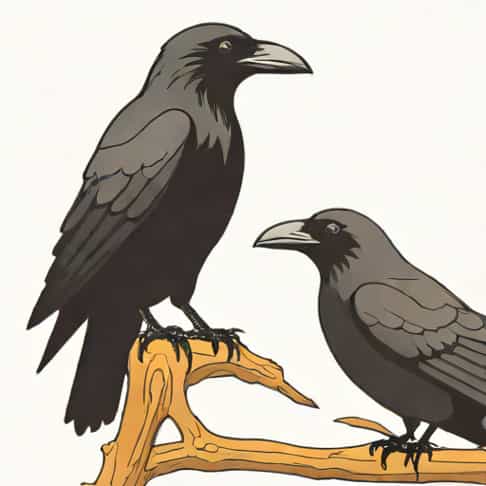
Birdwatchers and nature enthusiasts often encounter a variety of black birds in parks, forests, and urban areas, leading to questions about how to distinguish between similar species such as jackdaws, rooks, and crows. While these birds may appear alike at first glance due to their black plumage and similar behaviors, they each have unique characteristics, habits, and vocalizations. Understanding the differences between jackdaws, rooks, and crows is essential for identification, ecological studies, and appreciating the diversity of the Corvidae family. This topic explores their physical traits, behaviors, habitats, and other distinguishing features to help readers correctly identify these birds in the wild.
Introduction to Jackdaws, Rooks, and Crows
Jackdaws, rooks, and crows are all members of the crow family, known scientifically as Corvidae. This family is recognized for its intelligence, adaptability, and social behaviors. Despite their similarities, each species exhibits distinct traits that set them apart, including size, plumage details, beak shape, vocalizations, and social structure. Observing these differences can enhance birdwatching experiences and provide insight into the ecological roles these birds play.
Physical Characteristics
Jackdaws
Jackdaws are relatively small members of the crow family, typically measuring around 34-39 cm in length. They have a compact body, short tail, and a distinctive pale or silvery sheen on the back of their head and neck. Their eyes are strikingly pale, often described as pale blue or gray, which contrasts with their black plumage. The bill is short and slightly pointed, making it less robust than that of crows or rooks.
Rooks
Rooks are slightly larger than jackdaws, measuring approximately 44-46 cm in length. One of their most distinguishing features is the bare, grayish-white skin at the base of their long, pointed bill. This feature becomes more noticeable in adult birds. Rooks have a shaggy appearance around their legs and feathers, giving them a somewhat untidy look compared to crows. Their plumage is black with a slightly bluish sheen in sunlight.
Crows
Crows, depending on the species, are generally larger than both jackdaws and rooks, often measuring around 45-50 cm or more. They have strong, thick bills and entirely black plumage without the pale head or bare skin seen in jackdaws or rooks. Their tails are wedge-shaped, and their overall build is robust. Crows have a powerful appearance, which is often associated with their reputation for intelligence and problem-solving skills.
Vocalizations and Sounds
One of the easiest ways to distinguish these birds is through their vocalizations, as each species has a unique call.
Jackdaw Calls
Jackdaws produce high-pitched, chattering sounds, often described as kyaa or jack-jack. Their calls are softer and less harsh than those of crows and rooks, making them relatively easy to identify once familiar with their sound.
Rook Calls
Rooks have a distinctive cawing sound that is somewhat nasal and guttural. Their calls are often used in social interactions within flocks and during communal roosting. The sound can sometimes resemble crows, but with a sharper, more repetitive quality.
Crow Calls
Crows are known for their loud, resonant caw that carries over long distances. Their calls are deeper and more forceful than jackdaws or rooks. Crows are also capable of a wide variety of sounds, including mimicry of other birds or even human-made noises, showcasing their intelligence and adaptability.
Social Behavior and Flocking
Jackdaws
Jackdaws are highly social and often found in pairs or small groups. They are less aggressive than crows and rooks and frequently interact with other species. They are known to form tight-knit communities and can display cooperative behaviors such as sharing food or engaging in play.
Rooks
Rooks are extremely social and usually form large colonies, particularly during the breeding season. They are known to roost communally in rookeries, which can consist of dozens or even hundreds of birds. Their social structure helps protect them from predators and facilitates learning from one another.
Crows
Crows are also social, but they often display more territorial behavior compared to jackdaws and rooks. They can be seen in family groups or small flocks but are generally more independent outside the breeding season. Crows are known for their problem-solving skills, use of tools, and complex social interactions within their groups.
Habitat and Distribution
Jackdaws
Jackdaws are commonly found across Europe, western Asia, and North Africa. They favor open woodlands, farmlands, parks, and urban areas, often nesting in tree cavities, chimneys, or building structures.
Rooks
Rooks are widespread in Europe and parts of Asia. They prefer open fields, farmlands, and grasslands for foraging, while nesting occurs in large trees within communal rookeries. Rooks are less likely to be found in highly urbanized areas compared to jackdaws.
Crows
Crows have an extensive global distribution, including North America, Europe, Asia, and parts of Africa. They are highly adaptable, occupying diverse habitats from forests and grasslands to urban environments. Crows are opportunistic feeders and can thrive in nearly any area with available resources.
Diet and Foraging
While jackdaws, rooks, and crows are all omnivorous, there are subtle differences in their feeding habits.
Jackdaws
Jackdaws primarily feed on insects, seeds, fruits, and small invertebrates. They are known to forage in open fields and sometimes scavenge in urban areas, but they generally avoid carrion more than crows.
Rooks
Rooks forage mainly on soil for worms, insects, and other small invertebrates. They are less likely to scavenge human food compared to crows, focusing instead on agricultural fields and pastures for their sustenance.
Crows
Crows are highly versatile in their diet, consuming insects, small animals, seeds, fruits, carrion, and human leftovers. Their adaptability in feeding allows them to thrive in urban areas and take advantage of a wide range of food sources.
Although jackdaws, rooks, and crows share black plumage and belong to the same family, they are easily distinguishable through physical characteristics, vocalizations, behavior, habitat, and feeding habits. Jackdaws are small, social birds with pale eyes and a softer call. Rooks are medium-sized, colonial birds with a bare patch at the base of their beak and a distinctive nasal caw. Crows are larger, more robust, and highly intelligent birds with powerful caws and versatile feeding habits. Recognizing these differences enhances birdwatching, ecological understanding, and appreciation for the diversity within the Corvidae family. Observing these traits in the wild allows enthusiasts to identify each species confidently and understand their unique role in ecosystems.