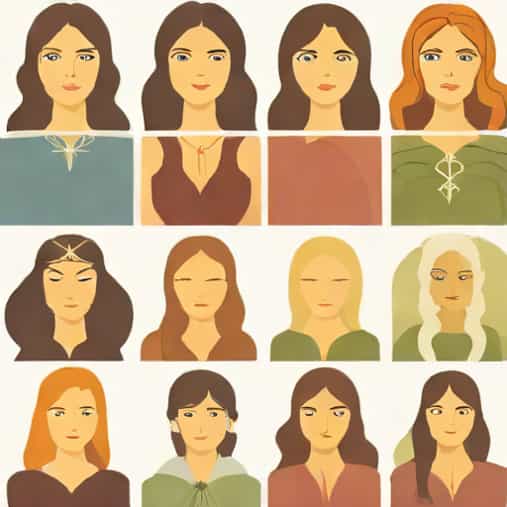
The world of Middle-earth is often remembered for its epic battles, heroic journeys, and ancient magic, yet beneath these grand elements lies a rich social structure shaped by lineage, duty, and honor. Among the most fascinating figures in this world are the fictional noblewomen in Lord of the Rings, whose roles extend far beyond simple titles. These women embody wisdom, resilience, and quiet strength, influencing the fate of kingdoms and the hearts of those around them. Their presence adds emotional depth and cultural richness to Tolkien’s legendary universe.
Nobility and Lineage in Middle-earth
Nobility in Middle-earth is closely tied to heritage, history, and responsibility. Noblewomen are often born into ancient houses that carry long memories of triumph and loss.
These women are not merely symbols of status; they serve as keepers of tradition and moral authority.
The Meaning of Nobility
In Tolkien’s world, nobility is not defined solely by power. It is defined by service, wisdom, and sacrifice.
This understanding shapes how noblewomen are portrayed.
Galadriel as a Noble Figure
Galadriel stands as one of the most iconic fictional noblewomen in Lord of the Rings. As the Lady of Lothlórien, she carries immense authority rooted in both lineage and personal strength.
Her nobility is expressed through wisdom, restraint, and foresight.
Power Through Wisdom
Unlike rulers who command through force, Galadriel leads through insight and moral clarity.
Her choices reflect centuries of experience.
Arwen and the Burden of Choice
Arwen Undómiel represents a different kind of nobility, one shaped by love and sacrifice. As an elf of high lineage, she is connected to ancient royal bloodlines.
Her decision to embrace mortality defines her character.
Love as a Noble Act
Arwen’s choice to give up immortality is an act of courage. It reflects a deep commitment to her values.
This choice elevates her beyond tradition.
Éowyn and Noble Defiance
Éowyn of Rohan is a noblewoman whose story challenges expectations. As a member of the royal house, she is bound by duty and social limits.
Yet she longs for honor on the battlefield.
Breaking Traditional Roles
Éowyn’s decision to fight defies convention. Her courage reshapes what nobility means in Rohan.
She proves that valor is not limited by gender.
Noblewomen Beyond the Main Narrative
While some noblewomen appear directly in the main story, others exist in the broader lore. These characters add historical depth.
They influence events through lineage and legacy.
Women of Ancient Houses
Many noblewomen are remembered through genealogies and songs. Their marriages and alliances shaped kingdoms.
Even without direct appearances, their impact remains.
The Role of Noblewomen in Politics
Political influence in Middle-earth is often subtle. Noblewomen exert power through counsel, alliances, and example.
Their voices guide decisions behind the scenes.
Diplomacy and Influence
Marriage alliances and counsel played key roles in maintaining peace.
Noblewomen often served as bridges between realms.
Cultural Expectations and Limitations
Despite their status, noblewomen face expectations. They are often expected to preserve tradition and stability.
This creates internal conflict.
Duty Versus Desire
Characters like Éowyn and Arwen struggle between personal desire and social duty.
This tension adds emotional realism.
Strength Without Domination
One defining trait of fictional noblewomen in Lord of the Rings is their strength without domination. They do not seek control through fear.
Instead, they inspire loyalty.
Quiet Authority
Authority is shown through presence and wisdom. This quiet power shapes outcomes.
It contrasts with darker forms of rule.
Symbolism of Light and Hope
Noblewomen often symbolize hope during dark times. Their presence reassures others.
This symbolism is consistent throughout the story.
Light in Shadow
Galadriel’s realm and Arwen’s choices represent light resisting darkness.
These symbols reinforce the theme of endurance.
Noblewomen in Different Races
Middle-earth includes elves, men, and other races, each with its own traditions. Noblewomen reflect these differences.
Yet common values unite them.
Elven and Human Perspectives
Elven noblewomen often emphasize longevity and memory. Human noblewomen focus on mortality and change.
This contrast enriches the narrative.
The Importance of Choice
Choice defines nobility in Tolkien’s work. Noblewomen are often placed at crossroads.
Their decisions carry lasting consequences.
Choosing Compassion Over Power
Many noblewomen reject domination. They choose compassion, even when power is available.
This choice defines true nobility.
Influence on Male Characters
Noblewomen influence male characters through guidance and emotional grounding.
They provide balance.
Partnership Rather Than Subordination
Relationships are built on mutual respect. Noblewomen are not passive figures.
They shape outcomes alongside their counterparts.
Legacy and Memory
The legacy of noblewomen continues beyond the events of the story. Songs and histories preserve their memory.
This reflects Tolkien’s emphasis on remembrance.
Immortality Through Story
Even mortal characters achieve a form of immortality through legend.
Noblewomen are central to this tradition.
Modern Interpretations and Appreciation
Modern readers and viewers often revisit these characters with fresh perspectives. The noblewomen resonate with contemporary values.
Their strength feels timeless.
Why They Still Matter
These characters challenge simplistic portrayals of power. They show leadership rooted in empathy.
This message remains relevant.
The fictional noblewomen in Lord of the Rings are essential to the richness of Middle-earth. Through wisdom, courage, and sacrifice, they shape history in ways both visible and subtle. Their nobility is defined not by dominance, but by integrity and choice.
By exploring their stories, readers gain a deeper understanding of Tolkien’s vision of leadership and humanity. These noblewomen stand as enduring symbols of strength, hope, and the quiet power of doing what is right.