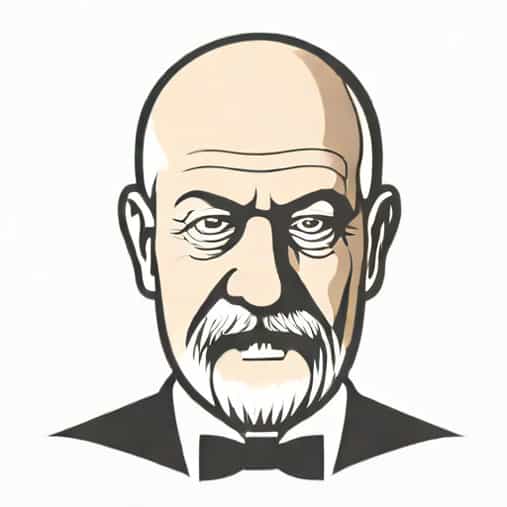
Sigmund Freud is one of the most influential figures in the history of psychology, and his ideas continue to shape discussions about the human mind today. When people ask how did Sigmund Freud develop his theory, they are often curious about the personal experiences, scientific influences, and cultural context that led him to create psychoanalysis. Freud did not develop his theories overnight. Instead, they evolved gradually through years of medical practice, observation, self-reflection, and debate with colleagues.
Early Life and Educational Background
Sigmund Freud was born in 1856 in what is now the Czech Republic. From an early age, he showed strong intellectual abilities and a deep interest in learning. He studied medicine at the University of Vienna, where he was exposed to biology, neurology, and philosophy.
Freud’s early education played a crucial role in shaping his thinking. He was particularly interested in how the brain worked and how physical processes might explain human behavior.
Influence of Medical Training
Freud initially trained as a neurologist. His early research focused on the anatomy of the nervous system, which influenced his belief that mental processes had underlying causes, even if they were not immediately visible.
Work with Patients and Clinical Observations
One of the most important answers to how did Sigmund Freud develop his theory lies in his clinical work. Freud treated patients suffering from hysteria, anxiety, and other psychological symptoms that had no clear physical cause.
By listening carefully to his patients’ stories, Freud noticed patterns in their thoughts, memories, and emotional conflicts. These observations led him to believe that unconscious processes played a major role in behavior.
The Role of Case Studies
Freud relied heavily on detailed case studies. Instead of large experiments, he focused on in-depth analysis of individual patients. This approach allowed him to explore the complexity of the human mind.
The Influence of Josef Breuer
A significant influence on Freud’s early thinking was his collaboration with Josef Breuer, a physician who used a method known as the talking cure. Breuer found that patients experienced relief when they talked about traumatic memories.
This idea deeply impressed Freud and became a foundation of psychoanalysis.
The Talking Cure and Catharsis
Through the talking cure, Freud observed that bringing unconscious memories into conscious awareness could reduce psychological distress. This insight helped him develop techniques such as free association.
The Development of the Unconscious Mind Concept
One of Freud’s most famous contributions is the concept of the unconscious mind. He believed that many thoughts, desires, and memories are hidden from conscious awareness but still influence behavior.
This idea was revolutionary at the time and challenged traditional views of human rationality.
Levels of Consciousness
Freud proposed that the mind consists of different levels
- The conscious mind, containing current thoughts
- The preconscious, holding accessible memories
- The unconscious, containing repressed desires
Self-Analysis and Personal Reflection
Another key factor in how did Sigmund Freud develop his theory was self-analysis. Freud closely examined his own dreams, memories, and emotional experiences.
He believed that by understanding himself, he could better understand others.
The Interpretation of Dreams
Freud viewed dreams as a window into the unconscious. He argued that dreams express hidden desires through symbols. His work on dream analysis became a cornerstone of psychoanalytic theory.
Influence of Culture and Society
Freud lived in a conservative society where open discussion of sexuality was limited. This cultural environment influenced his belief that many desires were repressed due to social norms.
He saw psychological conflict as a result of tension between instinctual drives and societal expectations.
The Structure of Personality
As Freud’s ideas evolved, he developed a structural model of personality consisting of the id, ego, and superego.
This model helped explain internal conflicts and moral struggles.
Id, Ego, and Superego Explained
According to Freud
- The id represents instinctual desires
- The ego balances reality and impulses
- The superego represents moral standards
Psychosexual Stages of Development
Freud believed that personality develops through a series of psychosexual stages during childhood. Each stage focuses on a different area of pleasure.
Unresolved conflicts at any stage, he argued, could influence adult personality.
Stages and Their Significance
These stages included oral, anal, phallic, latent, and genital stages. Freud used this framework to explain long-term patterns of behavior.
Criticism and Refinement of His Theory
Freud’s theories were controversial and often criticized by contemporaries and later psychologists. Some argued that his ideas lacked scientific evidence.
Despite criticism, Freud continued refining his theories throughout his life.
Debates with Other Thinkers
Freud engaged in intellectual debates with colleagues, some of whom later developed their own theories. These discussions helped shape and challenge psychoanalysis.
Legacy and Lasting Impact
Understanding how did Sigmund Freud develop his theory also involves recognizing his lasting impact. His ideas influenced psychology, literature, art, and popular culture.
Even those who disagree with Freud often build upon or react against his work.
Why Freud’s Method Still Matters
Freud emphasized listening, interpretation, and empathy. These principles continue to influence modern therapeutic approaches.
His focus on the unconscious changed how people think about motivation and behavior.
Key Factors in Freud’s Theory Development
- Medical and neurological training
- Clinical observation of patients
- Collaboration with other physicians
- Self-analysis and dream interpretation
- Cultural and social influences
So, how did Sigmund Freud develop his theory? The answer lies in a combination of scientific curiosity, clinical experience, personal reflection, and cultural context. Freud’s theories emerged gradually as he explored the hidden layers of the human mind.
While controversial, his ideas opened new ways of thinking about psychology and human behavior. Freud’s journey shows how observation, reflection, and persistence can lead to theories that shape entire fields of study for generations.