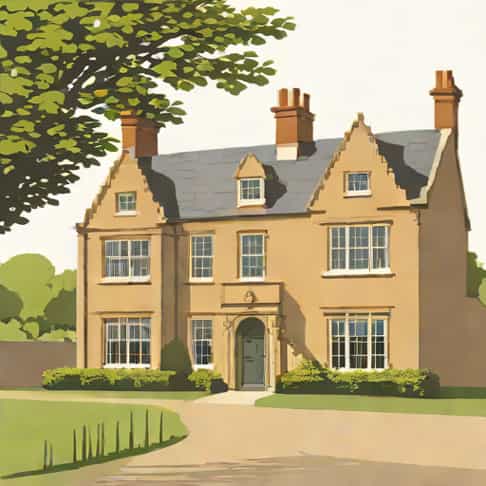
Justine Picardie and The Old Rectory in Norfolk have become closely linked in the minds of readers who enjoy literary memoirs, quiet English landscapes, and reflective writing about home and history. The story of this house is not simply about bricks and gardens, but about memory, creativity, and the emotional weight that old buildings can carry. Through her writing, Picardie transforms a rural property into a living narrative that resonates with readers interested in place, identity, and the passage of time.
Justine Picardie as a writer and observer
Justine Picardie is known for her thoughtful, understated style and her ability to blend personal experience with cultural and historical insight. She has written biographies, memoirs, and essays that often explore grief, family, and artistic legacy. Her work is not hurried or sensational; instead, it invites readers to slow down and reflect.
This approach makes her writing about The Old Rectory in Norfolk especially compelling. Rather than presenting the house as a luxury property or a simple countryside retreat, she frames it as a space shaped by lives lived before her and by her own evolving relationship with it.
The Old Rectory in Norfolk as a setting
The Old Rectory in Norfolk is more than a physical location. It represents a specific kind of English rural life, marked by changing seasons, long histories, and a deep sense of continuity. Rectories often carry layers of social and spiritual history, having once been central to village life.
In Picardie’s writing, the Norfolk rectory becomes a quiet witness to time. The creaking floors, aging walls, and surrounding landscape all contribute to a mood that feels both comforting and slightly melancholic.
Why Norfolk matters
Norfolk itself plays an important role in shaping the atmosphere of the story. Known for its flat landscapes, big skies, and sense of remoteness, Norfolk offers a contrast to busy urban life. This setting supports themes of reflection and retreat that run through Picardie’s work.
The county’s slower pace allows space for thought, memory, and creative work. In this way, The Old Rectory in Norfolk is inseparable from its wider environment.
Home as a concept in Picardie’s narrative
One of the strongest themes connected to Justine Picardie and The Old Rectory Norfolk is the idea of home. Rather than presenting home as something fixed or easily defined, Picardie explores it as a process. Living in an old house means engaging with its past while trying to make space for the present.
This tension appears in small details maintenance tasks, changes in the garden, and moments of solitude. These everyday experiences become meaningful reflections on belonging and impermanence.
The emotional layers of an old house
Old houses often invite introspection, and The Old Rectory is no exception. Picardie’s writing suggests that such buildings hold emotional residue, even if it cannot be explained rationally. The sense of previous lives, joys, and sorrows lingers.
Rather than being unsettling, this awareness adds depth. It encourages respect for what came before and attentiveness to the present moment.
Memory and imagination
The Old Rectory in Norfolk becomes a place where memory and imagination intersect. Picardie does not claim to know every story connected to the house, but she allows herself to imagine them. This imaginative engagement brings warmth to the narrative.
It also reflects how people often relate to historic homes, filling gaps in knowledge with emotional understanding.
Writing, solitude, and rural life
For many writers, solitude is essential, and rural settings often provide it. Picardie’s experience at The Old Rectory suggests that distance from urban noise can sharpen perception. Silence, rather than being empty, becomes full of small sounds and subtle changes.
This environment supports careful observation, which is a hallmark of her style. The rhythm of rural life shapes the rhythm of the prose.
- Quiet mornings and long afternoons
- Seasonal changes reflected in mood
- A slower, more deliberate pace of living
The garden and the natural world
The garden surrounding The Old Rectory in Norfolk is another important element. Gardens in literary writing often symbolize care, continuity, and renewal. Tending a garden connects the present inhabitant to those who planted and pruned before.
Picardie’s attention to plants, weather, and growth reinforces the theme of time passing gently rather than dramatically.
Historical awareness without nostalgia
Although history is central to the story of The Old Rectory, Picardie avoids heavy nostalgia. She does not idealize the past or present it as simpler or better. Instead, she acknowledges complexity.
This balanced approach allows readers to appreciate history without becoming trapped by it. The house is respected, not romanticized beyond recognition.
The Old Rectory as a creative anchor
For Justine Picardie, The Old Rectory in Norfolk functions as a creative anchor. It provides stability during periods of emotional uncertainty and change. Having a place rooted in history can be grounding, even when personal life feels unsettled.
This idea resonates with many readers who see their own homes as sources of comfort rather than status.
Why readers connect with this story
Readers are drawn to Picardie’s writing about The Old Rectory because it reflects universal experiences. While few people live in historic rectories, many understand the desire for a place that feels meaningful.
The story speaks to those who appreciate quiet narratives, where significance emerges from small moments rather than dramatic events.
Literary significance of place-based writing
Place-based writing has a long tradition in English literature, and Picardie’s work fits naturally within it. By focusing on The Old Rectory in Norfolk, she contributes to a genre that values attentiveness, restraint, and emotional honesty.
Such writing reminds readers that landscapes and buildings shape human experience as much as people shape them.
Final reflections on Justine Picardie and The Old Rectory Norfolk
The connection between Justine Picardie and The Old Rectory in Norfolk is not about ownership alone, but about engagement. Through careful observation and reflective prose, she turns a physical space into a meaningful narrative.
For readers interested in literature, history, and the quiet power of place, this story offers a gentle but lasting impression. It shows how an old house, when truly inhabited and understood, can become part of a writer’s inner life as well as their work.