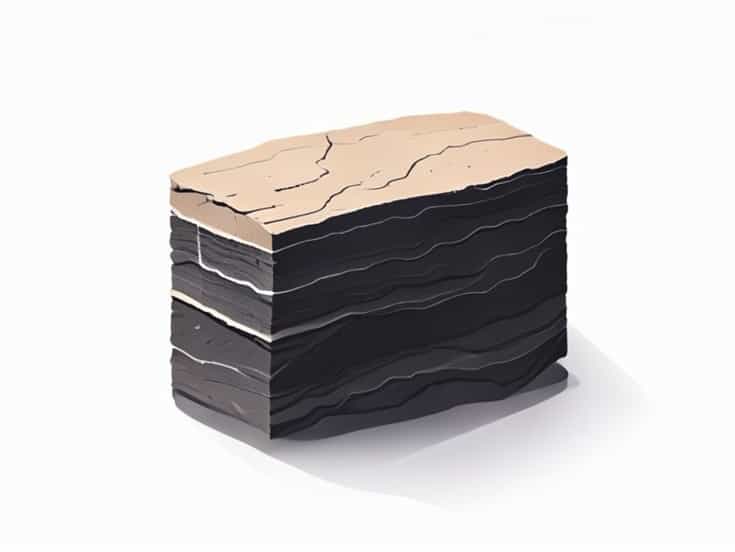
Understanding the structure and history of the Earth’s crust is an essential part of geology. One of the most important tasks for geologists is to correlate rock layers, which means identifying layers of rock that were formed at the same time in different locations. Correlating rock layers helps scientists reconstruct the geological history of a region, determine the age of rock formations, and locate important natural resources such as minerals, oil, and groundwater. There are multiple methods to correlate rock layers, each providing valuable information about the age, composition, and environment of deposition of these layers.
Introduction to Rock Layer Correlation
Rock layer correlation is a fundamental practice in stratigraphy, the study of rock layers and layering. Correlation allows geologists to match rock sequences from one location to another, even if the layers are separated by miles or disrupted by geological processes like faulting or folding. By understanding how rock layers relate to one another across regions, scientists can piece together a timeline of geological events and the history of the Earth. Correlation also helps in identifying patterns in sedimentation, volcanic activity, and fossil distribution, which can provide insights into past climates and ecosystems.
Why Correlation is Important
Correlating rock layers is important for several reasons
- It allows geologists to determine the relative age of rock formations.
- It helps identify regional and global geological events, such as mass extinctions or volcanic eruptions.
- It assists in locating natural resources like petroleum, coal, and groundwater.
- It provides a framework for understanding the geological history of an area.
One Method to Correlate Rock Layers Fossil Evidence
One widely used method to correlate rock layers is through the study of fossils, a technique known as biostratigraphy. Fossils are the preserved remains or traces of organisms that lived in the past, and they provide critical clues about the age and environment of rock formations. By examining the types of fossils present in a layer of rock, geologists can determine whether that layer corresponds to layers in other locations that contain the same fossils.
How Fossil Correlation Works
Fossil correlation works based on the principle of faunal succession. This principle states that fossil organisms succeed one another in a definite and recognizable order through geological time. Certain species existed for relatively short periods but were widespread geographically, making them excellent markers for correlating rock layers. These species are known as index fossils. By identifying index fossils in different rock formations, geologists can establish that those formations were deposited during the same time period, even if the rocks are separated by large distances.
Steps in Using Fossils to Correlate Rock Layers
The process of using fossils for correlation typically involves several steps
- Careful examination and identification of fossils in rock samples.
- Comparing the fossils with known index fossils in geological databases or reference materials.
- Determining the relative age of the rock layer based on the presence of specific fossils.
- Matching the fossil assemblages from different locations to establish correlation.
Advantages of Using Fossils for Correlation
Using fossils to correlate rock layers has several advantages
- Fossils provide precise relative dating of rocks within a geological period.
- They allow for correlation over long distances, even across continents in some cases.
- They offer insights into past environments and climate conditions.
- Fossil correlation can reveal evolutionary patterns and the appearance or disappearance of species over time.
Limitations of Fossil Correlation
While fossil correlation is a powerful method, it does have limitations. Not all rock layers contain fossils, especially igneous or metamorphic rocks, which are formed under conditions that destroy organic remains. Additionally, some fossils may be rare or poorly preserved, making identification difficult. In some cases, environmental factors such as erosion or non-deposition may result in gaps in the fossil record. Therefore, fossil correlation is often used in combination with other methods, such as radiometric dating or lithologic correlation, to provide a more complete understanding of rock layers.
Combining Fossil Correlation with Other Methods
To improve accuracy, geologists often combine fossil evidence with other correlation methods. For example
- Lithologic correlation involves comparing the physical characteristics of rock layers, such as color, grain size, and mineral composition.
- Radiometric dating provides absolute ages for rock layers using the decay rates of radioactive isotopes.
- Magnetostratigraphy examines the record of Earth’s magnetic field reversals preserved in rocks.
By combining these methods with fossil evidence, geologists can achieve more precise correlations and construct detailed geological timelines.
Examples of Fossil Correlation in Practice
Fossil correlation has been used in many significant geological studies. For instance, the correlation of marine fossils in sedimentary rock layers across Europe helped geologists identify the sequence of events during the Jurassic and Cretaceous periods. Similarly, the study of ammonite fossils has allowed scientists to correlate rock layers across multiple continents, providing insights into ancient marine environments and continental drift. Fossil correlation has also been essential in oil exploration, where identifying rock layers of the same age helps locate potential petroleum reservoirs.
Tips for Effective Fossil Correlation
For geologists and students who want to use fossil correlation effectively, the following tips are useful
- Always carefully document fossil locations and rock layer characteristics.
- Use multiple fossil species when possible to improve correlation accuracy.
- Cross-check fossil data with other correlation methods to confirm findings.
- Keep updated reference materials on index fossils and their known age ranges.
One method to correlate rock layers is the use of fossil evidence, or biostratigraphy, which relies on the principle of faunal succession and the presence of index fossils. This technique allows geologists to match rock formations across different locations and reconstruct the geological history of regions. While fossil correlation has limitations, such as the absence of fossils in some rocks, it remains a cornerstone of stratigraphy and has numerous practical applications in understanding Earth’s history and locating natural resources. When combined with other methods like lithologic comparison and radiometric dating, fossil correlation provides a powerful tool for scientists to explore and understand the ancient world preserved in the layers of rock beneath our feet.