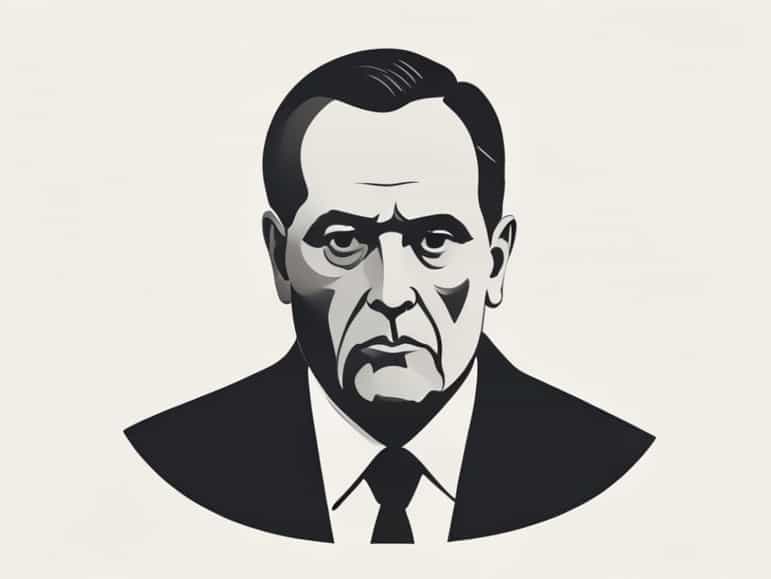
George Orwell’s political views continue to fascinate readers because they were shaped not only by ideas but also by personal experience, moral struggle, and a deep sense of justice. His writing reflects a lifelong attempt to understand power, corruption, and the responsibilities of ordinary people. By exploring his political philosophy, one gains a clearer sense of why his novels remain so influential and why discussions about freedom, totalitarianism, and social equality still rely on his insights. His political beliefs were not fixed in a simple category; rather, they evolved through travel, hardship, and firsthand encounters with oppression.
Orwell as a Democratic Socialist
The core of George Orwell’s political views can be best described as democratic socialism. He believed strongly in social justice, economic fairness, and the need for ordinary people to have real political power. However, his socialism was far from authoritarian. He rejected any system that allowed the ruling class-whether wealthy elites or rigid party officials-to control the lives of others.
For Orwell, democratic socialism meant improving society through equality, transparency, and the protection of individual rights. He wanted a system where workers were treated fairly, where economic exploitation was reduced, and where democracy could thrive without being overshadowed by propaganda or oppression.
Opposition to Totalitarianism
Perhaps the most famous aspect of George Orwell’s political perspective is his absolute hatred of totalitarianism. His experiences and observations convinced him that unchecked political power corrupts absolutely. Totalitarian governments, in his view, destroyed truth itself by controlling language, history, and thought.
Why He Opposed Totalitarian Systems
- They suppress freedom of speech.
- They rely on propaganda to control the population.
- They create fear through surveillance and punishment.
- They eliminate individuality and personal dignity.
- They rewrite reality to maintain power.
His novels1984andAnimal Farmreflect these concerns, showing how quickly political ideals can be twisted when leaders care more about maintaining control than helping their people. Orwell believed that political honesty was essential, and he warned against any movement that placed ideology above humanity.
Influence of His Early Life on His Political Views
Orwell’s political journey began long before he became a writer. His years in the British colonial police force in Burma exposed him to the harsh realities of imperialism. Seeing how colonial systems controlled and mistreated local populations pushed him toward anti-imperialist beliefs. He came to view imperialism as morally corrupt, built on inequality and exploitation.
This early disillusionment helped shape his later support for the rights of working people and his belief that political systems should uplift rather than suppress human beings.
His Experience in the Spanish Civil War
One of the most significant influences on Orwell’s political thinking came from fighting in the Spanish Civil War. He joined a militia aligned with anti-fascist and socialist groups, motivated by a desire to stop authoritarian forces from spreading across Europe.
What he witnessed in Spain deeply changed him. He saw bravery and solidarity among ordinary people, but he also witnessed betrayal, propaganda, and infighting among factions that were supposedly on the same side. He saw left-wing groups turning on each other and learned how easily political movements could be corrupted from within.
Key Lessons Orwell Drew from Spain
- Political parties often hide their true motives behind slogans.
- Propaganda is used by all sides, not just enemies.
- Fear and suspicion grow quickly when power struggles begin.
- Fighting for justice requires confronting uncomfortable truths.
These experiences strengthened his belief in honesty, workers’ rights, and democratic socialism, while reinforcing his opposition to authoritarianism-even when it appeared on the left.
Orwell’s Views on Capitalism
Although Orwell was critical of totalitarian forms of socialism, he was equally critical of capitalism. He believed capitalism created extreme inequality and placed too much power in the hands of the wealthy. He saw how ordinary people struggled to survive while elites controlled resources and political influence.
However, unlike some socialists, he did not believe in abolishing personal property or destroying all economic competition. Instead, he wanted a balanced system that protected people from poverty and exploitation while preserving democratic freedoms.
Commitment to Free Expression
Another central element of Orwell’s political beliefs was his unwavering commitment to freedom of speech. He viewed truth as a cornerstone of a healthy society and believed political systems crumble when information is distorted or censored.
Why Free Expression Matters to Orwell’s Philosophy
- It allows citizens to question authority.
- It prevents governments from rewriting history.
- It protects scientific and intellectual progress.
- It makes political corruption easier to expose.
His essays often criticized newspapers, governments, and political movements that misled the public. He believed that without truth, democracy could not survive.
Orwell’s Anti-Authoritarian Values
A consistent theme in Orwell’s political views is his distrust of concentrated power. Whether discussing fascism, Stalinism, colonialism, or economic elites, Orwell argued that humans suffer when authority becomes centralized and unaccountable.
For Orwell, political systems should serve the people rather than force them into obedience. His writing warns readers to remain alert, question leaders, and guard their rights.
Why Orwell Resisted Political Labels
Although commonly described as a democratic socialist, Orwell resisted being placed into strict political categories. He disliked rigid party loyalty and believed that political thinking should be based on real-world experience rather than slogans or ideology. His independence sometimes frustrated both the political left and right, because he refused to defend ideas he thought were dishonest or harmful.
Instead of choosing sides blindly, he evaluated each political movement according to its impact on human freedom and fairness. This made his views complex, but also deeply consistent with his moral values.
Orwell’s Relevance Today
George Orwell’s political views remain relevant because they help readers understand how power operates in society. His warnings about censorship, propaganda, political manipulation, and inequality continue to resonate. Modern discussions of surveillance, freedom of speech, and government authority often reference the same concerns Orwell wrote about decades ago.
His commitment to ordinary people, distrust of corrupt systems, and belief in democratic socialism make his political philosophy both practical and idealistic. Through his essays, novels, and personal experiences, he left behind a political legacy that encourages people to think independently and defend truth.
George Orwell’s political views cannot be reduced to a single label, but the ideas that shaped his life are clear democratic socialism, opposition to totalitarianism, support for free expression, and concern for the dignity of ordinary people. His experiences in colonial Burma, the Spanish Civil War, and his observations of global politics shaped a political philosophy built on fairness and moral honesty. These principles continue to inspire readers who seek to understand the relationship between power, truth, and freedom.