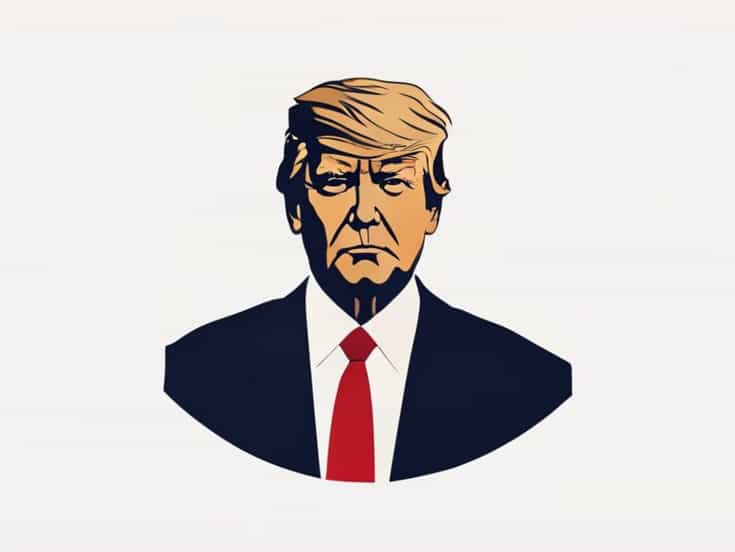
The president of the United States holds one of the most powerful and influential offices in the world. As the head of the executive branch of the U.S. federal government, the president plays a central role in shaping domestic policy, representing the nation abroad, and guiding legislative priorities. Knowing who the current president is helps people understand global news, international relations, and the political direction of the United States at any given time. It also reveals how democratic elections influence leadership in the world’s largest economy.
Current President of the United States
The current president of the United States is Donald J. Trump. He was inaugurated as the 47th President on January 20, 2025, after winning the 2024 presidential election. This marks his second nonconsecutive term in the nation’s highest office, a rare historical occurrence only previously achieved by Grover Cleveland.
Role and Responsibilities of the President
The president of the United States serves as both head of state and head of government, which means they are the chief executive authority in the federal system. According to the Constitution, the president’s responsibilities include
- Implementing and enforcing federal laws
- Serving as commander in chief of the armed forces
- Appointing federal judges, Cabinet members, and key officials
- Negotiating treaties with other nations (subject to Senate approval)
- Addressing Congress through messages such as the State of the Union
These functions give the president significant influence over national policy and governance.
Donald J. Trump’s Return to the Presidency
Donald Trump previously served as the 45th President from 2017 to 2021. After losing the 2020 election, he ran again and won the 2024 election, returning to office in January 2025. His second term is notable because nonconsecutive presidential terms are very rare in U.S. history.
Historic Significance of Trump’s Presidency
Trump’s presidency has been marked by intense public interest and frequent media attention. His first term brought debates on immigration, trade, and national policy, and his return in 2025 set the stage for continued political polarization in the country. His leadership style, decisions on foreign policy, and domestic agenda continue to shape how the United States engages with global partners as well as internal governance.
The U.S. Presidential Election Process
The president of the United States is elected through an indirect process involving the Electoral College. Voters in each state cast ballots for electors, who then vote for the presidential candidate. To win the presidency, a candidate must secure a majority of electoral votes. The system, rooted in the Constitution, reflects both population and state-level representation.
Four-Year Terms and Limits
A president serves a four-year term, beginning on Inauguration Day, which is usually January 20 following an election year. The Twenty-Second Amendment to the U.S. Constitution, ratified in 1951, limits a president to two terms in office. However, because Trump’s terms are nonconsecutive, he is counted as both the 45th and 47th president.
Vice President and the Line of Succession
The president is supported by the vice president, who is next in the line of succession. During Trump’s current term, his vice president is J.D. Vance, who assumed office alongside him in 2025. The vice president plays a key role in the Senate as its presiding officer and steps in if the president is unable to serve.
Important Powers and Limitations
While the president has broad authority, the office also has important checks and balances. The U.S. government is divided into three branches executive, legislative, and judicial. This division ensures that no single person or institution holds unchecked power. For example, Congress can pass laws, but the president can veto them. Conversely, the Supreme Court can review presidential actions for constitutional compliance.
Public Perception and Accountability
The president’s performance is continually evaluated by the public, media, and political institutions. Public opinion, electoral outcomes, and legislative interactions all influence how a president’s legacy is viewed. Transparency and accountability are central to democratic governance, with regular reporting, hearings, and public discourse contributing to how citizens understand presidential leadership.
Historical Context of the Office
The office of the president has evolved since its first holder, George Washington, took office in 1789. Since then, presidents have faced a range of challenges, from wars and economic crises to social movements and technological change. Each president’s era reflects the issues and priorities of their time, shaping both national direction and global influence.
Comparison With Previous Administrations
Comparing current and past presidents helps illustrate how the role adapts to different political landscapes. For example, Franklin D. Roosevelt served four terms during the Great Depression and World War II, while Barack Obama focused on healthcare reform and economic recovery. Trump’s leadership reflects ongoing debates over policy direction, national identity, and international engagement.
The President’s Daily Work
On a daily basis, the president engages in decision-making on national security, economic issues, and legislative priorities. This includes meeting with advisers, signing or vetoing bills, addressing national events, and working with foreign leaders. Behind the scenes, the executive office staff helps coordinate initiatives and manage the wide range of responsibilities tied to being the nation’s leader.
International Role of the U.S. President
The president represents the United States in diplomatic relations with other countries. This role includes attending international summits, negotiating agreements, and addressing global challenges such as climate change or security threats. The president’s voice on the world stage can influence alliances, trade, and global policy frameworks.
Understanding who is the president of the United States provides insight into current political leadership, national priorities, and the dynamics that shape both domestic and international affairs. As of now, Donald J. Trump serves as the 47th President of the United States following his inauguration in January 2025. The presidency remains an office of great responsibility and influence, reflecting the democratic will of the American people and guiding the country’s future direction.