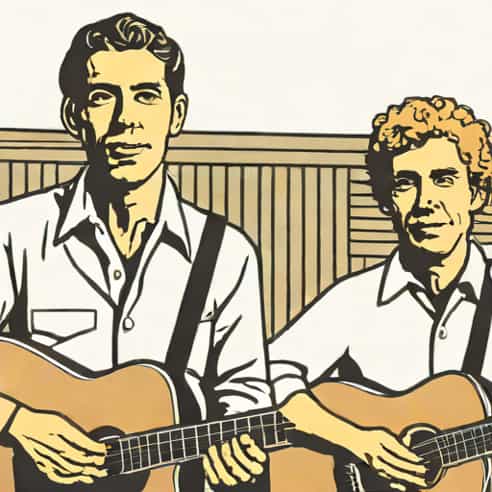
Simon & Garfunkel, one of the most iconic folk-rock duos in American music history, have left a lasting legacy with their poetic lyrics, harmonious melodies, and cultural impact. Among their celebrated catalog of songs, Mrs. Robinson stands out as a track that intertwines music with American cultural references, including a notable mention of Joe DiMaggio. The reference to Joe DiMaggio in the song has intrigued fans and scholars alike, linking a baseball legend with a folk music masterpiece, reflecting the duo’s ability to weave societal elements into their art. Understanding this connection requires a closer look at the song, its lyrics, the historical context, and the cultural significance of both Simon & Garfunkel and Joe DiMaggio.
The Song Mrs. Robinson
Released in 1968, Mrs. Robinson was originally composed for the soundtrack of Mike Nichols’ film The Graduate. The song quickly became an anthem of the late 1960s, capturing themes of disillusionment, societal change, and personal longing. Its upbeat yet reflective tone, paired with Paul Simon’s intricate lyricism and Art Garfunkel’s clear vocals, cemented it as a timeless piece. The song reached number one on the Billboard Hot 100, further establishing Simon & Garfunkel as cultural icons during a transformative period in American history.
Lyrical References to Joe DiMaggio
Within Mrs. Robinson, Paul Simon includes the line, Where have you gone, Joe DiMaggio? Our nation turns its lonely eyes to you. This lyric evokes a sense of nostalgia for a bygone era of American heroes and cultural stability. Joe DiMaggio, a legendary baseball player for the New York Yankees, symbolized excellence, integrity, and national pride. By invoking DiMaggio, Simon & Garfunkel connect the listener to a collective memory of mid-20th-century Americana, contrasting it with the societal turbulence of the 1960s.
Joe DiMaggio as a Cultural Icon
Joe DiMaggio, often referred to as Joltin’ Joe, played for the New York Yankees from 1936 to 1951. He was a three-time MVP and famously held a 56-game hitting streak, a record that remains unmatched in Major League Baseball. Beyond his athletic achievements, DiMaggio became a symbol of American optimism and perseverance. His marriage to Marilyn Monroe and his stoic public persona contributed to his status as a larger-than-life figure in American culture. Simon & Garfunkel’s mention of him in Mrs. Robinson taps into this mythology, using DiMaggio as a representation of American ideals and nostalgia.
Interpreting the Lyric
The line about DiMaggio can be interpreted on multiple levels. On one hand, it reflects a yearning for simpler, more stable times, a theme prevalent in much of Simon & Garfunkel’s work. On another level, it underscores the contrast between personal and societal disillusionment, as the 1960s were marked by political unrest, the Vietnam War, and generational shifts. By juxtaposing DiMaggio’s iconic status with the contemporary challenges of the 1960s, the duo crafts a lyric that is both poetic and socially resonant.
Simon & Garfunkel’s Connection to American Identity
Simon & Garfunkel’s music frequently explores the tension between individual experience and national identity. Songs like The Sound of Silence, America, and Mrs. Robinson address themes of alienation, change, and cultural introspection. By including Joe DiMaggio in Mrs. Robinson, the duo links personal nostalgia with collective memory, blending pop culture with folk storytelling. This technique elevates the song beyond a simple soundtrack piece, positioning it as a commentary on American society.
The Role of Nostalgia in the Song
Nostalgia in Mrs. Robinson functions as a tool to explore societal longing and personal reflection. The reference to Joe DiMaggio evokes a simpler, more heroic era in the American imagination. It encourages listeners to reflect on the passage of time, cultural shifts, and the evolving nature of national ideals. This layering of meaning contributes to the song’s enduring appeal, making it relevant across generations.
Impact of Mrs. Robinson on Popular Culture
Mrs. Robinson had a significant impact on popular culture, influencing music, film, and societal discourse. Its release alongside The Graduate amplified the film’s themes, while the Joe DiMaggio reference sparked conversations about American icons and their place in contemporary society. The song’s success also exemplifies Simon & Garfunkel’s skill in blending lyrical depth with accessible melodies, reaching a broad audience while conveying complex ideas.
Legacy of the Joe DiMaggio Reference
The mention of Joe DiMaggio in Mrs. Robinson has endured as a notable example of Simon & Garfunkel’s engagement with American culture. It has been analyzed in scholarly topics, music critiques, and pop culture retrospectives. The lyric demonstrates how a single cultural reference can encapsulate broader themes, linking music to historical and social context in a meaningful way.
Simon & Garfunkel’s Mrs. Robinson is more than a hit song from the late 1960s; it is a cultural artifact that captures the complexities of American life during a period of significant change. The reference to Joe DiMaggio enriches the song by invoking nostalgia, national identity, and the contrast between idealized heroes and contemporary challenges. Through their poetic lyricism and musical craftsmanship, Simon & Garfunkel created a work that continues to resonate, connecting listeners to both personal and collective memories. The integration of a baseball legend into a folk-rock anthem illustrates the duo’s ability to merge popular culture with deep social commentary, ensuring the song’s place in the canon of American music history.