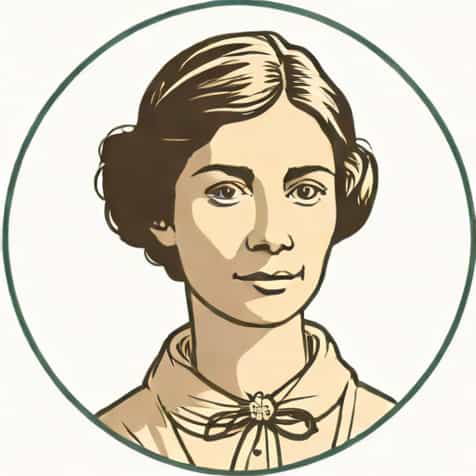
Emily Dickinson is one of the most fascinating figures in American literature, often remembered for her short yet deeply thought-provoking poems. Her work has sparked debates for generations about whether she belonged to the Romantic tradition or if she stood outside of it, shaping her own unique style. By examining her themes, style, and the philosophical undertones of her poetry, we can better understand how Dickinson engaged with Romanticism while also transcending it. The question of whether Emily Dickinson was a Romanticist is complex, as she both embraced and challenged the conventions of the movement in ways that made her writing timeless.
Understanding Romanticism as a Literary Movement
Before analyzing Emily Dickinson’s poetry, it is important to understand the essence of Romanticism. Romanticism was a literary and artistic movement that began in the late eighteenth century and flourished through the nineteenth century. It emphasized the importance of emotion over reason, celebrated nature, and explored the human imagination as a powerful source of truth. Romantic poets often used symbolism, personal reflection, and a sense of transcendence in their works.
Key characteristics of Romanticism included
- A deep appreciation for the beauty and power of nature.
- An emphasis on individuality and personal expression.
- Exploration of emotion, spirituality, and the sublime.
- A tendency to question traditional authority and societal norms.
- A fascination with death, immortality, and the mysteries of existence.
Emily Dickinson’s Place in the Nineteenth Century
Emily Dickinson lived during the mid-1800s, a time when Romanticism was still influential in both Europe and America, but was beginning to evolve into different literary movements such as Transcendentalism and Realism. American poets like Ralph Waldo Emerson and Walt Whitman were engaging with similar themes, yet Dickinson’s work was far more private, personal, and unconventional in style. While she never formally aligned herself with Romanticist circles, the spirit of Romantic thought is evident throughout her writing.
Romantic Themes in Dickinson’s Poetry
Emily Dickinson’s poems often reveal strong connections to Romantic ideals, even if she did not follow them in a straightforward way. Several of her recurring themes echo Romantic concerns, including
Nature as Inspiration
Like many Romantic poets, Dickinson found great inspiration in nature. Her poems frequently reference flowers, birds, the sky, and the seasons, not just as background scenery but as symbols of life, death, and eternity. Nature in her work reflects a sense of mystery and spiritual depth, aligning her with Romanticist reverence for the natural world.
Emotion and Inner Life
Dickinson’s poetry explores the intensity of personal emotions-love, fear, joy, and despair. Romanticism valued authenticity of feeling, and Dickinson fully embraced this through her intimate reflections on the human condition. Her poems often carry a raw, vulnerable quality that resonates with Romantic ideals.
Death and Immortality
One of the strongest Romantic elements in Dickinson’s poetry is her preoccupation with death and what lies beyond. Many of her most famous works meditate on the inevitability of death, the uncertainty of immortality, and the spiritual significance of life’s end. These themes were central to Romanticism, which frequently sought to explore the unknown and the sublime.
Innovations That Set Her Apart
While Dickinson shared many characteristics with Romanticist poets, she also deviated from their traditions in ways that make her unique. For example, Romantic poetry often employed rich, flowing language and lengthy verses, while Dickinson preferred concise lines, dashes, and unconventional capitalization. Her minimalist approach broke away from the grandeur of many Romantic works, offering a style that was distinct and ahead of her time.
Another way Dickinson diverged from Romanticism was through her tone. While Romantics often celebrated nature and the human spirit with optimism, Dickinson’s writing could be more skeptical, ironic, or questioning. Her poems rarely provided definitive answers, instead leaving space for ambiguity. This complexity has led some scholars to argue that she was closer to a proto-modernist than a pure Romanticist.
Comparisons with Other Romantic Poets
To better understand Dickinson’s connection to Romanticism, it is helpful to compare her with her contemporaries. For instance, William Wordsworth celebrated the beauty of nature as a moral and spiritual teacher. Dickinson, however, approached nature more personally, often using it as a metaphor for internal struggles or cosmic mysteries rather than a guide to truth.
Similarly, John Keats reflected on mortality and beauty, seeking transcendence through poetic imagination. Dickinson shared his fascination with death, but her treatment of the subject was starker, sometimes even unsettling, lacking the lush imagery that Keats employed. This difference in style shows that while Dickinson engaged with Romantic themes, she presented them in an idiosyncratic way that resisted easy categorization.
Transcendentalist Influences
Another reason why Dickinson does not fit neatly into Romanticism is her proximity to Transcendentalist thought. Figures like Emerson and Thoreau emphasized the individual’s spiritual connection to nature and self-reliance, which deeply influenced Dickinson. Her reclusive lifestyle and focus on inward reflection resonate with these ideals. However, she often expressed doubt rather than certainty, setting her apart from the more confident tone of Transcendentalist writings.
Romanticism or Beyond?
So, was Emily Dickinson a Romanticist? The answer depends on how strictly one defines the movement. If Romanticism is understood as a focus on nature, emotion, individuality, and mortality, then Dickinson clearly fits within that framework. Her poems express the depth of human feeling and grapple with the great questions of existence in a way that reflects Romantic values.
However, Dickinson was not a follower of tradition. Her style was highly original, her use of form experimental, and her perspective often more questioning than celebratory. She both inherited and challenged Romantic ideals, creating a body of work that cannot be confined to a single category. In many ways, she represents a transition between Romanticism and modern poetic sensibilities.
Legacy and Modern Interpretations
Today, Emily Dickinson is celebrated not just as a possible Romanticist, but as a poet who transcended labels. Her originality ensured that she influenced generations of writers who came after her. Scholars continue to debate her place in literary history, but whether classified as Romantic, Transcendentalist, or modernist, her work speaks powerfully to universal human concerns.
Her connection to Romanticism is undeniable, but it is her independence and refusal to conform that make her poetry enduring. She was deeply influenced by the currents of her time, yet she reshaped them into something entirely her own. That tension between tradition and innovation is what makes her one of the most remarkable poets in American literature.
Emily Dickinson’s relationship with Romanticism is complex, layered, and nuanced. While she shared many Romantic themes such as reverence for nature, fascination with death, and exploration of emotion, she also pushed boundaries through her unconventional style and skeptical tone. This blend of influence and originality makes it difficult to label her as purely a Romanticist. Instead, she should be seen as a poet who absorbed the spirit of Romanticism but transformed it into a distinct voice that continues to captivate readers today. Whether or not she was a Romanticist, her poetry remains one of the most significant contributions to American literature.