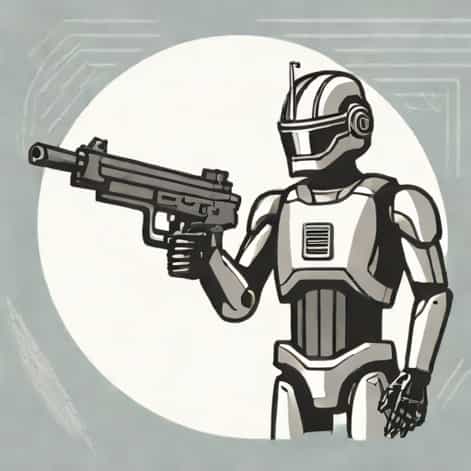
The phrase you disrupt public order immediately brings to mind the futuristic law enforcement world of RoboCop, where the line between chaos and lawfulness is sharply drawn. In the RoboCop universe, maintaining public order is not merely a duty; it is the foundation of societal stability. The phrase is emblematic of the challenges law enforcement faces in a technologically advanced and morally complex urban environment. RoboCop, as a symbol of both justice and authority, represents the ideal of restoring order in the face of disruption. Understanding this phrase requires an exploration of its implications in law, ethics, technology, and culture, particularly within the context of the iconic RoboCop franchise.
The Context of Public Order in RoboCop
RoboCop is set in a dystopian future where corporate interests, crime syndicates, and societal unrest intersect. Public order is constantly under threat, whether from gang violence, corporate corruption, or civil disobedience. The phrase you disrupt public order is more than a warning; it is a legal and moral categorization of behaviors that challenge societal norms. In the RoboCop narrative, disruptions to public order are met with swift intervention, often highlighting the tension between individual freedom and societal safety.
Understanding Public Order
Public order refers to the set of rules, norms, and laws that maintain societal stability and ensure that citizens can live safely and peacefully. Disruptions to public order can include riots, vandalism, organized crime, and actions that incite widespread fear or chaos. In RoboCop, the enforcement of public order is not only a legal requirement but also a symbol of corporate and governmental authority. This creates a complex dynamic where law enforcement is both protector and instrument of power.
RoboCop as a Guardian of Order
RoboCop embodies the concept of ultimate law enforcement efficient, unemotional, and technologically enhanced. As a cyborg, RoboCop operates without the moral hesitation and emotional bias that human officers may exhibit. His primary function is to uphold the law, and in doing so, he directly confronts individuals who disrupt public order. The phrase you disrupt public order is almost a programmatic declaration within his world, signaling imminent intervention against any act that threatens societal stability.
Technological Enforcement
RoboCop’s enforcement mechanisms are a blend of advanced robotics, artificial intelligence, and legal programming. This technology allows for precise identification of lawbreakers and immediate action against those who disrupt public order. It raises interesting ethical questions
- How much autonomy should law enforcement have in determining what constitutes a disruption?
- What is the balance between strict enforcement and civil liberties?
- Does technological enforcement enhance justice or risk authoritarian overreach?
These questions are central to the RoboCop universe and resonate in real-world discussions about surveillance, policing, and automated law enforcement systems.
Ethical Implications
The phrase you disrupt public order also reflects ethical considerations. In RoboCop, the line between right and wrong is often blurred by corporate interests and moral ambiguity. When an individual is accused of disrupting public order, the ethical question arises are they genuinely endangering society, or are they challenging an unjust system? RoboCop, programmed to uphold the law without bias, often confronts these dilemmas, highlighting the tension between ethical reasoning and strict legal enforcement.
Moral Dilemmas in Enforcement
- Individual rights vs. societal safety Ensuring public order can sometimes infringe on personal freedoms.
- Corporate influence RoboCop operates within a corporate-controlled police force, complicating notions of justice.
- Automated justice The reliance on programming raises questions about accountability and moral judgment.
These ethical considerations make the phrase you disrupt public order more than a legal assertion; it becomes a lens through which audiences examine justice, morality, and power in a high-tech society.
Cultural Resonance
RoboCop has become a cultural icon because it explores the consequences of technology, corporate control, and law enforcement in ways that remain relevant. The phrase you disrupt public order resonates because it reflects the universal struggle between order and chaos. It is a reminder that maintaining societal stability is both a legal and moral endeavor, requiring vigilance, fairness, and sometimes, difficult choices.
Representation in Media
- Film In the RoboCop films, this phrase is often echoed in scenes where crime is confronted, reinforcing themes of justice and authority.
- Comics and novels Expanded narratives explore the tension between public order and individual rebellion, providing a deeper understanding of societal dynamics.
- Video games Players embody RoboCop, actively enforcing public order, illustrating the phrase’s practical implications in an interactive context.
Through these media, the phrase becomes a touchstone for discussions about law, technology, and ethics in popular culture.
Legal Implications
In a legal sense, disrupting public order is considered a criminal offense in many jurisdictions, encompassing acts like rioting, incitement, and public disturbances. RoboCop’s programming reflects this legal framework, allowing him to respond to violations with precision and authority. The phrase serves as both a warning and a legal declaration, signaling to offenders that their actions are recognized as unlawful and that enforcement is imminent.
Enforcement Techniques
- Surveillance Identifying and monitoring potential disruptions before they escalate.
- Immediate intervention Using RoboCop’s capabilities to neutralize threats efficiently.
- Legal documentation Recording incidents for accountability and compliance with legal standards.
These techniques underscore the interplay between technology, law, and ethical responsibility, highlighting the comprehensive approach to maintaining public order in RoboCop’s world.
Psychological Impact on Society
The presence of a figure like RoboCop and the phrase you disrupt public order can have a profound psychological impact on citizens. It serves as both a deterrent to potential lawbreakers and a reassurance to law-abiding members of society. The knowledge that public order is actively monitored and enforced can reduce crime, foster a sense of security, and promote adherence to societal norms.
Fear and Respect
- Fear The threat of immediate intervention creates a powerful deterrent against disorderly behavior.
- Respect Citizens may develop respect for the rule of law and the authority figures who enforce it.
- Compliance The combination of fear and respect encourages voluntary compliance, enhancing societal stability.
The psychological dimension of public order enforcement illustrates how law, technology, and culture intersect to shape societal behavior.
The phrase you disrupt public order within the RoboCop universe embodies a complex intersection of law, technology, ethics, and societal dynamics. It signals the presence of authority, the enforcement of societal norms, and the ethical dilemmas inherent in maintaining stability. RoboCop’s role as a technologically enhanced enforcer highlights the tension between individual freedoms and collective security, prompting audiences to consider the balance between order and justice. Beyond its narrative function, the phrase resonates culturally, legally, and psychologically, illustrating the enduring importance of public order in both fictional and real-world contexts. Ultimately, you disrupt public order is not merely a warningit is a reflection of society’s ongoing struggle to maintain stability, protect its citizens, and navigate the ethical complexities of law enforcement in a technologically advanced world.