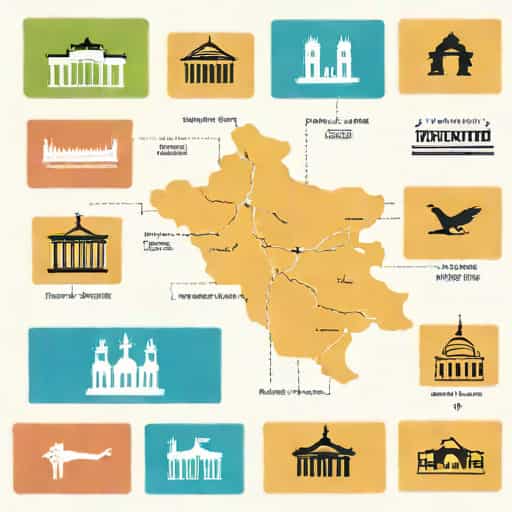
Jammu and Kashmir holds a unique place in India’s political and administrative structure, shaped by history, geography, and evolving governance frameworks. One important aspect of its democratic system is representation in the Indian Parliament through parliamentary constituencies. These constituencies define how citizens from different regions elect their representatives to the Lok Sabha, the lower house of Parliament. Understanding the list of parliamentary constituencies in Jammu and Kashmir helps clarify how political representation is distributed across the Union Territory and why these divisions matter in everyday governance.
Parliamentary Representation in Jammu and Kashmir
Parliamentary constituencies are territorial divisions created for the purpose of electing Members of Parliament. In Jammu and Kashmir, these constituencies reflect regional diversity, population distribution, and administrative boundaries. Each constituency elects one representative to the Lok Sabha, giving people a voice in national law-making and policy discussions.
As a Union Territory with legislative representation in Parliament, Jammu and Kashmir sends elected members to the Lok Sabha, ensuring participation in India’s democratic process at the national level.
Historical Context of Parliamentary Constituencies
The structure of parliamentary constituencies in Jammu and Kashmir has evolved over time. Changes in population, administrative status, and political reforms have influenced how constituencies are defined. Earlier arrangements were based on older administrative divisions, while more recent changes reflect updated demographic realities.
The most significant recent shift came after a delimitation exercise, which redrew constituency boundaries to better balance population representation and regional inclusion.
Current Number of Parliamentary Constituencies
At present, Jammu and Kashmir has five parliamentary constituencies for the Lok Sabha. These constituencies are spread across the Kashmir Valley, the Jammu region, and the mountainous areas connecting the two. Each constituency represents a distinct geographic and cultural zone.
The list of parliamentary constituencies in Jammu and Kashmir is designed to ensure that both urban centers and remote regions have a voice in Parliament.
List of Parliamentary Constituencies in Jammu and Kashmir
Srinagar Parliamentary Constituency
The Srinagar constituency covers the central part of the Kashmir Valley. It includes the city of Srinagar along with surrounding districts. As one of the most prominent constituencies, it represents an area known for its political awareness, economic activity, and cultural heritage.
This constituency often draws national attention due to its political significance and high voter engagement.
Baramulla Parliamentary Constituency
Baramulla constituency lies in the northern part of the Kashmir Valley. It covers several districts known for their diverse terrain, ranging from plains to mountainous regions. Agriculture, tourism, and cross-border trade have historically influenced the socio-economic life of this constituency.
Baramulla plays an important role in reflecting the concerns of northern Kashmir at the national level.
Anantnag-Rajouri Parliamentary Constituency
The Anantnag-Rajouri constituency is one of the most distinctive parliamentary constituencies in Jammu and Kashmir. It stretches across parts of southern Kashmir and the Rajouri-Poonch region in Jammu. This constituency was created through a reconfiguration to improve regional balance.
It represents a mix of cultural, linguistic, and geographic diversity, making it unique among the parliamentary constituencies in the Union Territory.
Jammu Parliamentary Constituency
The Jammu constituency covers major urban and semi-urban areas in the Jammu region. It includes the city of Jammu, which serves as a key administrative and economic hub. The constituency reflects issues related to urban development, infrastructure, and public services.
Jammu constituency often highlights the perspectives and priorities of the southern part of the Union Territory.
Udhampur Parliamentary Constituency
The Udhampur constituency spans hilly and mountainous districts in the Jammu region. It includes areas known for their strategic importance and rural character. Issues such as connectivity, development, and access to services are central to political discussions here.
This constituency represents the voices of people living in some of the most challenging terrains of Jammu and Kashmir.
Geographical and Cultural Diversity
The list of parliamentary constituencies in Jammu and Kashmir reflects the region’s extraordinary diversity. From the lakes and valleys of Srinagar to the rugged mountains of Udhampur, each constituency brings unique concerns and perspectives to Parliament.
This diversity makes representation both complex and essential, as policies must address varying needs related to climate, livelihood, and infrastructure.
Role of Delimitation in Constituency Formation
Delimitation is the process of redrawing constituency boundaries based on population data. In Jammu and Kashmir, this process aimed to create a more balanced representation between regions. The formation of the Anantnag-Rajouri constituency is a direct outcome of this effort.
Delimitation seeks to ensure that each Member of Parliament represents a roughly equal number of citizens, strengthening democratic fairness.
Why Parliamentary Constituencies Matter
Parliamentary constituencies are more than just electoral boundaries. They define how local issues reach the national stage. Through their elected representatives, people from Jammu and Kashmir can raise concerns related to development, security, education, and healthcare in Parliament.
Effective representation helps bridge the gap between regional needs and national policy-making.
Voter Participation and Representation
Voter participation varies across constituencies due to factors such as geography, weather, and political engagement. Despite challenges, elections in Jammu and Kashmir remain a vital part of democratic life.
Each parliamentary constituency plays a role in shaping political outcomes and influencing the direction of governance.
The list of parliamentary constituencies in Jammu and Kashmir provides insight into how democratic representation is structured in this diverse Union Territory. With five constituencies-Srinagar, Baramulla, Anantnag-Rajouri, Jammu, and Udhampur-the region ensures that different voices and perspectives are represented in the Lok Sabha.
Understanding these constituencies helps citizens and observers appreciate the complexity and importance of parliamentary representation in Jammu and Kashmir, where geography, culture, and politics intersect in meaningful ways.