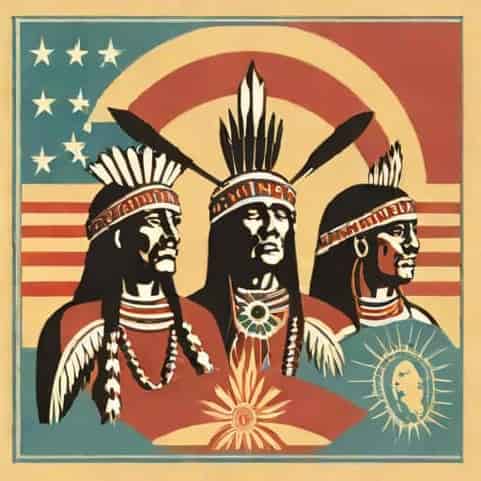
In the late 19th and early 20th centuries, the United States government implemented several policies aimed at assimilating Native Americans into mainstream American culture. One of the most significant legislative attempts to achieve this goal was the Dawes Act of 1887, also known as the General Allotment Act. This act sought to Americanize Native Americans by breaking up communal tribal lands and distributing parcels of land to individual Native American families. The underlying belief was that private land ownership and participation in agriculture would encourage Native Americans to adopt European-American cultural norms, abandon traditional tribal practices, and integrate into American society. Understanding the Dawes Act provides insight into the broader context of U.S. government policies toward Native Americans and the lasting impact of these policies on indigenous communities.
The Dawes Act of 1887
The Dawes Act, named after Senator Henry L. Dawes of Massachusetts, was signed into law by President Grover Cleveland in 1887. Its primary objective was to assimilate Native Americans by promoting private land ownership, encouraging farming, and dismantling the traditional communal landholding system that many tribes had maintained for centuries. Under the act, Native American tribal lands were surveyed and divided into individual allotments, usually ranging from 40 to 160 acres per family, with the remaining land declared surplus and sold to non-Native settlers.
Provisions of the Dawes Act
- Individual allotments of tribal land were assigned to Native American heads of households.
- Surplus lands not allotted to Native Americans were opened to white settlers through land sales or homesteading.
- Native Americans who accepted allotments were granted U.S. citizenship after 25 years.
- Tribal governments lost much of their authority over communal lands, weakening traditional political structures.
Aim of Americanization
The Dawes Act was designed to promote Americanization by encouraging Native Americans to adopt European-American ways of life. Policymakers believed that private land ownership would instill a sense of individual responsibility and self-sufficiency. Farming was promoted as a means to integrate Native Americans into the agrarian economy of the United States. Additionally, the act sought to erode tribal culture and social organization by undermining the communal land system, which was central to many Native American societies.
Methods of Cultural Assimilation
- Individual land ownership replaced collective tribal holdings, diminishing the influence of tribal leaders.
- Native Americans were encouraged to abandon traditional clothing, language, and customs in favor of Euro-American practices.
- Missionaries and government-run boarding schools were used to teach English, Christianity, and vocational skills, reinforcing assimilation.
- Native children were often removed from their families to attend these schools, further promoting cultural integration.
Impact on Native American Communities
The Dawes Act had profound and lasting effects on Native American communities. While the law aimed to integrate Native Americans into American society, it resulted in significant land loss, cultural disruption, and social challenges. Tribal lands, which had previously been held communally, were drastically reduced. Many Native Americans were unfamiliar with private land ownership and faced difficulties in farming, leading to economic hardship. The act also weakened tribal governments and undermined traditional social structures, leaving communities vulnerable to exploitation and marginalization.
Land Loss and Economic Consequences
Before the Dawes Act, Native American tribes collectively owned approximately 138 million acres of land. By 1934, due to allotment and the sale of surplus lands to non-Native settlers, Native Americans had lost over 90 million acres. This massive loss of land not only reduced economic self-sufficiency but also eroded the cultural and spiritual connection that tribes had with their ancestral territories. Many families struggled to farm their allotted plots, and some were forced to sell land to survive.
Cultural and Social Effects
The act’s emphasis on individualism over communal living disrupted traditional social structures. Tribal councils lost authority, elders’ roles diminished, and cultural practices were suppressed. Boarding schools and missionary programs further accelerated assimilation, often at the cost of Native languages, customs, and identity. The combination of land dispossession, economic hardship, and cultural suppression contributed to long-term social and psychological challenges for Native American communities.
Criticism and Legacy
The Dawes Act has been widely criticized by historians, scholars, and Native American leaders for its detrimental effects. While intended to integrate Native Americans into American society, it instead led to dispossession, cultural erosion, and deep socioeconomic inequalities. By prioritizing assimilation over respect for tribal sovereignty, the act inflicted lasting harm on indigenous communities. In response to these negative outcomes, the U.S. government eventually shifted its policies.
Shift in Policy
- The Indian Reorganization Act of 1934 marked a significant reversal of the Dawes Act’s policies.
- This act encouraged the restoration of tribal governments, promoted communal land ownership, and sought to preserve Native cultures.
- Federal authorities recognized the failures of forced assimilation and sought to provide more autonomy and support for Native American communities.
The Dawes Act of 1887 was the primary legislative attempt to Americanize Native Americans through the imposition of individual land ownership, farming, and cultural assimilation. While its intention was to integrate Native Americans into the broader American society, the act resulted in widespread land loss, economic hardship, and cultural disruption. By dismantling communal landholding and weakening tribal governance, the act had long-lasting consequences that shaped the social and economic landscape of Native American communities. Today, the legacy of the Dawes Act serves as a reminder of the complexities and challenges associated with forced assimilation policies, highlighting the importance of respecting indigenous sovereignty and cultural heritage.