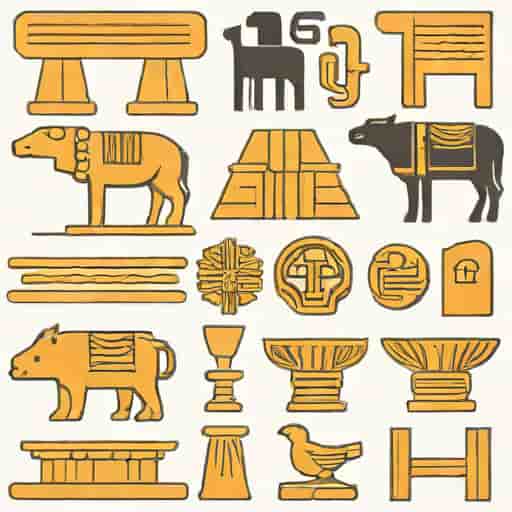
The ancient Egyptian writing system has fascinated historians, linguists, and enthusiasts for centuries, largely because of its intricate symbols and unique style of communication. Among the terms frequently discussed are hieroglyphs and hieroglyphics, which are often used interchangeably but actually have subtle differences in meaning. Understanding the distinction between these two terms can provide deeper insight into how the ancient Egyptians recorded their language, expressed religious and cultural ideas, and preserved their civilization’s history through writing. The study of these symbols sheds light on one of the oldest writing systems known to humanity and highlights the complexity and artistry of ancient communication methods.
Understanding Hieroglyphs
Hieroglyphs are the individual symbols or characters used in the ancient Egyptian writing system. Each hieroglyph represents a sound, idea, object, or combination thereof, functioning much like letters, words, or pictograms in modern writing. The term hieroglyph comes from the Greek words hieros, meaning sacred, and glyphein, meaning to carve, reflecting the sacred and often ceremonial use of these symbols in temples, tombs, and official inscriptions.
Function of Hieroglyphs
Hieroglyphs served multiple purposes in ancient Egyptian society. They were used for religious texts, monumental inscriptions, royal decrees, and decorative purposes. Each symbol could represent a single consonant (similar to an alphabetic letter), a combination of consonants (like a syllable), or a full word or concept (logograms). This versatility allowed scribes to convey complex ideas and maintain records of historical events, religious practices, and cultural achievements.
Visual Characteristics
Hieroglyphs are highly detailed and pictorial. They often depict animals, humans, objects, or abstract symbols, making them visually distinct from alphabetic scripts. For example, a hieroglyph of an owl represents the sound m, while a loaf of bread represents the sound t. The combination of these symbols could form words and sentences. The aesthetic appeal of hieroglyphs also contributed to their use in ceremonial contexts and monumental art.
Understanding Hieroglyphics
Hieroglyphics, on the other hand, refers to the entire system of writing that uses hieroglyphs. When we speak of hieroglyphics, we are discussing the method, style, or practice of writing with these symbols rather than the individual symbols themselves. Hieroglyphics encompasses the rules, grammar, and conventions that guided how hieroglyphs were combined to form meaningful texts.
Applications of Hieroglyphics
Hieroglyphics were used in religious texts, such as the Pyramid Texts and the Book of the Dead, as well as in inscriptions on monuments, tombs, and statues. This writing system was highly formal and often reserved for sacred or official purposes. Because of its complexity, writing in hieroglyphics required extensive training, and scribes dedicated years to mastering the system. The study of hieroglyphics also provides crucial information about ancient Egyptian culture, governance, and daily life, as it reflects societal values, religious beliefs, and historical events.
Hieroglyphics vs. Other Scripts
While hieroglyphics was the most formal writing system, Egyptians also developed other scripts derived from it, such as hieratic and demotic. Hieratic was a cursive form of writing used for religious documents and administrative texts, while demotic became a more simplified, everyday script for general purposes. Understanding the distinction between hieroglyphs and hieroglyphics helps clarify that hieroglyphs are the symbols themselves, whereas hieroglyphics refers to the complete writing system and its usage.
Common Confusions
One of the main reasons hieroglyphs and hieroglyphics are often confused is because the words sound similar and are used in overlapping contexts. Many people use hieroglyphics to describe the symbols themselves, but technically, this is not accurate. Hieroglyphs are the building blocks, while hieroglyphics is the structured system they form. Recognizing this distinction is important for scholars, students, and enthusiasts who study ancient Egyptian writing and culture.
Practical Example
For instance, an inscription on the wall of a tomb might feature a series of hieroglyphs representing the name of a pharaoh, a prayer, or a historical event. Individually, these symbols are hieroglyphs. When a scribe arranged them following grammatical rules and stylistic conventions to convey a complete message, that entire composition is considered hieroglyphics. This distinction clarifies discussions about translations, interpretations, and historical analysis of Egyptian texts.
Modern Implications
The difference between hieroglyphs and hieroglyphics also matters in educational and research contexts. Historians, linguists, and archaeologists often specify whether they are examining individual symbols or studying the overall writing system. This precision aids in understanding textual analysis, decoding ancient inscriptions, and preserving historical accuracy. The distinction also helps in teaching students and enthusiasts about the rich complexity of ancient Egyptian communication.
Impact on Culture and Legacy
Hieroglyphs and hieroglyphics have left a lasting legacy on both historical study and popular culture. Their intricate designs inspire art, design, and educational materials. Museums around the world showcase hieroglyphic inscriptions to illustrate the sophistication of Egyptian civilization. Additionally, the decipherment of hieroglyphics by Jean-François Champollion in the 19th century opened doors to understanding Egypt’s history, culture, and language in unprecedented detail. The distinction between the symbols and the system remains crucial in appreciating the depth and richness of this ancient writing form.
Educational Importance
Studying the difference between hieroglyphs and hieroglyphics provides students and researchers with a clearer framework for analyzing texts, interpreting historical records, and exploring linguistic development. It also highlights the ingenuity of ancient Egyptians in creating a writing system that combined artistry, functionality, and cultural significance. By distinguishing between the symbols and the system, learners gain a better understanding of how communication evolved and how ancient societies documented their world.
In summary, the distinction between hieroglyphs and hieroglyphics lies in the difference between individual symbols and the writing system as a whole. Hieroglyphs are the pictorial or symbolic characters used to convey sounds, ideas, or words, while hieroglyphics is the complete system of writing that organizes these symbols into meaningful texts. Understanding this difference enriches our appreciation of ancient Egyptian civilization, its culture, and its sophisticated methods of communication. The study of hieroglyphs and hieroglyphics continues to captivate scholars, artists, and enthusiasts, providing invaluable insights into one of humanity’s earliest and most visually striking writing systems.