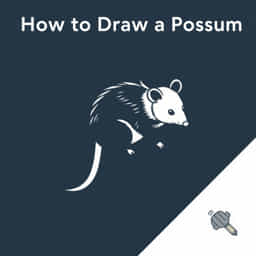
Drawing a possum can be a fun and rewarding artistic challenge. These unique marsupials have distinct features that make them instantly recognizable pointed snouts, round ears, long tails, and expressive eyes. Whether you’re creating a realistic wildlife sketch or a cute cartoon version, knowing how to draw a possum step by step helps you bring accuracy and personality to your work. This guide provides an easy and detailed approach, making it suitable for beginners as well as intermediate artists looking to improve their animal drawing skills.
Understanding the Anatomy of a Possum
Before starting your sketch, it’s essential to study the general structure of a possum. Observing the anatomy helps you understand proportions, key features, and posture. Possums typically have lean bodies, pointed faces, clawed feet, and long, hairless tails. Their fur is usually coarse, with shades of gray or white, and they have large, dark eyes and pink noses.
Key Features of a Possum
- Pointed, narrow snout with a small pink nose
- Large, rounded ears with minimal fur
- Thick body with short legs and visible claws
- Long, prehensile tail, often curled or hanging
- Shaggy fur texture, especially around the body and neck
Tools You’ll Need
Whether drawing traditionally or digitally, gather the right tools to create smooth lines and realistic shading:
- Pencil (HB for sketching, 2B-4B for shading)
- Eraser (kneaded or precision eraser for highlights)
- Paper (smooth or medium texture drawing paper)
- Blending stump or tissue (for soft shading)
- Pen or liner (optional, for outlining)
- Digital drawing tablet and stylus (for digital illustrations)
Step-by-Step Guide: How to Draw a Possum
Step 1: Sketch the Basic Shapes
Start with simple geometric shapes to build the possum’s form. Draw a horizontal oval for the body and a smaller circle connected to it for the head. Use a guideline down the center of the face to help place facial features evenly. Sketch a curved line extending from the back of the body to represent the tail’s flow.
Step 2: Add the Limbs and Tail
Draw lines and ovals to place the legs. Possums have short, clawed legs that are slightly curved. Add small circles for joints to give flexibility to the sketch. For the tail, extend the line from the previous step into a curling or draping shape and make it taper toward the tip. Possum tails are long, hairless, and often appear rope-like.
Step 3: Define the Head and Face
Shape the head by refining the circle into a pointed snout. Draw a small round nose at the tip, and then sketch the mouth line slightly under it. Add two large, rounded ears on top of the head. Then, draw the eyes on either side of the facial centerline, slightly forward on the head. Use reference images if necessary to get the spacing correct.
Step 4: Outline the Body and Fur Texture
Using the basic shapes as a guide, draw the final outline of the body. Create a slightly uneven line to suggest fur texture, especially along the back, belly, and neck. Keep the limbs short and narrow, ending in visible claws or toes. Possum fur is coarse and patchy, so add small jagged lines or hatching to give it a realistic appearance.
Step 5: Draw the Tail and Finalize the Limbs
Refine the tail, making sure it appears smooth and tapering. Add texture with cross-hatching or soft lines along its length. For the limbs, ensure each paw has visible digits and claws. Possums have sharp, gripping claws for climbing, so include a slight curve to them. Finish the outline of the limbs, paying attention to joint placement and posture.
Step 6: Add Facial Details
Enhance the face by detailing the eyes with a small highlight in each to create a lifelike shine. Darken the nose and outline the mouth softly. You can also lightly shade under the eyes and snout to give depth. Add a few thin lines inside the ears to show their shape and texture. For a more expressive possum, adjust the eye shape or angle of the head slightly.
Step 7: Shade and Add Depth
Begin shading the possum using a soft pencil like 2B or 4B. Start with the areas under the belly, around the neck, and along the back. Use directional strokes to follow the fur’s flow. Blend with a tissue or blending stump to soften harsh lines, especially on the tail and body. Add darker shadows beneath the legs and on the opposite side of the light source.
- Use lighter shading for fur highlights
- Add contrast around the face to draw attention
- Use cross-hatching for the tail or paws for texture
Step 8: Add Background Elements (Optional)
If desired, sketch a simple background to place the possum in context. Possums are often found near trees, fences, or trash bins. Draw a tree branch or grassy patch beneath them to enhance realism. Keep the background light so the possum remains the focal point.
Tips for Drawing a Realistic Possum
- Use real-life references to study posture, fur texture, and facial expression
- Keep outlines loose during the sketch phase to allow adjustments
- Don’t over-blend; some rough texture adds realism
- Experiment with different poses, like climbing or curled up
- Study baby possums for cuter, rounder proportions
Common Mistakes to Avoid
- Ignoring proportions: Possums have elongated bodies and short limbs. Overstretching the legs can make them look unnatural.
- Over-smoothing fur: Realistic fur should have variation in direction and length.
- Misplacing facial features: Keep the eyes close to the front and the nose small for accuracy.
- Neglecting the tail: The tail is a defining feature and should be carefully shaped and textured.
Practice Ideas for Drawing Possums
To improve your possum drawing skills, create a series of sketches focusing on different poses and angles. Try these exercises:
- Draw a possum sleeping curled up
- Sketch a mother possum with babies on her back
- Create a cartoon possum with exaggerated features
- Illustrate a possum climbing a tree branch
- Practice drawing just the head and facial expressions
Learning how to draw a possum is a great way to explore animal anatomy, shading techniques, and expressive character design. These fascinating creatures offer a balance of cute and wild features that make them enjoyable to illustrate. By following these step-by-step instructions and practicing regularly, you’ll gain confidence and develop a strong understanding of how to represent possums accurately and creatively in your artwork. Keep refining your skills, experiment with different styles, and most importantly, have fun bringing your possum drawings to life.