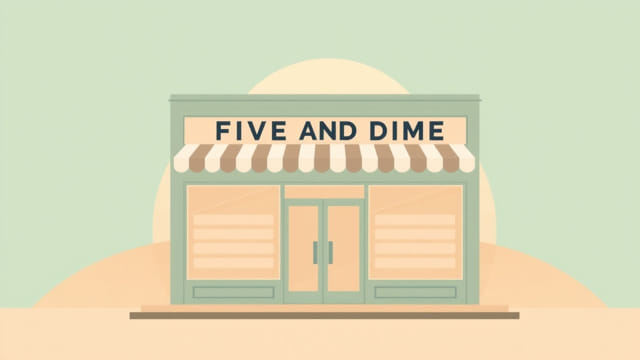
There was a time when almost every American town had a small shop where people could find everyday items at affordable prices a place filled with charm, simplicity, and the comfort of familiarity. That place was the five and dime. Known for selling a wide variety of goods at low prices, five and dime stores were more than retail shops; they were vibrant community centers and symbols of a different era in American culture. At the Five and Dime isn’t just a nostalgic phrase; it represents a shared memory of modest pleasures, economic accessibility, and the heartbeat of small-town life.
The History and Origin of Five and Dime Stores
The term ‘five and dime’ refers to stores that originally sold items priced at five or ten cents. These stores emerged in the late 19th and early 20th centuries, with pioneers like Frank Woolworth, who opened the first successful five and ten cent store in 1879. His idea was revolutionary fixed prices, self-service counters, and accessible products for everyday people.
These stores quickly became staples of American retail. Brands like Woolworth’s, Kresge’s, and Ben Franklin expanded across the country, providing not just affordable products, but also a unique shopping experience. The layout, friendly staff, and wide variety of items created an environment where people could spend hours browsing and mingling.
What You Could Find at the Five and Dime
Walking into a five and dime store was like stepping into a treasure trove. You never knew exactly what you’d find, but there was always something for everyone. Here are just a few examples of the types of goods people could find at the five and dime:
- Children’s toys and games
- Buttons, thread, and sewing supplies
- Kitchenware and household tools
- Stationery, greeting cards, and school supplies
- Candy counters and soda fountains
- Seasonal decorations and small gifts
Prices were deliberately low, making these items accessible even to working-class families. That affordability gave these stores their charm and kept them bustling with customers day after day.
The Five and Dime as a Social Hub
At the five and dime, people didn’t just shop they connected. Children would rush to the toy section, teenagers would stop by after school, and adults might chat with neighbors over a soda or browse new items during their errands. The store was a place where memories were made, first jobs were earned, and community ties were strengthened.
Many five and dime stores had a lunch counter or soda fountain, which became a local gathering spot. Whether it was a quick cup of coffee or a shared milkshake between friends, those simple moments at the five and dime became treasured parts of everyday life.
Impact on American Consumer Culture
Five and dime stores played a significant role in shaping American consumer habits. They introduced the idea of impulse buying grabbing a small item that caught your eye while browsing. They also popularized the idea of fixed pricing and self-service retail, paving the way for modern discount and variety stores.
In many ways, five and dime stores were the predecessors of big-box retailers. However, unlike today’s impersonal superstores, these smaller shops maintained a sense of intimacy and warmth. The store clerks often knew customers by name, and personal service was a key part of the experience.
The Decline of the Five and Dime
As the 20th century progressed, the retail landscape began to shift. Supermarkets and large chain stores offered greater variety and convenience, often under one roof. Rising costs made it harder for five and dime stores to maintain their low pricing model. As consumer expectations evolved, many of these beloved local stores closed their doors for good.
By the late 1980s and 1990s, most of the original five and dime chains had either closed or been absorbed into larger companies. The simple charm of shopping at the five and dime gradually faded, replaced by the fast pace and scale of modern retail.
Nostalgia and Cultural Legacy
Despite their decline, five and dime stores have never disappeared from American memory. They are still referenced in music, film, and literature as symbols of a simpler time. Songs like Love at the Five and Dime evoke images of innocent romance and childhood joy within the aisles of those small stores.
Vintage enthusiasts and historians often look back at the five and dime era with admiration. Some small towns have even preserved or restored these types of shops as part of their historic districts. In doing so, they honor not just a retail model, but a way of life centered on community and affordability.
Modern-Day Equivalents
While traditional five and dime stores may be rare today, their spirit lives on in places like dollar stores, local variety shops, and even some department stores that aim to offer budget-friendly goods. However, the atmosphere is rarely the same. The five and dime was as much about the experience as it was about the pricing.
Some independent stores across America have revived the five and dime concept with a modern twist offering both nostalgic products and newer items while keeping prices low and service personal. These stores cater to a generation looking for a shopping experience that feels more meaningful than simply ordering online or scanning barcodes in a warehouse-like setting.
Why the Five and Dime Still Matters
The phrase at the five and dime captures more than just a place it represents a feeling. It reminds us of the value of small pleasures, face-to-face interaction, and local business. In a world that often moves too fast, the memory of browsing the aisles of a five and dime store reminds us to slow down and appreciate the little things.
Though the original model may not return in full form, the values it represented community, accessibility, and kindness are still very much relevant. In fact, those ideals may be more important now than ever before. Whether you’re reminiscing about your own childhood memories or discovering the concept for the first time, the story of the five and dime connects generations across time and place.
At the five and dime, life felt approachable. It was where you could find a birthday card, a needle and thread, and a friendly hello all in one visit. These stores were more than places to buy goods; they were woven into the fabric of daily life, offering both material value and human connection. While the era of the traditional five and dime has largely passed, its essence endures in the hearts of those who experienced it and in the shops that seek to revive its timeless charm.