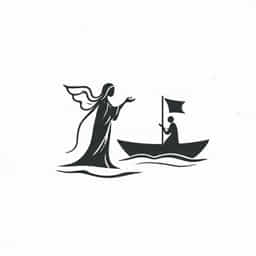
In many myths, legends, and modern fantasy games, the act of offering a soul to the Ferryman is both symbolic and powerful. This mysterious ritual often appears in games and stories where players must pay a price to cross into the afterlife or gain access to a forbidden realm. Whether you’re navigating through a dark RPG or exploring the roots of ancient mythology, the concept of offering a soul to the Ferryman stands as a recurring theme that combines sacrifice, transition, and consequence. This topic dives deep into the meaning, uses, and symbolism of this concept in various contexts, especially in video games and folklore, while also exploring how it resonates with modern players.
Understanding the Role of the Ferryman
The Ferryman is a mythical figure often responsible for transporting souls across a body of water that separates the world of the living from the world of the dead. The most iconic representation is Charon, the Ferryman in Greek mythology, who carries souls across the river Styx. In this tradition, the dead must offer a coin usually placed in their mouth or on their eyes as payment. In more modern interpretations, this payment is often more significant: a soul.
The idea of a Ferryman isn’t limited to Greek mythology. Similar figures exist in Egyptian, Norse, and even Japanese mythologies. These figures commonly appear at the threshold of life and death, functioning as guardians or gatekeepers who require something valuable like a soul in return for passage.
Modern Usage in Games and Fantasy Lore
In many video games, especially those with dark or fantasy settings, the concept of ‘Offer Soul to Ferryman’ appears as an action players can take to unlock powerful abilities, enter new areas, or trigger major story events. It’s often associated with permanent choices, reflecting the seriousness of offering one’s soul or the soul of another.
- In some games, offering a soul is tied to moral consequences, impacting the player’s alignment or reputation.
- Other times, it serves as a game mechanic for summoning, fast travel, or even resurrection.
- It may also trigger a boss battle, unlock secret lore, or reveal a hidden character path.
The Ferryman in these contexts is often depicted as a cloaked or skeletal figure, silent and motionless until approached with the correct offering. This adds to the eerie, powerful atmosphere of the moment and enhances the narrative tension around soul-related decisions.
Symbolism of Offering a Soul
The act of offering a soul is heavy with symbolic weight. In literature and gaming, a soul often represents identity, essence, or ultimate value. Giving it up isn’t a casual act it signals commitment, desperation, or ultimate sacrifice. Here’s what offering a soul usually symbolizes:
- Transition: The passage from one realm to another often life to death, or ignorance to enlightenment.
- Cost: Powerful rewards come with great sacrifice. A soul as currency shows the weight of the exchange.
- Control: The one who accepts the soul gains power over the giver, symbolizing loss of freedom.
- Transformation: The act changes the individual, often permanently, indicating personal evolution or corruption.
Contextual Variations
Depending on the world or game mechanics, the meaning of Offer Soul to Ferryman can vary. Some worlds treat the soul as something that regenerates or reforms, while others view it as a finite, unique entity. These interpretations influence gameplay and narrative depth.
For example, in a roguelike dungeon crawler, souls might be collected and used to power up weapons or spells. Offering one to the Ferryman could unlock a temporary buff or new dungeon floor. Meanwhile, in a more story-driven game, offering a soul might represent a one-time event with permanent narrative consequences.
Mechanics Behind Soul Offerings
From a game design perspective, the mechanic of offering a soul to a Ferryman provides meaningful choices. Players are forced to evaluate the cost-benefit of their actions. Do you give up a rare resource to gain short-term power? Or save it for a better opportunity?
Common Game Mechanics Involving Soul Offering
- Unlocking New Areas: Some locked zones or hidden islands may only become accessible after the offering.
- Resurrecting NPCs or Allies: Sacrificing a soul to bring someone else back to life.
- Altering the World State: Changing the balance between life and death, light and dark.
- Trading for Rare Items: Ferrymen sometimes act as mysterious merchants accepting only souls.
These systems can greatly enhance immersion, especially when tied to lore and player decision-making. When players understand that each offering has long-term impact, it adds emotional and strategic weight to the gameplay.
Narrative Power and Emotional Impact
One reason the idea of offering a soul to the Ferryman resonates so strongly is its narrative potency. It taps into fears and questions about death, destiny, and value. When games or stories present a scenario where the player must offer a soul especially their own it becomes a moment of reflection and consequence.
Some storylines may even play with this mechanic. For example, what if the soul being offered is not the player’s, but an innocent character’s? This raises moral dilemmas, adding emotional layers to what could have been a simple transaction. In turn, this encourages deeper engagement and emotional investment in the story.
Spiritual and Mythological Echoes
Offering a soul to the Ferryman reflects deeper spiritual themes. In many belief systems, the soul is immortal and sacred. The act of handing it over voluntarily whether to a deity, demon, or death guide marks a spiritual shift. It may symbolize:
- Submission: A surrender to fate or the divine plan.
- Defiance: Giving up a soul to achieve personal goals, even at great spiritual cost.
- Redemption: Offering one’s soul to save another, echoing themes of sacrifice and love.
Such themes are timeless, echoing in everything from Dante’s Inferno to modern fantasy RPGs. They connect us to ancient questions about what we are, what we value, and what we’re willing to give up.
A Choice with Weight
In both myth and modern media, the moment when a character must offer a soul to the Ferryman is one of the most memorable. It’s a dramatic, often emotional decision that encapsulates themes of sacrifice, consequence, and transformation. For players and readers alike, it’s more than a mechanic or plot point it’s a symbolic journey that speaks to deeper truths.
Whether you’re facing this moment in a game, writing your own story, or exploring legends of old, remember that offering a soul is never just an action. It’s a statement of what the character values most and what they’re willing to lose to achieve their goal. The Ferryman waits, silent and unmoved, holding out his hand. The choice is yours.