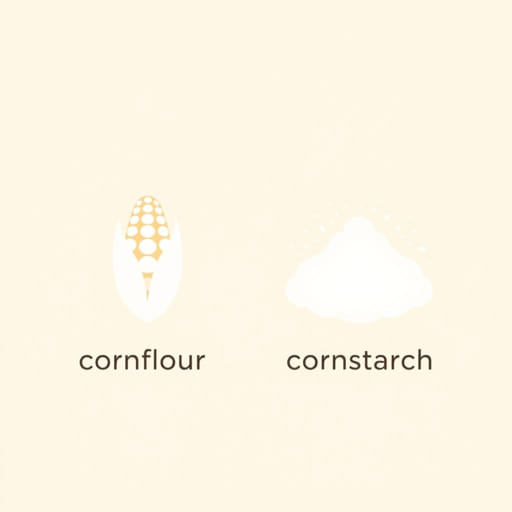
Cornflour and cornstarch are two terms that often confuse people, especially when following recipes from different countries. While they may sound like the same thing, there are subtle differences depending on regional usage. If you’ve ever stood in the baking aisle of a grocery store wondering which one to choose, you’re not alone. This topic will explore the key similarities and differences between cornflour and cornstarch, helping you understand how to use them properly in cooking, baking, and even household applications.
Understanding Cornflour and Cornstarch
The Source: What Are They Made From?
Both cornflour and cornstarch come from corn, but they are made from different parts of the kernel. Cornstarch is extracted from the starchy part of the corn kernel, known as the endosperm. This process yields a fine white powder that is almost pure starch. Cornflour, on the other hand, is typically made by grinding whole corn kernels into a fine or medium powder, which means it includes protein, fiber, and starch.
Because of their different origins, they vary in texture, color, and nutritional content. Cornstarch is very light and silky, while cornflour can have a coarser, slightly gritty feel. Cornflour may appear more yellow if it’s made from yellow corn, whereas cornstarch is always a pure white powder.
Regional Terminology Differences
The biggest source of confusion between cornflour and cornstarch comes from differences in regional vocabulary. In the United States, ‘cornstarch’ refers to the white, starchy powder used as a thickening agent. ‘Cornflour’ in American English may sometimes refer to finely ground cornmeal or masa harina, but it’s not a commonly used term.
In the United Kingdom, however, the term ‘cornflour’ is used to describe what Americans call cornstarch. So when you see a UK recipe that asks for cornflour, they are referring to the fine white starch powder used to thicken sauces and soups. This regional discrepancy is important to understand when cooking from international recipes.
Main Uses in Cooking
Cornstarch as a Thickening Agent
Cornstarch is primarily used as a thickener in cooking. It’s ideal for making gravies, sauces, puddings, pie fillings, and soups. When mixed with cold water, cornstarch forms a slurry that can be added to hot liquids to give them a smooth, glossy texture. It works quickly and does not add much flavor, making it a neutral choice for many dishes.
- Thickening soups and sauces
- Improving texture in stir-fry sauces
- Creating a crisp coating for fried foods
Cornflour in Baking and Frying
Cornflour (especially when referring to finely ground cornmeal) is often used in baking. It can be combined with wheat flour to make breads, muffins, or pancakes. It adds a slightly sweet, earthy flavor and a soft texture. It is also used in batter for frying to create a crispy crust.
- Making cornbread and tortillas
- Creating coatings for fried dishes
- Blending into flour mixes for added flavor
Can You Substitute Cornflour for Cornstarch?
Whether or not you can substitute cornflour for cornstarch depends on what you’re making. In most cases, they are not interchangeable. Cornstarch has a higher concentration of starch, which means it thickens more effectively and quickly than cornflour. Using cornflour in place of cornstarch might not give you the same smooth, thick texture.
However, in baking, especially when the recipe is from the UK and calls for cornflour, you can use American cornstarch as a direct substitute. Always check the context of the recipe and the country of origin before making any swaps.
Other Applications Beyond Cooking
Household Uses of Cornstarch
Cornstarch is not just for the kitchen. It’s commonly used in household and beauty products. You can use it as a dry shampoo, a natural deodorant, or to remove grease stains. It also works as a soothing agent for skin irritations like sunburn and rashes.
Craft and DIY Uses
In arts and crafts, cornstarch can be mixed with water to make homemade modeling clay or slime. It’s a popular ingredient for school projects and safe for children to handle.
Nutritional Comparison
Calories and Nutrients
Cornstarch is almost pure carbohydrate, which means it has a high calorie content and provides little to no fiber, protein, or fat. Cornflour, especially when made from whole corn, retains more of the grain’s natural nutrients, including small amounts of fiber and protein. However, neither one is particularly nutrient-dense.
- Cornstarch: 100% starch, high glycemic index
- Cornflour: Contains some fiber and protein, slightly more balanced
People on low-carb or diabetic diets may need to be cautious with both products due to their impact on blood sugar levels.
Storage and Shelf Life
Both cornflour and cornstarch should be stored in a cool, dry place in airtight containers. Moisture can cause clumping or spoilage. When stored properly, cornstarch can last indefinitely, while cornflour may spoil more quickly due to its natural oil content.
Frequently Asked Questions
Is maize flour the same as cornflour?
Maize flour is another name for cornflour, especially in countries like India and South Africa. It usually refers to flour made by grinding dried corn kernels. This can lead to more confusion, but generally maize flour and cornflour mean the same thing outside of the US and UK.
Can I use cornmeal instead of cornstarch?
No. Cornmeal is too coarse and will not dissolve into liquids to thicken them properly. Cornmeal is best used in baking or as a coating for fried foods, not as a thickener.
Is cornstarch gluten-free?
Yes, cornstarch is naturally gluten-free. However, if you have celiac disease or a severe gluten intolerance, look for brands that specifically label their cornstarch as gluten-free to avoid cross-contamination during processing.
While cornflour and cornstarch both come from corn, they are not exactly the same thing. Understanding the difference largely depends on your location and the type of recipe you are working with. In American kitchens, cornstarch is the go-to thickener, while cornflour is used more like a traditional flour. In British and other Commonwealth countries, ‘cornflour’ often means the same as American cornstarch. Always consider the context, and when in doubt, check the recipe’s origin. Knowing how to use each correctly will make your cooking more successful and avoid any kitchen mishaps.