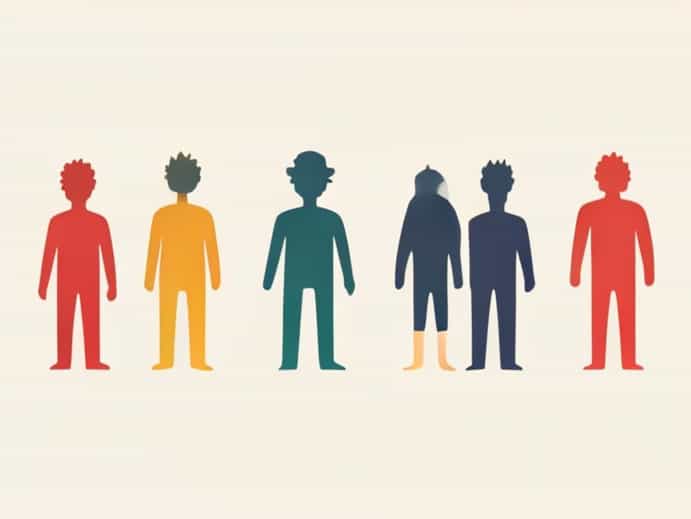
The question of whether human races can be classified as subspecies has been a topic of scientific and social debate for decades. While humans exhibit variations in physical traits such as skin color, facial features, and hair texture, the biological concept of subspecies requires a deeper understanding of genetics, reproductive compatibility, and evolutionary history. Exploring this topic involves examining the definition of subspecies, human genetic diversity, and the social implications of categorizing humans into racial subgroups. Understanding the scientific perspective on human races helps clarify misconceptions and highlights the complexities of human variation in a global context.
Understanding the Concept of Subspecies
In biology, a subspecies is a taxonomic rank below species, used to classify populations of a species that are genetically distinct and often geographically isolated. Subspecies are usually capable of interbreeding with other populations of the same species but may exhibit specific traits that set them apart. Examples include the Siberian tiger (Panthera tigris altaica) and the Bengal tiger (Panthera tigris tigris), which are distinct subspecies of tiger with differing habitats, behaviors, and physical characteristics. Subspecies classification relies on both genetic differences and observable traits, along with geographic or ecological separation.
Criteria for Defining Subspecies
Biologists consider several factors when determining subspecies
- Genetic differentiation that is consistent and significant.
- Physical traits or morphology that are unique to the population.
- Geographic isolation or distinct habitat that limits gene flow.
- Ability to interbreed with other populations of the species, producing fertile offspring.
These criteria ensure that subspecies represent meaningful biological divisions rather than arbitrary classifications.
Human Genetic Diversity
Humans exhibit remarkable genetic diversity, but studies show that the majority of genetic variation occurs within populations rather than between them. In fact, approximately 85 to 90 percent of human genetic variation exists within so-called racial groups, with only a small fraction attributable to differences between populations. This distribution of genetic diversity suggests that the concept of dividing humans into discrete subspecies is not supported by genetics. Modern humans share a recent common ancestry, and gene flow has been extensive across populations throughout history.
Physical Traits vs. Genetic Reality
Observable differences in skin color, hair type, and facial features are often cited as evidence for human races as subspecies. However, these traits are influenced by a small number of genes and environmental factors such as sun exposure and climate. They do not reflect significant genetic divergence or reproductive isolation. For example
- Skin color varies gradually across geographic regions and is subject to evolutionary adaptation rather than strict lineage.
- Hair texture and eye color demonstrate continuous variation and overlap between populations.
- Physical traits often do not correlate consistently with underlying genetic variation, making them unreliable indicators of subspecies.
Scientific Consensus on Human Races and Subspecies
The overwhelming consensus among anthropologists, geneticists, and biologists is that humans do not constitute distinct subspecies. While there are population-level differences influenced by geography and ancestry, these differences are minor compared to the overall genetic similarity among humans. Organizations such as the American Association of Physical Anthropologists have explicitly stated that biological races do not exist in humans in the same way they exist in other species. The concept of race in humans is largely a social and cultural construct rather than a strict biological division.
Role of Geography and Evolution
Humans evolved as a single species in Africa before migrating to other continents. During migration, populations adapted to local environments, resulting in phenotypic variations such as skin pigmentation. However, migration and interbreeding prevented long-term genetic isolation, which is essential for subspecies formation. Unlike tigers or birds, human populations have maintained continuous gene flow, preventing the development of genetically distinct subspecies.
Implications of Misclassifying Human Subspecies
Labeling human races as subspecies can have serious social and ethical consequences. Historically, the misuse of biological classification has been associated with racism, eugenics, and discriminatory policies. Presenting humans as separate subspecies can reinforce stereotypes and justify inequality based on perceived biological differences. In contrast, acknowledging that genetic variation is continuous and shared among all humans promotes understanding, equality, and appreciation of human diversity.
Education and Public Understanding
Educating the public about human genetic diversity is crucial to combat misconceptions. Key points include
- Humans are one species with minor regional variations.
- Observable traits like skin color do not indicate subspecies status.
- Race is a social construct with cultural and historical significance, not a strict biological category.
- Scientific research supports a shared human heritage and extensive genetic overlap among populations.
Modern Research and Genomic Studies
Advances in genomic research have reinforced the understanding that human races are not subspecies. Large-scale studies of human DNA reveal that populations share the vast majority of their genetic makeup, with small regional differences that do not justify subspecies classification. Geneticists use concepts like population structure and ancestry to describe variation without invoking subspecies. Tools such as genome-wide association studies and ancestry mapping allow researchers to understand human diversity while avoiding outdated racial categorizations.
Population vs. Subspecies
While humans can be divided into populations based on ancestry or geographic origin, these populations do not meet the biological criteria for subspecies. Populations are useful for studying genetic patterns, disease susceptibility, and evolutionary history, but they remain part of a single, interbreeding human species. This distinction is crucial for both scientific accuracy and ethical considerations in discussing human diversity.
Humans are a single species without biologically distinct subspecies. Although there is observable variation in physical traits and ancestry, the majority of genetic diversity exists within populations rather than between them. The concept of human races as subspecies is not supported by modern genetics, anthropology, or evolutionary biology. Understanding this helps dismantle misconceptions and emphasizes the shared heritage of all humans. Recognizing race as a social construct rather than a biological reality encourages equality, tolerance, and appreciation of the rich diversity that defines humanity. Ultimately, humans should be seen as a single species with continuous variation, connected by common ancestry and a shared genetic foundation.