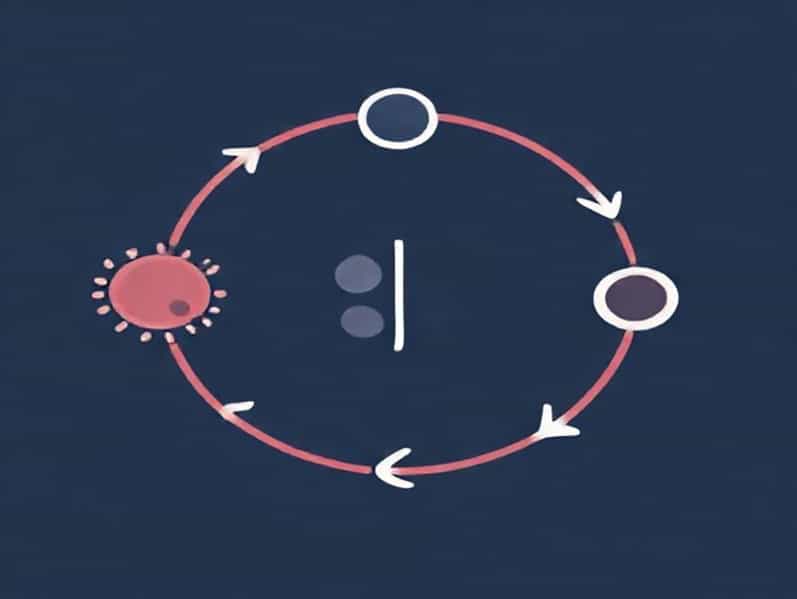
The life of every cell is a continuous cycle of growth, replication, and division. This process, known as the cell cycle, is essential for the survival and reproduction of all living organisms. Through cell division, organisms grow, replace damaged tissues, and reproduce new cells. Whether in a single-celled bacterium or the complex human body, the principles of the cell cycle and cell division remain fundamentally the same, ensuring that genetic material is copied and distributed accurately to maintain life and function.
Understanding the Cell Cycle
The cell cycle is a series of stages that a cell goes through from its formation until it divides into two daughter cells. This cycle consists of two main phases interphase and the mitotic phase (M phase). Interphase is the period of growth and DNA replication, while the mitotic phase involves the actual division of the cell’s nucleus and cytoplasm. Together, these phases ensure that each new cell contains the correct genetic information and is prepared to perform its biological role.
Phases of the Cell Cycle
The cell cycle is divided into four key stages G1 phase, S phase, G2 phase, and M phase. Each stage plays a specific and crucial role in preparing the cell for division.
- G1 Phase (Gap 1)During this phase, the cell grows in size, produces proteins, and synthesizes organelles. It also performs its regular metabolic functions. This is the longest phase of the cycle, where the cell determines whether conditions are favorable for division.
- S Phase (Synthesis)The cell replicates its DNA, ensuring that each chromosome is copied exactly once. This guarantees that both daughter cells will receive identical sets of genetic material.
- G2 Phase (Gap 2)The cell continues to grow and produces proteins necessary for mitosis. It also checks for any DNA replication errors and repairs them before proceeding to the next phase.
- M Phase (Mitosis)The final phase of the cycle, where the cell divides its nucleus and cytoplasm to form two daughter cells. This phase includes several distinct steps prophase, metaphase, anaphase, and telophase, followed by cytokinesis.
Cell Cycle Regulation
The cell cycle is tightly controlled by a complex network of regulatory proteins and enzymes. These regulators ensure that each stage is completed accurately before the next one begins. The most important of these regulatory molecules are cyclins and cyclin-dependent kinases (CDKs). Together, they act as checkpoints, monitoring DNA integrity and cell size.
There are three major checkpoints in the cell cycle
- G1 CheckpointDetermines whether the cell is ready to divide. If conditions are not favorable, the cell may enter a resting state called G0 phase.
- G2 CheckpointEnsures that DNA replication is complete and error-free before mitosis begins.
- Spindle CheckpointOccurs during mitosis to verify that all chromosomes are properly attached to the spindle fibers before separation.
If a cell fails to pass any of these checkpoints, it may undergo programmed cell death, or apoptosis, to prevent damaged or abnormal cells from dividing. This regulation maintains the health of the organism and prevents diseases like cancer, which arise from uncontrolled cell division.
Cell Division The Process of Mitosis
Cell division is the mechanism by which a parent cell produces two or more daughter cells. In most organisms, cell division occurs through mitosis or meiosis, depending on whether the goal is growth and repair or reproduction. Mitosis is the process used for growth and tissue maintenance, while meiosis is used for producing reproductive cells (gametes).
Stages of Mitosis
Mitosis is a highly organized process that ensures equal distribution of chromosomes to each daughter cell. It can be divided into several stages
- ProphaseThe chromatin condenses into visible chromosomes, each consisting of two sister chromatids joined at the centromere. The nuclear membrane begins to disintegrate, and the mitotic spindle starts to form.
- MetaphaseChromosomes align at the cell’s equator, known as the metaphase plate. Spindle fibers attach to the centromeres, preparing the chromosomes for separation.
- AnaphaseThe sister chromatids separate and move toward opposite poles of the cell, pulled by the spindle fibers. This ensures that each new cell receives an identical set of chromosomes.
- TelophaseChromosomes reach the poles and begin to decondense back into chromatin. A new nuclear envelope forms around each set of chromosomes, creating two distinct nuclei.
- CytokinesisThis is the final step where the cytoplasm divides, forming two daughter cells. In animal cells, a cleavage furrow forms, while in plant cells, a cell plate develops to separate the new cells.
Meiosis The Division for Reproduction
While mitosis creates identical cells, meiosis produces gametes sperm and egg cells with half the number of chromosomes. This reduction is crucial for sexual reproduction, ensuring that when two gametes fuse, the resulting zygote has the correct number of chromosomes. Meiosis involves two successive divisions, meiosis I and meiosis II, resulting in four genetically unique daughter cells.
Key Stages of Meiosis
Meiosis I reduces the chromosome number by half, while meiosis II separates sister chromatids, similar to mitosis. The stages of meiosis include
- Prophase IHomologous chromosomes pair up and exchange genetic material in a process called crossing over, increasing genetic diversity.
- Metaphase IPaired chromosomes align at the cell’s equator.
- Anaphase IHomologous chromosomes are pulled to opposite poles.
- Telophase I and CytokinesisTwo haploid cells form, each with half the number of chromosomes.
- Meiosis IISimilar to mitosis, sister chromatids separate, producing four haploid daughter cells, each genetically distinct.
The Importance of Cell Cycle and Division
The cell cycle and cell division are essential for the continuity of life. Without these processes, organisms would not be able to grow, repair tissues, or reproduce. Every second, billions of cells divide in the human body to replace old or damaged ones, maintaining the body’s function and health. In plants, cell division enables growth in roots and stems, allowing them to absorb nutrients and expand toward sunlight.
Role in Growth and Development
During early development, rapid cell division allows a single fertilized egg to grow into a multicellular organism. The balance between cell division and cell death determines the shape and size of tissues and organs. When this balance is disrupted, it can lead to abnormal growths such as tumors.
Cell Division and Disease
Errors in the cell cycle can lead to serious health problems. For example, mutations that affect the regulatory checkpoints can cause uncontrolled cell proliferation, leading to cancer. Similarly, improper chromosome separation during meiosis can result in genetic disorders such as Down syndrome. Understanding how the cell cycle is regulated helps scientists develop treatments for these diseases and improve genetic therapies.
The cell cycle and cell division represent the foundation of biological growth, repair, and reproduction. From a single cell to complex multicellular organisms, these processes ensure that life continues in an orderly and balanced way. Each phase of the cell cycle contributes to the accurate replication and distribution of genetic material, maintaining stability across generations. By studying how cells grow, divide, and regulate themselves, scientists gain valuable insight into both the normal functioning of living organisms and the causes of diseases that disrupt this balance. The cell cycle, therefore, remains one of the most fundamental and fascinating concepts in all of biology.