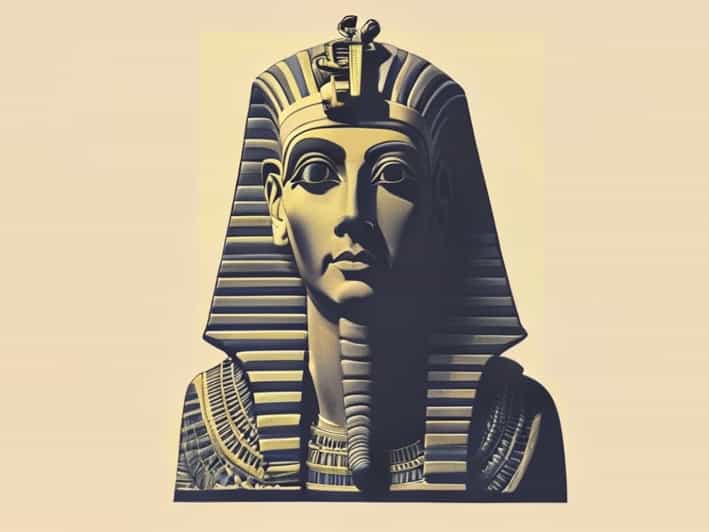
The colossal statue of Amenhotep III and Queen Tiye is one of ancient Egypt’s most remarkable artistic achievements, reflecting both the grandeur of the 18th Dynasty and the prominence of royal imagery in Egyptian culture. This statue not only symbolizes the power and divine authority of Pharaoh Amenhotep III but also honors his queen, Tiye, highlighting her influence and status in the royal court. Standing as a testament to ancient craftsmanship and political propaganda, the statue continues to capture the imagination of historians, archaeologists, and visitors interested in Egypt’s rich cultural heritage. Exploring its history, artistic significance, and cultural impact provides insight into the complexities of ancient Egyptian society.
Historical Background
Amenhotep III ruled Egypt during the 14th century BCE, a period often regarded as the height of Egypt’s wealth, power, and artistic achievement. His reign was characterized by prosperity, extensive building projects, and the establishment of strong diplomatic ties with neighboring civilizations. Queen Tiye, his principal wife, played a crucial role in political and religious affairs, making her one of the most prominent women in ancient Egyptian history. The creation of a colossal statue featuring both figures was intended to project their joint authority and divine favor, reinforcing the king’s image while acknowledging Tiye’s influential position.
The Role of Queen Tiye
- Tiye was the daughter of a nobleman and became Amenhotep III’s chief wife.
- She participated in religious and political matters, often depicted alongside the pharaoh in official monuments.
- Her presence in the colossal statue reflects her importance in royal decision-making and ceremonial life.
- The statue elevates her status, showing that royal women could wield significant influence in ancient Egypt.
Artistic Features of the Statue
The colossal statue is remarkable for its scale, craftsmanship, and attention to detail. Carved from stone, the sculpture portrays Amenhotep III seated on a throne with Queen Tiye by his side. Both figures exhibit the characteristic idealized features of Egyptian art, including symmetrical facial proportions, a sense of calm authority, and symbolic elements that convey divine kingship and eternal life. The size of the statue amplifies its presence, making it a powerful visual statement about the pharaoh’s authority and the prominence of the queen.
Materials and Construction
- The statue was typically carved from quartzite or granite, materials chosen for durability and aesthetic appeal.
- Advanced techniques allowed artisans to achieve detailed facial features, intricate headdresses, and inscriptions.
- The colossal scale required careful planning, including transportation of large stone blocks and precise carving methods.
- These materials and construction techniques ensured the statue’s longevity, allowing it to survive millennia.
Symbolism and Iconography
Every element of the statue carries symbolic meaning. Amenhotep III is often depicted wearing the nemes headdress and a royal kilt, signifying kingship and divine authority. Queen Tiye is portrayed slightly smaller than the pharaoh, reflecting traditional Egyptian hierarchies while emphasizing her prominence. Inscriptions on the throne and base often convey blessings, divine lineage, and the pharaoh’s achievements, reinforcing the notion of eternal rule and legitimacy. The presence of Tiye alongside Amenhotep III highlights the partnership between king and queen, a recurring theme in Egyptian art.
Historical and Cultural Significance
The colossal statue of Amenhotep III and Tiye served multiple purposes in ancient Egyptian society. It was a political tool, reinforcing the pharaoh’s image as a powerful ruler blessed by the gods. It was also religious, linking the king and queen to divine forces and ensuring their place in the afterlife. Public display of such statues in temples or ceremonial spaces allowed citizens to witness the grandeur of the monarchy, fostering loyalty and reverence. Additionally, the statue demonstrates the skill of ancient Egyptian artisans and the society’s investment in monumental art as a form of communication and legacy.
Monumental Art as Propaganda
- Large-scale statues emphasized the pharaoh’s power and divine right to rule.
- The inclusion of Queen Tiye reinforced the importance of royal women in maintaining political stability.
- Public display of monumental art created a sense of awe and reinforced social hierarchies.
- The combination of art and symbolism allowed the monarchy to communicate authority and ideology effectively.
Discovery and Archaeological Research
The statue was discovered in fragments, typical for ancient Egyptian monuments, many of which were damaged or relocated over time. Archaeologists have painstakingly studied the fragments to reconstruct the original appearance and understand the context in which the statue was created. This research has provided valuable insights into 18th Dynasty art, construction techniques, and the relationship between pharaoh and queen. Conservation efforts continue to preserve these monuments for educational and cultural purposes, allowing the public to appreciate their historical significance.
Modern Reconstructions
- Fragments are carefully pieced together in museums and research institutions.
- Digital reconstruction techniques help visualize the statue’s original form and scale.
- Exhibitions and scholarly publications provide access to this iconic piece of Egyptian art.
- Ongoing research reveals more about the social, religious, and political context of Amenhotep III’s reign.
Influence on Egyptian Art and Later Cultures
The colossal statue of Amenhotep III and Tiye influenced the development of royal portraiture in Egypt and established aesthetic conventions that persisted for centuries. The emphasis on idealized features, monumental scale, and symbolic representation became hallmarks of Egyptian art, inspiring future generations of sculptors. Additionally, the statue has contributed to modern understanding of gender roles in ancient Egypt, highlighting the significant influence of queens in royal and religious life.
Legacy in Art History
- Set standards for pharaonic portraiture and monumental sculpture.
- Illustrates the integration of political, religious, and artistic objectives in ancient Egypt.
- Highlights the importance of royal women in statecraft and ceremonial practices.
- Remains a valuable reference for historians, archaeologists, and art scholars studying ancient civilizations.
The colossal statue of Amenhotep III and Tiye is more than an artistic masterpiece; it is a cultural symbol that represents the power, influence, and divine authority of Egypt’s 18th Dynasty. Its artistic features, monumental scale, and intricate symbolism provide insight into the society, religion, and politics of ancient Egypt. By honoring both the pharaoh and his queen, the statue highlights the central role of monarchy and royal partnership in maintaining political stability and religious legitimacy. Today, it continues to inspire admiration and scholarly study, standing as a timeless testament to human creativity and the enduring legacy of ancient Egyptian civilization.