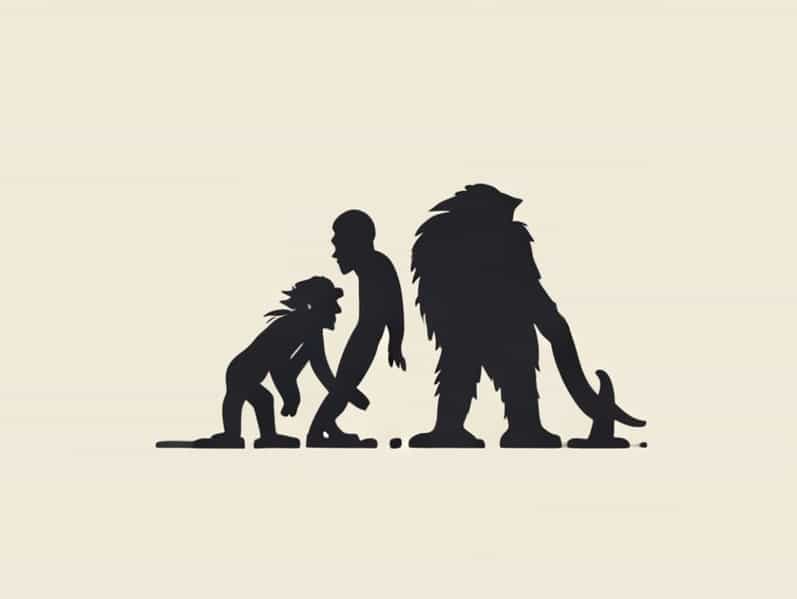
Thousands of years ago, Earth was not inhabited by just one type of human. Our ancestors shared the planet with another close relative the Neanderthals. For a long time, scientists wondered whether modern humans, known as Homo sapiens, ever lived alongside Neanderthals, or if they replaced them after their extinction. Thanks to advances in archaeology and genetics, we now know that humans and Neanderthals did, in fact, coexist for thousands of years. This fascinating period of overlap shaped human history, culture, and even our DNA in ways that continue to influence us today.
Who Were the Neanderthals?
Neanderthals, orHomo neanderthalensis, were a species of archaic humans that lived across Europe and parts of western Asia. They appeared around 400,000 years ago and thrived in cold, harsh environments during the Ice Age. Despite old stereotypes of them being primitive, evidence shows that Neanderthals were intelligent, adaptable, and social beings who used tools, controlled fire, and even buried their dead.
Physically, Neanderthals were stockier and more muscular than modern humans, an adaptation to colder climates. They had large brow ridges, wide noses, and strong limbs. Their brains were as large as, or sometimes larger than, those of modern humans, suggesting complex thought and communication abilities. These similarities and differences raise the question what happened when Homo sapiens and Neanderthals met?
When Did Humans and Neanderthals Meet?
Modern humans evolved in Africa roughly 300,000 years ago. Around 60,000 to 70,000 years ago, they began migrating out of Africa and into Eurasia territories already inhabited by Neanderthals. Archaeological findings suggest that humans and Neanderthals coexisted for at least 5,000 to 10,000 years, perhaps even longer, depending on the region. This overlap provided ample opportunity for interaction, competition, and cooperation.
Regions of Coexistence
Some of the most significant evidence of coexistence has been found in parts of Europe and the Middle East. Sites in France, Spain, and Croatia contain layers showing alternating or mixed use by both Neanderthals and modern humans. In Israel’s caves, remains of both species have been found within close time periods, suggesting they might have inhabited the same regions possibly even the same landscapes at overlapping times.
How Did Humans and Neanderthals Interact?
One of the biggest mysteries in anthropology is the nature of interactions between Neanderthals and humans. Did they compete violently for resources, or did they coexist peacefully and exchange ideas? The evidence points toward a complex relationship that included both conflict and cooperation.
Competition and Survival
As Homo sapiens entered Neanderthal territories, both species likely competed for food, shelter, and hunting grounds. Modern humans had advanced tools, symbolic art, and possibly more efficient social networks, giving them an advantage. However, Neanderthals were well adapted to their environment and had survival strategies that had worked for hundreds of thousands of years. This competition might have contributed to Neanderthal decline, though not necessarily through direct violence.
Exchange of Knowledge and Culture
Archaeological evidence suggests that humans and Neanderthals might have shared ideas or learned from each other. For instance, similar tools and ornaments appear in both groups around the same time. This could mean that humans adopted Neanderthal techniques, or vice versa. The spread of symbolic behavior, such as jewelry-making and pigment use, may have been influenced by these cultural exchanges.
Evidence of Interbreeding
Perhaps the most groundbreaking discovery about human-Neanderthal coexistence comes from genetics. In 2010, scientists sequenced the Neanderthal genome and found that all non-African modern humans carry traces of Neanderthal DNA about 1% to 2% on average. This means interbreeding occurred between the two species.
How Scientists Discovered Neanderthal DNA
DNA extracted from ancient Neanderthal bones revealed genetic similarities to modern humans. By comparing these sequences, researchers confirmed that interbreeding took place tens of thousands of years ago, most likely in regions where both species overlapped, such as the Middle East or southern Europe. These findings revolutionized our understanding of human evolution, showing that the story of Homo sapiens is not one of complete replacement, but of mixture and shared ancestry.
Modern Impacts of Neanderthal Genes
Neanderthal DNA still affects modern humans today. Some genes inherited from them influence skin color, hair texture, and immune responses. For instance, certain Neanderthal genes help modern humans adapt to colder climates or resist specific diseases. On the other hand, some genetic variants linked to depression, allergies, or diabetes may also trace back to Neanderthal ancestry. This blend of traits highlights the lasting legacy of interbreeding.
Why Did Neanderthals Go Extinct?
Neanderthals disappeared roughly 40,000 years ago, but their extinction remains a topic of debate. Several theories attempt to explain their disappearance, and it’s possible that multiple factors played a role.
- Climate ChangeRapid shifts in temperature during the Ice Age made survival more difficult, especially for populations already limited in number.
- CompetitionModern humans may have outcompeted Neanderthals for resources through better technology and broader social networks.
- IntegrationSome researchers believe Neanderthals didn’t completely vanish but were absorbed through interbreeding with Homo sapiens.
- Small Population SizeGenetic studies suggest that Neanderthal groups were small and isolated, making them vulnerable to extinction.
While it’s unlikely that humans directly exterminated Neanderthals, the arrival of modern humans certainly changed the balance of survival in Eurasia.
Shared Traits Between Humans and Neanderthals
Living alongside each other for thousands of years meant that humans and Neanderthals shared more than just space they shared behaviors and survival strategies. Studies suggest both species
- Used tools made of stone and bone for hunting and crafting.
- Controlled fire for warmth and cooking.
- Had social structures and cared for the injured or elderly.
- Possibly had language or symbolic communication abilities.
These similarities show that Neanderthals were not primitive cavemen but intelligent beings capable of adapting and innovating, much like Homo sapiens.
Modern Perspectives on Human-Neanderthal Relations
Today, the idea that humans and Neanderthals lived side by side is widely accepted. This understanding reshapes how we view human evolution not as a simple ladder, but as a complex web of interactions. The discovery that modern people carry Neanderthal DNA has also changed how we define humanity itself. Rather than seeing Neanderthals as an extinct cousin, many scientists now consider them part of the broader human story.
What We Continue to Learn
New discoveries continue to refine our understanding of this shared history. Fossils, ancient tools, and improved DNA analysis techniques reveal that our ancestors likely met other archaic humans too, such as the Denisovans. Together, these findings paint a picture of a dynamic world where different human species coexisted, interacted, and shaped each other’s destinies.
So, did humans live alongside Neanderthals? Absolutely and their coexistence was one of the most pivotal chapters in human evolution. For thousands of years, both species shared the same lands, faced the same climates, and occasionally shared more than just space. Through interaction and interbreeding, Neanderthals left an enduring imprint on modern humans, both biologically and culturally. Far from being a story of separation, the relationship between humans and Neanderthals shows how interconnected our past truly is. The traces of their DNA in our own bodies remind us that our history is a story of connection, adaptation, and shared humanity that continues to this day.