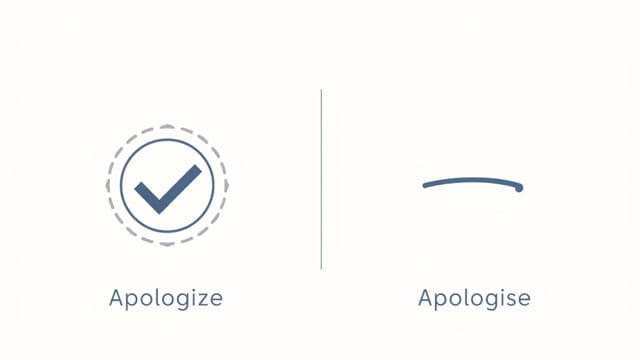
When learning English, one of the common confusions for students is the difference between apologize and apologise. At first glance, they look almost identical and mean the same thing, which is to express regret or say sorry for a mistake. However, the variation in spelling often leads to questions: Is one wrong? Are they used in different contexts? Is it a matter of grammar or geography? Understanding the difference between these two forms is important for improving both your writing and cultural awareness.
What Does Apologize Mean?
Apologize is the American English spelling of the verb that means to express regret or say sorry. It follows the typical American English preference for using -ize in certain words. You will see this spelling in the United States and other regions influenced by American English. Examples include:
- I need to apologize for being late to the meeting.
- She apologized for the misunderstanding.
- They will apologize to their customers for the inconvenience.
In formal writing, business communication, and academic papers in the U.S., apologize is the correct spelling. If you are writing for an American audience, this is the form you should use.
What Does Apologise Mean?
Apologise is the British English spelling of the same verb. It carries the same meaning expressing regret or saying sorry but is commonly used in the United Kingdom, Australia, New Zealand, South Africa, and other countries that follow British English conventions. For example:
- I must apologise for forgetting your birthday.
- He apologised after realizing his mistake.
- The company apologises for any delay in service.
If you are writing for a British audience or following British style guides, apologise is the preferred spelling. It aligns with British spelling rules, where -ise endings are common instead of -ize.
Why Do These Spelling Differences Exist?
The difference between apologize and apologise is not about meaning but about spelling conventions. Historically, English spelling evolved differently in the U.S. and the U.K. Noah Webster, an American lexicographer, promoted simplified spellings in the 19th century, which is why many American words use -ize while British English uses -ise. Some examples include:
- American: organize | British: organise
- American: realize | British: realise
- American: apologize | British: apologise
However, it is worth noting that British English sometimes allows both -ize and -ise, but -ise is more commonly accepted in British writing.
Is There a Difference in Pronunciation?
Interestingly, there is no difference in pronunciation between apologize and apologise. Both are pronounced the same way: /ÉËpÉl.É.dÊaɪz/. The only distinction lies in spelling, so the choice depends on the variety of English you follow rather than how you speak.
How to Choose Between Apologize and Apologise
Choosing the correct spelling depends on your audience and the English variety you are using:
- Use apologizeif your audience is in the United States or if you are following American English style guides.
- Use apologiseif your audience is in the United Kingdom or regions that prefer British English.
Consistency is important in writing. If you choose one form, use it throughout your text to maintain a professional and polished appearance.
Examples in Sentences
American English (Apologize)
- The manager will apologize for the delay in the service.
- I want to apologize for missing the event last night.
- They should apologize to the guests for the inconvenience caused.
British English (Apologise)
- The minister will apologise for the mistake made during the speech.
- She apologised for breaking the glass accidentally.
- We apologise for any misunderstanding regarding the schedule.
Common Phrases with Apologize or Apologise
Both spellings appear in common English phrases, such as:
- Apologize/apologise sincerely She apologised sincerely for her behavior.
- Apologize/apologise for something I apologize for the confusion.
- Apologize/apologise to someone He apologised to his friend after the argument.
Is One Spelling More Correct Than the Other?
No, neither apologize nor apologise is more correct than the other. Both are accepted forms of English. The key factor is consistency and understanding which form suits your context best. If you are writing an academic paper for a U.S. university, apologize is the expected form. If you are submitting a report in the U.K., apologise would be appropriate.
Tips to Avoid Confusion
Here are a few tips to ensure you use the correct form consistently:
- Check your audience: U.S. vs U.K. readers.
- Follow your style guide: APA, MLA, and Chicago recommend American spelling; Oxford or Cambridge may follow British spelling.
- Set your word processor to the appropriate language setting to catch spelling differences automatically.
The difference between apologize and apologise is purely about spelling, not meaning or pronunciation. Apologize is standard in American English, while apologise is preferred in British English. Understanding this distinction is important for effective communication and professionalism in writing. Always choose the form that matches your audience and maintain consistency throughout your text. With practice, this will become second nature and help you write with confidence in any English-speaking context.