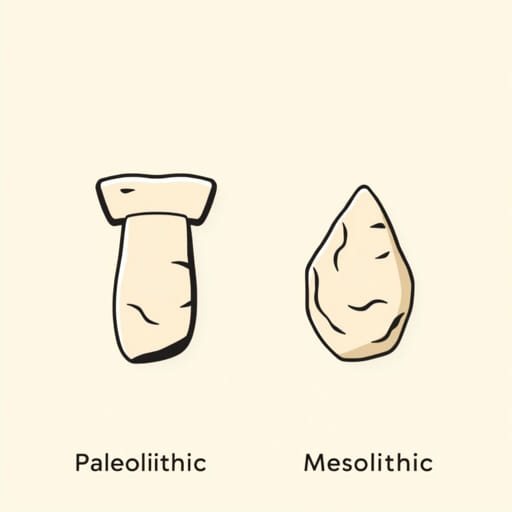
The Paleolithic and Mesolithic Ages represent two crucial phases in the development of early human history. These prehistoric periods are part of what is commonly called the Stone Age, named for the dominant use of stone tools during these times. While both periods are prehistoric and share some similarities, they differ significantly in terms of lifestyle, technology, subsistence patterns, and social organization. Understanding the difference between the Paleolithic and Mesolithic Age helps trace the evolution of human civilization from nomadic hunter-gatherers to more settled communities.
Chronological Framework
Paleolithic Age
The Paleolithic Age, also known as the Old Stone Age, is the earliest and longest phase of human history. It began roughly 2.5 million years ago and lasted until around 10,000 BCE. This era was marked by the first use of stone tools by early humans such as Homo habilis and Homo erectus. The period is divided into three phases: Lower, Middle, and Upper Paleolithic, reflecting gradual improvements in tool-making and human development.
Mesolithic Age
The Mesolithic Age, or Middle Stone Age, followed the Paleolithic Age and serves as a transitional period between the Paleolithic and Neolithic Ages. It generally spans from around 10,000 BCE to 8,000 BCE, although exact dates vary depending on the region. This period witnessed significant climatic changes due to the end of the Ice Age, which influenced human adaptation and technological progress.
Tools and Technology
Paleolithic Tools
During the Paleolithic Age, humans used simple stone tools known as core tools and flake tools. These included hand axes, choppers, and scrapers, typically made by striking one stone against another to produce a sharp edge. The primary focus was survival through hunting and gathering, and the tools were often large and rough in appearance.
Mesolithic Tools
In the Mesolithic Age, tool technology became more advanced and refined. Microliths, or small, sharp stone tools, were developed and often set into wooden or bone handles to form composite tools such as arrows, spears, and fishing gear. This innovation allowed for greater precision in hunting and food processing, and it marked a technological leap from the rudimentary tools of the Paleolithic Age.
Subsistence and Food Gathering
Diet in the Paleolithic Period
Paleolithic people were primarily hunter-gatherers who depended on the environment for food. They hunted wild animals, fished, and gathered edible plants, fruits, and roots. Their diet was high in protein due to hunting large game, and they were constantly on the move in search of food sources, which led to a nomadic lifestyle.
Diet in the Mesolithic Period
While hunting and gathering continued in the Mesolithic Age, there was a noticeable diversification in the diet. With the retreat of glaciers and the warming climate, new plants and animal species became available. Humans began fishing more extensively and collecting shellfish. There is also evidence of early attempts at plant cultivation and animal domestication, foreshadowing the agricultural developments of the Neolithic Age.
Habitation and Settlement
Living Conditions in the Paleolithic Age
Paleolithic humans were nomadic and lived in temporary shelters such as caves, rock overhangs, or simple huts made from natural materials. Their shelters were dictated by the availability of resources and the need to follow migrating animals or seasonal food sources.
Settlement Patterns in the Mesolithic Age
The Mesolithic period marked the beginning of semi-permanent or even permanent settlements, especially near rivers, lakes, and coastal regions. With more stable food sources and advanced tools, people began building more durable dwellings and forming small communities. These changes reflect a gradual shift from nomadism to a more sedentary lifestyle.
Social and Cultural Developments
Paleolithic Society
Society in the Paleolithic Age was based on small, kin-based groups or bands. There was little to no concept of social hierarchy, and tasks such as hunting, gathering, and tool-making were likely shared among group members. Religious beliefs were rudimentary, often revolving around animism and shamanism. Art appeared in the form of cave paintings, carvings, and symbolic items like the Venus figurines.
Mesolithic Society
Mesolithic societies show signs of increasing complexity. Population density grew due to better food availability, and groups began forming more structured communities. There is evidence of burials, pottery use, and ritual practices, suggesting a more organized spiritual life. Trade and social differentiation also started emerging during this period.
Art and Symbolism
Paleolithic Art
The Paleolithic Age is known for its remarkable cave paintings, petroglyphs, and figurines. These artworks were often found deep inside caves and likely held religious or ritual significance. Common themes included animals, hunting scenes, and fertility symbols, indicating the central role of nature and survival in early human consciousness.
Mesolithic Art
In the Mesolithic period, art became more diverse and portable. Rock engravings and geometric motifs began to appear. People also started decorating tools and pottery, indicating the emergence of aesthetic expression and cultural identity. The art in this era often reflected a more settled lifestyle and broader interaction with the environment.
Environmental Impact
Paleolithic Adaptation
Paleolithic humans had minimal impact on their environment. Their survival depended on adapting to nature rather than altering it. They used resources as they found them and moved when those resources were depleted, which kept their ecological footprint small.
Mesolithic Adaptation
Mesolithic people began modifying their environments to better suit their needs. They practiced controlled burning to clear areas for hunting and may have engaged in proto-agriculture. These changes signify a shift toward human beings actively shaping the landscape, a trend that would continue into the Neolithic Age.
Summary of Key Differences
- Chronology: Paleolithic (2.5 million10,000 BCE), Mesolithic (10,0008,000 BCE)
- Tools: Basic stone tools vs. microliths and composite tools
- Food: Strict hunting and gathering vs. early domestication and fishing
- Settlements: Nomadic life vs. semi-permanent dwellings
- Society: Simple bands vs. developing communities with social structures
- Art: Cave paintings vs. decorated tools and pottery
The distinction between the Paleolithic and Mesolithic Age lies in the subtle yet transformative changes that occurred in human life. From tool innovation and food practices to settlement patterns and social development, the transition marks a significant step toward the modern human experience. While both periods belong to the broader Stone Age, the Mesolithic represents a bridge that led humanity from survival to adaptation, from mobility to settlement, and from instinctual living to conscious shaping of the world. Recognizing these differences helps us appreciate the remarkable resilience and ingenuity of early humans as they laid the foundation for civilization.