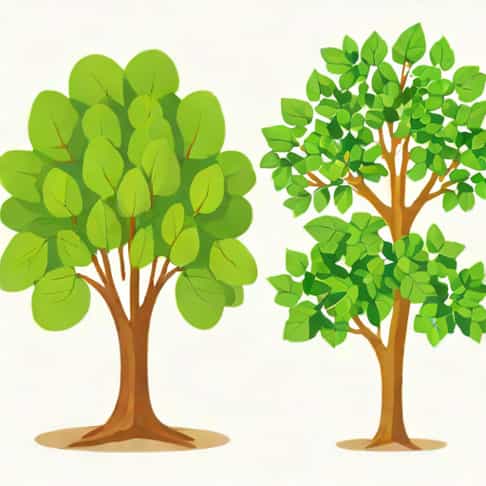
Peepal and banyan trees are among the most recognizable and culturally significant trees in South Asia and many tropical regions. People often confuse them because both are large, long-living trees that belong to the fig family and are frequently mentioned in religious, historical, and environmental contexts. However, when you look closely, the difference between peepal and banyan tree becomes clear in terms of appearance, growth pattern, leaves, roots, and symbolic meaning. Understanding these differences helps not only students and nature enthusiasts, but also anyone interested in ecology and traditional knowledge.
Basic Overview of Peepal and Banyan Trees
Both peepal and banyan trees belong to the genus Ficus, which includes many fig species. Despite this shared family, each tree has unique characteristics that set it apart.
The peepal tree is scientifically known as Ficus religiosa, while the banyan tree is called Ficus benghalensis. Their scientific classification already hints at differences in structure and behavior.
Difference in Physical Appearance
One of the most noticeable differences between peepal and banyan tree lies in their physical form. While both can grow quite large, the way they spread and occupy space is very different.
Overall Shape
- Peepal tree grows tall with a relatively narrow trunk.
- Banyan tree spreads widely with massive horizontal branches.
The banyan often looks like a small forest due to its expanding canopy, whereas the peepal tree maintains a more upright structure.
Leaf Shape and Texture
Leaves are one of the easiest ways to tell the difference between peepal and banyan tree. Each has a distinctive leaf shape that can be identified even by beginners.
Peepal Tree Leaves
Peepal leaves are heart-shaped with a long, pointed tip. They are thin and smooth, and they tend to flutter easily in the wind.
Banyan Tree Leaves
Banyan leaves are broader, oval-shaped, and thicker. They feel leathery to the touch and do not have the long tapering tip seen in peepal leaves.
Roots and Growth Pattern
The most dramatic difference between peepal and banyan tree is found in their root systems. This difference affects how each tree grows and interacts with its environment.
Peepal Tree Roots
The peepal tree usually has a single main trunk with roots that grow underground. It does not develop aerial roots under normal conditions.
Banyan Tree Roots
The banyan tree is famous for its aerial prop roots. These roots grow down from branches and eventually reach the ground, becoming additional trunks.
This unique feature allows the banyan tree to spread over a very large area and live for centuries.
Size and Lifespan
Both trees are known for their long lifespan, but the banyan tree often grows much larger in terms of horizontal spread.
- Peepal tree can grow tall and live for hundreds of years.
- Banyan tree can cover acres of land and live for many centuries.
In many places, banyan trees are considered among the largest trees in the world by canopy area.
Environmental Benefits
When discussing the difference between peepal and banyan tree, it is also important to consider their environmental roles. Both trees are highly valued for their ecological contributions.
Oxygen and Air Quality
Peepal trees are often praised for their ability to release oxygen, especially during the daytime. They are commonly planted along roads and in urban areas.
Banyan trees provide massive shade and help reduce heat, making them valuable in hot climates.
Wildlife Support
Both trees support a wide range of wildlife, but the banyan tree is particularly known for this role.
- Banyan trees provide shelter for birds, insects, and small animals.
- Peepal trees offer food and nesting space, especially for birds.
The figs produced by both trees are an important food source for many species.
Cultural and Religious Significance
The difference between peepal and banyan tree also extends into cultural and spiritual beliefs, especially in South Asia.
Peepal Tree Symbolism
The peepal tree is considered sacred in many traditions. It is often associated with meditation, wisdom, and spiritual enlightenment.
Banyan Tree Symbolism
The banyan tree symbolizes longevity, strength, and protection. It is often seen as a gathering place and a symbol of community.
Uses in Traditional Medicine
Both trees are used in traditional medicine systems, though different parts are used for different purposes.
Peepal bark, leaves, and fruits are commonly used in herbal remedies, while banyan roots and bark are valued for their healing properties.
Differences in Habitat and Growing Conditions
Another key difference between peepal and banyan tree is their preferred growing environment.
- Peepal trees adapt well to urban and roadside environments.
- Banyan trees require large open spaces to grow fully.
This makes peepal trees more common in cities, while banyan trees are usually found in villages, temples, or open grounds.
Maintenance and Space Requirements
From a practical perspective, the banyan tree requires much more space and maintenance compared to the peepal tree.
Peepal trees, while still large, are easier to manage in limited spaces.
Common Misconceptions
A common misconception is that peepal and banyan trees are the same. While they belong to the same family, their growth patterns and structures are very different.
Understanding these distinctions helps avoid confusion in education and environmental planning.
Summary of Key Differences
- Peepal has heart-shaped leaves; banyan has oval, thick leaves.
- Peepal grows tall; banyan spreads wide.
- Banyan develops aerial roots; peepal does not.
- Both have cultural and ecological importance, but in different ways.
The difference between peepal and banyan tree becomes clear when observing their leaves, roots, growth patterns, and cultural roles. While both trees are deeply respected and environmentally valuable, they serve different purposes in nature and human society. The peepal tree stands as a symbol of spirituality and adaptability, while the banyan tree represents strength, shelter, and longevity. By understanding these differences, we gain a deeper appreciation for the diversity within nature and the unique contributions each tree makes to the ecosystem.