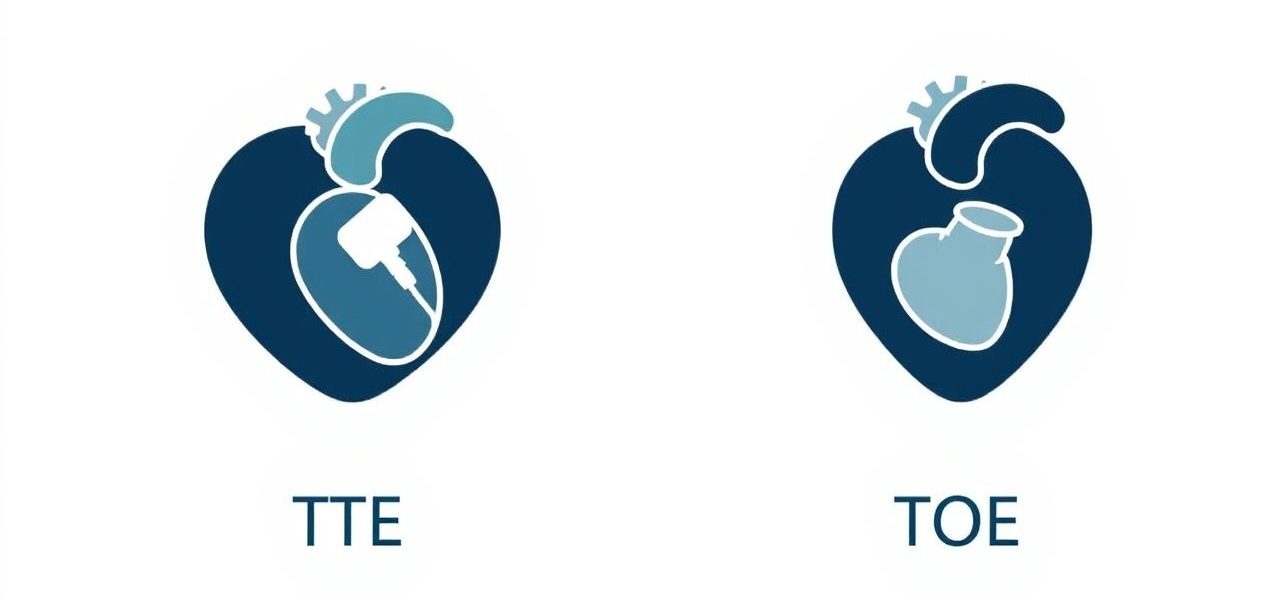
The heart is one of the most important organs in the human body, and its proper evaluation is critical for diagnosing and managing cardiovascular conditions. Medical imaging has advanced significantly, offering different techniques to look inside the heart and its structures. Two common types of echocardiograms are transthoracic echocardiography (TTE) and transesophageal echocardiography (TOE). While both use ultrasound technology to capture images of the heart, they differ in procedure, accuracy, and application. Understanding the difference between TTE and TOE is essential for patients and healthcare professionals when determining the most appropriate test for specific heart conditions.
What Is TTE?
TTE, or transthoracic echocardiography, is the most common type of echocardiogram. In this procedure, a probe is placed on the chest wall, and ultrasound waves are transmitted through the chest to produce images of the heart. TTE is non-invasive, painless, and widely available in hospitals and clinics. It is often the first test performed when evaluating heart structure and function.
Key Features of TTE
- Non-invasive and painless.
- Performed externally on the chest wall.
- Provides real-time images of heart chambers, valves, and blood flow.
- Commonly used as a first-line test for general cardiac evaluation.
Advantages of TTE
TTE is convenient and safe, making it ideal for routine heart assessments. It can detect many cardiac problems, such as
- Enlarged heart chambers.
- Valve abnormalities like stenosis or regurgitation.
- Heart muscle weakness or thickening.
- Fluid buildup around the heart (pericardial effusion).
Limitations of TTE
Despite its usefulness, TTE has limitations. Image quality may be reduced in individuals with obesity, lung disease, or chest deformities. Additionally, TTE may not clearly visualize small structures like clots in the atrium or small valve defects, which is where TOE becomes more valuable.
What Is TOE?
TOE, or transesophageal echocardiography, is a more specialized form of echocardiography. Instead of placing the probe on the chest wall, the probe is inserted into the esophagus, which lies directly behind the heart. This close proximity allows TOE to provide clearer and more detailed images, particularly of the atria, valves, and blood vessels near the heart. Because the esophagus is so close to the heart, ultrasound waves do not have to pass through the ribs, lungs, or chest wall, which can distort images in TTE.
Key Features of TOE
- Involves inserting a probe into the esophagus.
- Requires sedation or anesthesia for patient comfort.
- Provides high-resolution images of heart structures.
- Especially useful for detecting small abnormalities not visible on TTE.
Advantages of TOE
TOE is highly accurate and provides superior visualization compared to TTE. It is often used in complex cases such as
- Detecting blood clots in the atria, especially before procedures like cardioversion.
- Detailed evaluation of heart valves for infection (endocarditis) or malfunction.
- Assessing congenital heart defects.
- Guiding cardiac surgeries or catheter-based interventions.
Limitations of TOE
TOE is more invasive than TTE, requiring sedation and sometimes causing mild throat discomfort. There is also a small risk of complications, such as injury to the esophagus, though these are rare. Because of this, TOE is not typically the first choice for general screening but is reserved for specific situations where more detail is needed.
Key Differences Between TTE and TOE
While both TTE and TOE are echocardiography methods using ultrasound technology, their differences lie mainly in the procedure, image quality, and clinical use.
Comparison Overview
- ProcedureTTE is external and non-invasive, while TOE involves inserting a probe into the esophagus.
- ComfortTTE is painless, while TOE requires sedation and may cause discomfort.
- Image QualityTTE images may be limited by chest structures; TOE offers clearer, more detailed views.
- UseTTE is used for general assessment, while TOE is reserved for complex cases needing precision.
- RisksTTE has virtually no risk, while TOE carries a small risk of throat or esophagus injury.
When Is TTE Recommended?
TTE is typically recommended as the first step in evaluating heart health. Doctors may order a TTE if a patient has symptoms such as
- Shortness of breath.
- Chest pain.
- Heart palpitations.
- Unexplained fatigue.
It is also commonly used to monitor chronic conditions such as heart failure, valve disease, or after a heart attack. Because it is quick, safe, and effective, TTE is often the go-to tool for routine heart imaging.
When Is TOE Recommended?
TOE is generally ordered when TTE does not provide enough information. It is particularly useful in scenarios such as
- Evaluating prosthetic heart valves for leaks or infection.
- Investigating suspected blood clots in the atria before surgery or cardioversion.
- Diagnosing infections of the heart lining or valves (endocarditis).
- Assessing congenital heart defects with greater accuracy.
- Guiding surgical and interventional procedures in real-time.
Benefits of Combining TTE and TOE
In many cases, TTE and TOE are complementary rather than competitive. A patient may undergo TTE first for a general overview. If the results are unclear or more precision is needed, a TOE may follow. This stepwise approach ensures both safety and accuracy in diagnosing heart problems. Combining the strengths of both methods allows doctors to tailor care to individual patient needs.
Patient Experience and Preparation
Patients undergoing TTE usually require no special preparation. They lie on their side while the probe is moved over the chest with some gel applied to improve sound transmission. The process typically takes less than 30 minutes and does not interfere with daily activities.
For TOE, patients are usually asked to fast for several hours before the procedure. Sedation is administered, and the probe is gently inserted through the mouth into the esophagus. The procedure may last 30 to 60 minutes, and patients need some recovery time afterward. Because of sedation, they may need assistance going home and should avoid driving for the rest of the day.
Why the Difference Matters
Understanding the difference between TTE and TOE is important because it helps patients and doctors choose the right diagnostic tool. TTE is simple, safe, and widely applicable, making it suitable for most routine cases. TOE, on the other hand, is more invasive but provides superior accuracy, making it indispensable in high-risk or complex conditions. The choice between TTE and TOE often depends on the clinical question being asked and the detail required for diagnosis or treatment planning.
TTE and TOE are two vital forms of echocardiography, each with its own strengths and limitations. TTE is non-invasive and well-suited for general evaluations, while TOE provides high-resolution images for detailed analysis in complex cases. Knowing when to use each test ensures accurate diagnosis, effective treatment planning, and better outcomes for patients with heart disease. By recognizing the differences between TTE and TOE, individuals can better understand their medical care and feel more confident in the diagnostic process.