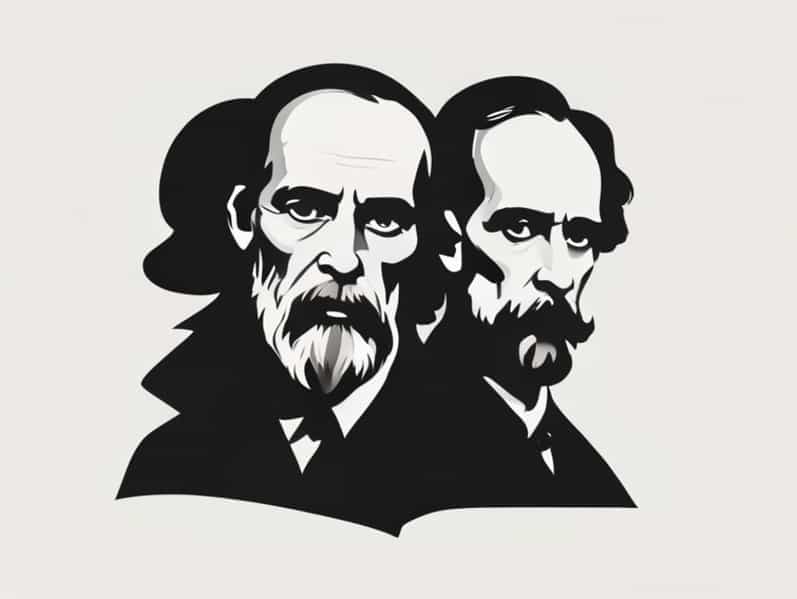
The works of Fyodor Dostoevsky, Søren Kierkegaard, Friedrich Nietzsche, and Franz Kafka continue to captivate readers and scholars alike due to their profound exploration of human existence, morality, and the struggles of the individual. Each of these thinkers approached the concept of life, suffering, and freedom from a unique perspective, yet their ideas often intersect in remarkable ways. While Dostoevsky delved into the depths of human psychology and morality, Kierkegaard emphasized individual faith and existential choice. Nietzsche challenged conventional morality and championed the idea of the Übermensch, whereas Kafka portrayed the alienation and absurdity of modern life. Together, these thinkers provide a rich tapestry for understanding existential thought and the complexities of human experience.
Fyodor Dostoevsky Exploring the Depths of the Human Psyche
Fyodor Dostoevsky, a Russian novelist of the 19th century, is renowned for his exploration of psychological depth and moral dilemmas. His works, including Crime and Punishment, The Brothers Karamazov, and Notes from Underground, explore themes such as guilt, redemption, and the tension between faith and reason. Dostoevsky was deeply interested in the moral choices that define human existence and often depicted characters struggling with internal conflicts that reflect broader societal issues.
Key Themes in Dostoevsky’s Work
- Existential Guilt and RedemptionCharacters frequently face moral dilemmas that force them to confront their own conscience and search for redemption.
- Faith and DoubtDostoevsky explored the tension between religious faith and skepticism, reflecting his own spiritual journey.
- Human PsychologyHis detailed exploration of the inner workings of the mind paved the way for modern psychological literature.
Søren Kierkegaard The Father of Existentialism
Søren Kierkegaard, a 19th-century Danish philosopher, is often regarded as the father of existentialism. Kierkegaard emphasized the importance of individual choice, personal responsibility, and the subjective nature of truth. His writings, including Fear and Trembling and Either/Or, focus on the individual’s relationship with God and the necessity of making authentic choices in the face of uncertainty. Kierkegaard argued that life’s meaning is found not in societal norms but through personal engagement and existential commitment.
Kierkegaard’s Influence on Existential Thought
- Individual ResponsibilityEmphasized the importance of personal decisions in defining one’s existence.
- Leap of FaithAdvocated for a subjective commitment to faith despite uncertainty or doubt.
- AuthenticityUrged individuals to live genuinely rather than conform to societal expectations.
Friedrich Nietzsche Challenging Conventional Morality
Friedrich Nietzsche, a German philosopher of the late 19th century, is known for his critique of traditional moral values and his exploration of human potential. Nietzsche introduced the concept of the Übermensch, or overman, as an individual who transcends conventional morality to create personal values. His works, such as Thus Spoke Zarathustra and Beyond Good and Evil, explore themes of nihilism, the will to power, and the importance of embracing life’s challenges to achieve self-realization.
Nietzsche’s Key Philosophical Concepts
- Will to PowerThe driving force behind human ambition and creativity, emphasizing self-overcoming.
- Critique of MoralityChallenged conventional notions of good and evil, encouraging individuals to define their own values.
- Nihilism and AffirmationAddressed the existential void and encouraged the affirmation of life despite its inherent meaninglessness.
Franz Kafka The Absurd and Alienated Individual
Franz Kafka, a 20th-century writer from Prague, is best known for his exploration of alienation, bureaucracy, and existential anxiety. His novels and short stories, such as The Trial and The Metamorphosis, depict protagonists trapped in oppressive systems and confronted with absurd situations. Kafka’s work reflects the anxieties of modern life and the disorientation of the individual in a world that seems indifferent or hostile.
Central Themes in Kafka’s Writing
- AlienationCharacters often feel isolated and disconnected from society, family, and even themselves.
- AbsurdityKafka illustrates the irrational and often incomprehensible nature of human institutions and existence.
- Existential AnxietyHis narratives convey a deep sense of unease and the struggle to find meaning in a perplexing world.
Intersections and Contrasts Among the Thinkers
While Dostoevsky, Kierkegaard, Nietzsche, and Kafka wrote in different contexts and with distinct perspectives, their works share notable intersections. All four address the individual’s confrontation with existential dilemmas, whether through faith, morality, personal choice, or absurdity. Dostoevsky and Kierkegaard emphasize spiritual and moral dimensions, whereas Nietzsche challenges traditional moral frameworks, and Kafka exposes the absurdity and alienation inherent in modern life.
Comparative Insights
- Dostoevsky vs KierkegaardBoth explore faith and moral responsibility, but Dostoevsky focuses on narrative and psychological depth, while Kierkegaard emphasizes philosophical and theological analysis.
- Nietzsche vs DostoevskyNietzsche critiques moral values and advocates self-creation, contrasting with Dostoevsky’s exploration of redemption and moral struggle.
- Kafka vs NietzscheKafka’s portrayal of existential absurdity aligns with Nietzsche’s critique of societal norms, though Kafka emphasizes alienation over the celebration of individual empowerment.
- Kierkegaard vs KafkaKierkegaard focuses on personal faith as a source of meaning, whereas Kafka often depicts the individual’s struggle to find meaning in an indifferent world.
Legacy and Modern Relevance
The ideas of Dostoevsky, Kierkegaard, Nietzsche, and Kafka continue to resonate in contemporary philosophy, literature, and psychology. Their exploration of existential questions, morality, and the human condition provides valuable insights into modern concerns, such as identity, purpose, and the search for authenticity. These thinkers have influenced existentialist philosophy, literary theory, psychology, and even cultural studies, highlighting the enduring relevance of their work.
Applications in Today’s World
- Existential psychology and therapy often draw on themes of meaning, choice, and alienation found in these thinkers’ works.
- Modern literature and film frequently reference Kafkaesque scenarios, moral dilemmas, and Nietzschean concepts of self-overcoming.
- Ethical discussions in philosophy continue to engage with Dostoevsky’s insights on morality and Kierkegaard’s emphasis on personal responsibility.
Fyodor Dostoevsky, Søren Kierkegaard, Friedrich Nietzsche, and Franz Kafka offer profound explorations of human existence, morality, and the challenges of individual freedom. Their works examine the tension between societal norms and personal authenticity, the search for meaning in life, and the struggles of the human psyche. By studying these thinkers together, we gain a richer understanding of existential thought and the complex nature of the human experience, allowing their insights to remain relevant and influential in both intellectual and practical contexts today.