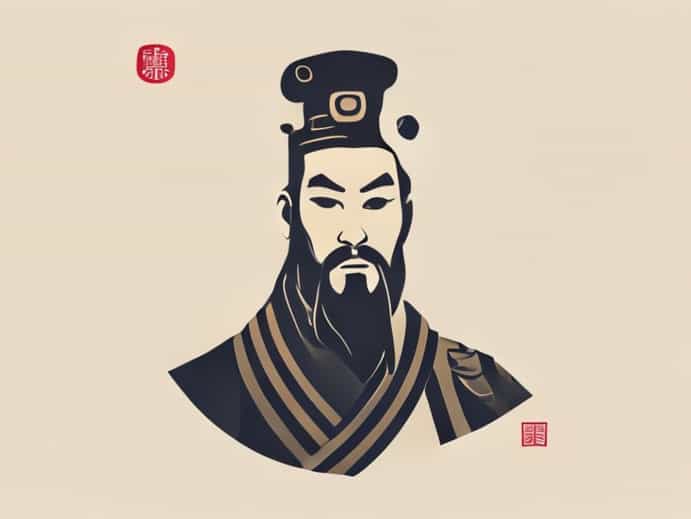
Emperor Wu of Han, also known as Han Wudi, is remembered as one of the most influential rulers in Chinese history. His reign, which lasted from 141 BCE to 87 BCE, marked a period of unprecedented expansion, centralization, and cultural development in the Han Dynasty. Emperor Wu’s policies and vision shaped the trajectory of China for centuries, strengthening imperial power, promoting Confucianism, and opening trade routes that would later become part of the Silk Road. His legacy is complex, combining military conquest with cultural patronage, and his impact continues to be studied by historians and scholars around the world.
Early Life and Ascension to the Throne
Born in 156 BCE, Emperor Wu became the seventh emperor of the Han Dynasty at a young age. He was originally known as Liu Che, the son of Emperor Jing of Han. From early childhood, he displayed intelligence, ambition, and a keen interest in state affairs. His ascension to the throne was facilitated by the support of influential court officials and his mother, Empress Dou. Once in power, he embarked on a mission to consolidate central authority, reduce the power of feudal lords, and strengthen the role of the emperor in governing the vast empire.
Political Reforms
Emperor Wu implemented a series of political reforms aimed at centralizing authority and enhancing administrative efficiency. These reforms included
- Reduction of feudal powerHe systematically curtailed the influence of regional princes and local nobles, bringing more territories directly under imperial control.
- Strengthening the civil serviceHe promoted talented officials based on merit, laying the groundwork for what would later become the Chinese imperial examination system.
- Legal and administrative reformsEmperor Wu codified laws and standardized procedures across the empire, ensuring consistent governance and reducing corruption.
Military Expansion
Emperor Wu is perhaps best known for his ambitious military campaigns, which expanded Han territory and secured China’s borders. He waged wars against the Xiongnu, a powerful nomadic confederation in the north, achieving significant victories that secured the northern frontier. His expansionist policies also reached the south and west, bringing regions such as modern-day Vietnam and parts of Central Asia under Han control. These military campaigns were not only strategic but also aimed at controlling trade routes, ensuring access to resources, and projecting imperial power.
The Xiongnu Campaigns
The campaigns against the Xiongnu were among the most notable achievements of Emperor Wu. For decades, the Xiongnu had posed a major threat to the northern borders of China. Emperor Wu invested heavily in building a strong army, developing new strategies, and appointing capable generals. The Han forces successfully pushed the Xiongnu northward, reducing raids and securing the safety of agricultural regions. These campaigns also established the precedent for China’s long-term policy of dealing with nomadic threats through both diplomacy and military force.
Economic Policies
To support his military ambitions and maintain a stable empire, Emperor Wu introduced several economic policies that strengthened the state’s finances. He established state monopolies on essential goods such as salt, iron, and alcohol, generating significant revenue for the imperial treasury. Additionally, he promoted agricultural development, irrigation projects, and land redistribution programs to increase productivity and support population growth. These measures helped fund military campaigns while stabilizing the economy and reducing social unrest.
Promotion of Trade
Emperor Wu’s reign also facilitated trade and cultural exchange. By securing routes to the west, he opened connections with Central Asia, India, and beyond. This trade network would later evolve into what historians call the Silk Road. Chinese silk, iron, and other goods were exchanged for horses, precious stones, and cultural knowledge. These economic and cultural exchanges enhanced the wealth of the Han Empire and increased its influence over neighboring regions.
Promotion of Confucianism
Emperor Wu played a pivotal role in promoting Confucianism as the official state philosophy. He established Confucian academies and appointed scholars as advisors, integrating Confucian principles into governance. This ideological shift emphasized moral duty, social hierarchy, and ethical governance, which reinforced the emperor’s authority while providing a framework for officials to govern justly. Confucianism under Emperor Wu influenced Chinese society for centuries, shaping educational practices, political thought, and cultural values.
Cultural Achievements
Beyond politics and military expansion, Emperor Wu fostered cultural development. Literature, history, and philosophy thrived during his reign. He commissioned the compilation of historical records, supported scholars, and encouraged the study of classical texts. These efforts preserved knowledge, standardized learning, and contributed to a rich cultural legacy that would influence later dynasties.
Challenges and Criticisms
Despite his achievements, Emperor Wu’s reign was not without challenges and criticisms. His expansionist policies were costly, placing a heavy tax burden on the population. Prolonged military campaigns led to social strain, and some historians criticize his authoritarian approach and harsh punishments for dissent. Additionally, succession issues and court intrigues created instability in the later years of his reign. Nevertheless, his successes in consolidating power, expanding the empire, and promoting culture overshadowed these difficulties.
Legacy
Emperor Wu of Han left an enduring legacy as a transformative ruler. His reign solidified the Han Dynasty’s position as a major power in East Asia and laid the foundation for China’s long-standing imperial system. Military expansion secured borders and trade routes, while economic and cultural policies strengthened the state. By promoting Confucianism, he influenced the ideological and moral framework of China for centuries. Emperor Wu’s achievements and vision continue to be studied as examples of effective leadership, strategic governance, and cultural stewardship.
Emperor Wu of Han stands out in Chinese history as a ruler of vision, ambition, and determination. His reign was marked by territorial expansion, administrative reform, cultural promotion, and the establishment of Confucianism as the state ideology. While his policies sometimes imposed hardships on the population, the long-term benefits of his leadership shaped the development of China for generations. Studying Emperor Wu provides insight into the complexities of governance, the challenges of empire-building, and the enduring influence of a leader whose impact resonates more than two thousand years later.