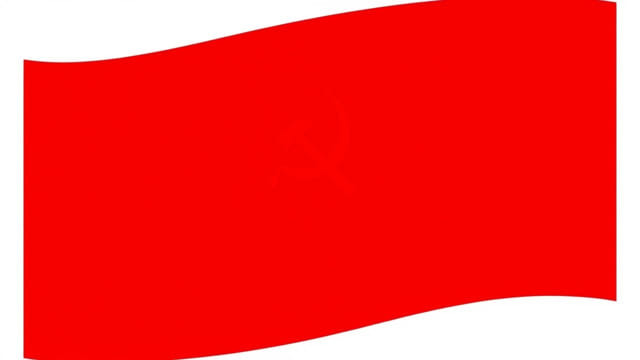
The flag of the Russian Soviet Federative Socialist Republic (RSFSR) underwent several transformations throughout the existence of Soviet Russia, reflecting shifts in political ideology, national identity, and symbolism. From its early revolutionary beginnings in 1917 to its last official design before the dissolution of the Soviet Union in 1991, the RSFSR flag was more than just a national emblem it was a visual representation of communism, state authority, and the evolving structure of the USSR. Understanding the evolution and design of the RSFSR flag offers insight into how political symbolism was employed during one of the most ideologically driven eras in world history.
Early Designs of the RSFSR Flag
The First Flag (19181937)
After the October Revolution in 1917 and the formal establishment of the RSFSR in 1918, a provisional flag was introduced. This initial version was a simple red field representing the blood of the working class and revolution bearing the Cyrillic letters РСФСРin gold, which stood for ‘РоÑÑийÑÐºÐ°Ñ Ð¡Ð¾Ð²ÐµÑÑÐºÐ°Ñ Ð¤ÐµÐ´ÐµÑаÑÐ¸Ð²Ð½Ð°Ñ Ð¡Ð¾ÑиалиÑÑиÑеÑÐºÐ°Ñ Ð ÐµÑпÑблика’ (Russian Soviet Federative Socialist Republic).
- Color: Solid red background symbolizing revolution and socialism.
- Text: The letters were usually in a serif typeface and placed in the top-left corner.
- Symbolism: There were no hammers or sickles at this point; the emphasis was purely on revolutionary identification through red and text.
This flag remained in use for nearly two decades and was the standard banner of the RSFSR before standardized Soviet symbolism was adopted across the union republics.
The Second Flag (19371954)
In 1937, a new constitution for the RSFSR was adopted, which brought changes to national symbols, including the flag. The revised flag retained the red background but introduced a golden hammer and sickle, as well as a gold-bordered red star above it mirroring the design of the national flag of the USSR.
- New Symbols: Hammer and sickle represented industrial workers and peasants; the star symbolized the Communist Party and international socialism.
- Placement: These symbols were placed in the top-left corner of the flag.
- Standardization: This change aligned the RSFSR with the rest of the Soviet Union’s republics, which also adopted similar designs around this period.
This flag signified deeper integration of the RSFSR into the larger Soviet state and was used during Stalin’s rule and World War II.
The 1954 Flag of the RSFSR
Final Design (19541991)
The most recognizable version of the RSFSR flag was adopted on January 9, 1954. This design was distinct from that of the USSR, though still featured core Soviet symbols.
- Background: Predominantly red field, retaining the revolutionary theme.
- Blue Stripe: A vertical light blue stripe was added on the hoist side, occupying one-eighth of the flag’s length.
- Symbols: A golden hammer and sickle beneath a red star with a gold border were placed in the upper corner near the hoist, above the blue stripe.
This was the official flag of the RSFSR until the collapse of the Soviet Union. The blue stripe was intended to symbolize the unity of the Russian people and the diversity of its republic. The addition of a non-red element also visually distinguished the RSFSR’s flag from that of the central USSR government.
Symbolic Meaning of Elements
Red Field
The color red in Soviet symbolism consistently represented the blood shed by workers and revolutionaries during the class struggle. It was also a color traditionally associated with socialism and communism.
Hammer and Sickle
This iconic emblem stood for the unity of industrial laborers (hammer) and agricultural workers (sickle), and was meant to reflect the foundational coalition of the Soviet economy and society.
Red Star
The five-pointed red star symbolized the global reach of socialism and the direction of the Communist Party. It was a guide for the worldwide proletariat revolution and a mark of ideological supremacy.
Blue Stripe
Though interpretations varied, the blue stripe was said to represent the rivers and skies of Russia, or alternatively, national unity among the various ethnic groups within the RSFSR. It served a practical role in distinguishing the RSFSR flag from the nearly identical national flag of the USSR.
Comparison with Other Soviet Republic Flags
Standard Soviet Layout
By the 1950s, all Soviet republics had flags based on a standardized template: a red background with a hammer and sickle and a star in the upper corner, often accompanied by unique elements that symbolized their culture or geography.
- Ukraine: Included a horizontal blue stripe at the bottom.
- Belarus: Featured a green stripe and a traditional decorative pattern.
- Uzbekistan: Had a horizontal blue and white stripe with star and crescent symbolism.
In this context, the RSFSR’s blue vertical stripe aligned with the broader trend of giving each republic a visual identity while still maintaining loyalty to the central Soviet symbols.
Use and Display of the Flag
Official Government Use
The RSFSR flag was displayed on government buildings, used in parades, and flown alongside the flags of other republics during official state events. It was a symbol of administrative and territorial authority within the Soviet Union.
Educational and Propaganda Purposes
Schools and public institutions displayed the flag as part of civic education and to reinforce Soviet unity and loyalty to the Communist Party. It was also featured in propaganda posters, textbooks, and political rallies.
End of the RSFSR Flag
Transition After the Soviet Collapse
As the Soviet Union began to collapse in 19901991, movements across the republics pushed for national sovereignty and identity. In Russia, this meant a reexamination of Soviet symbols, including the flag.
On August 22, 1991, following a failed coup by Soviet hardliners, the Russian tricolor white, blue, and red was restored as the official flag of the Russian Federation. The RSFSR flag was officially retired and ceased to be used after the Soviet Union was formally dissolved in December 1991.
Legacy and Historical Value
Today, the RSFSR flag is viewed primarily as a historical artifact. It is preserved in museums, studied by historians, and sometimes referenced in discussions about Soviet symbolism, nationalism, and identity. For some, it is a reminder of a powerful centralized regime; for others, it represents a complex and controversial period in Russian history.
The flag of the RSFSR evolved through several stages, each reflecting the political and ideological climate of its time. From the plain red banner of revolutionary zeal to the more stylized and symbolic final version adopted in 1954, the flag was a constant presence throughout Soviet Russia’s turbulent history. As a unifying emblem, it served both to signify allegiance to the Communist vision and to establish a distinct identity for the RSFSR within the larger Soviet framework. Though no longer in official use, the RSFSR flag remains a potent symbol of an era defined by ideological ambition, political transformation, and cultural change.