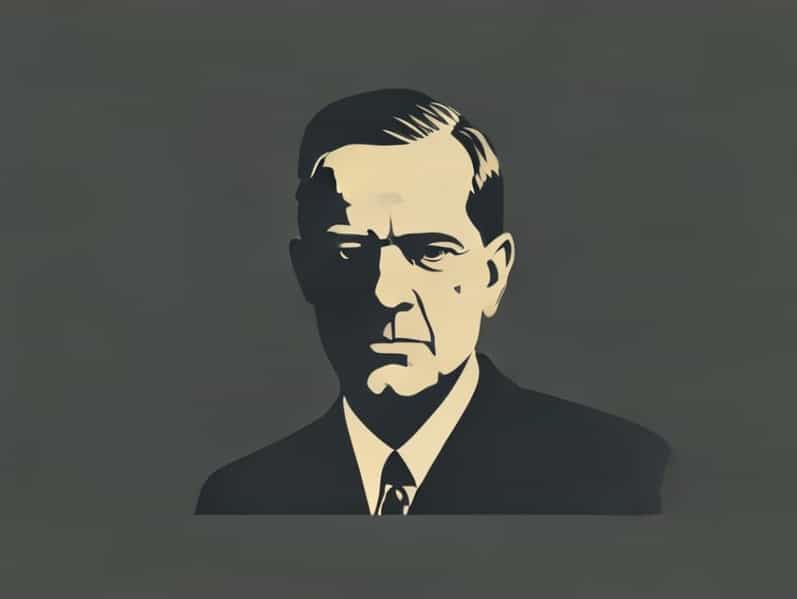
When Harry S. Truman became president of the United States in 1945, the world was in a state of massive transformation. World War II had just ended, and new global power structures were emerging. Truman faced the enormous challenge of leading America through the early years of the Cold War while shaping a foreign policy philosophy that would define U.S. international relations for decades. His approach combined realism, containment, and a deep belief in defending democracy, laying the foundation for much of modern American foreign policy.
The Roots of Truman’s Foreign Policy Philosophy
Harry Truman’s foreign policy was largely shaped by the realities of the postwar world. The devastation of Europe, the rise of the Soviet Union, and the emergence of nuclear weapons created a new and uncertain global landscape. Truman believed that the United States had both a moral and strategic responsibility to lead the world toward stability. His philosophy was built on three key ideas containment of communism, support for democracy, and international cooperation.
Truman was not a career diplomat or scholar of international relations, but his decisions reflected strong convictions about right and wrong. He believed that totalitarian regimes especially the Soviet Union posed a direct threat to freedom and world peace. Therefore, his foreign policy was proactive rather than isolationist. America would not retreat after the war; instead, it would use its power to shape global events and prevent another catastrophic conflict.
The Truman Doctrine Containment of Communism
The cornerstone of Truman’s foreign policy philosophy was the doctrine of containment. Announced in 1947, theTruman Doctrinedeclared that the United States would provide political, military, and economic assistance to any country threatened by communism or totalitarian ideologies. This doctrine was first applied in Greece and Turkey, where Truman secured congressional approval to send aid and prevent Soviet expansion.
Truman’s reasoning was clear if the United States failed to act, communist movements could spread throughout Europe and Asia. Containment became not just a strategy but a moral mission protecting free nations from external subversion. This idea would dominate U.S. foreign policy throughout the Cold War, influencing the actions of every president after Truman.
The Marshall Plan and Economic Reconstruction
Truman understood that economic instability often led to political extremism. To rebuild war-torn Europe and prevent the spread of communism, his administration launched theMarshall Planin 1948. Officially known as the European Recovery Program, it provided over $13 billion in economic aid to help Western European countries rebuild their economies and strengthen democratic governments.
The Marshall Plan was more than just an act of generosity it was a strategic move grounded in Truman’s foreign policy philosophy. By supporting economic recovery, the United States could stabilize global trade, foster allies, and demonstrate the benefits of democracy and capitalism. It also strengthened the transatlantic relationship, paving the way for long-term partnerships such as the North Atlantic Treaty Organization (NATO).
Creation of NATO and Collective Security
Another essential element of Truman’s foreign policy was the belief in collective defense. In 1949, the United States and its European allies founded NATO, a military alliance designed to counter Soviet aggression. Truman viewed NATO as an extension of his commitment to collective security an idea that nations must work together to preserve peace.
Through NATO, Truman institutionalized America’s role as a global leader. This marked a departure from the traditional isolationism that had dominated U.S. politics before World War II. Truman recognized that international cooperation was the best way to maintain global stability and deter future conflicts.
Truman and the Birth of the Cold War
Truman’s presidency marked the beginning of the Cold War, a geopolitical struggle between the United States and the Soviet Union. His foreign policy philosophy centered on managing this conflict without escalating it into direct military confrontation. This delicate balance required diplomacy, deterrence, and ideological firmness.
He authorized the development of the atomic bomb but also pushed for international control of nuclear weapons through the United Nations. Truman’s administration laid the groundwork for institutions like the Central Intelligence Agency (CIA) and the National Security Council (NSC), designed to coordinate foreign and defense policies. These organizations reflected his belief in maintaining constant vigilance against potential threats to U.S. security and democratic values.
The Korean War and the Limits of Containment
The outbreak of the Korean War in 1950 was a major test of Truman’s foreign policy philosophy. When North Korea invaded South Korea, Truman viewed the aggression as part of a broader communist strategy to expand influence in Asia. Acting under the United Nations, he committed U.S. forces to defend South Korea, declaring that aggression must not be allowed to succeed.
The Korean War demonstrated both the strength and the limits of Truman’s containment strategy. While it succeeded in preserving South Korea’s independence, it also highlighted the dangers of becoming entangled in regional conflicts. Truman refused to expand the war into China or use nuclear weapons, showing restraint that reflected his deep understanding of the risks of escalation.
The Role of Morality and Democracy in Truman’s Policy
Truman’s foreign policy philosophy was not solely strategic it was also moral. He believed that the United States had an obligation to defend freedom and human rights worldwide. This belief was evident in his support for the creation of the United Nations and his commitment to the Universal Declaration of Human Rights.
He viewed democracy not only as a political system but as a moral ideal. For Truman, helping other nations achieve self-determination and prosperity was an extension of America’s own founding principles. His emphasis on honesty, fairness, and human dignity made his approach distinct from purely power-based foreign policies.
Criticism and Legacy
While Truman’s foreign policy philosophy shaped much of the modern world order, it was not without criticism. Some argued that his anti-communist stance led to unnecessary military involvement, while others believed he did not go far enough in confronting the Soviet Union. Domestically, the cost of foreign aid and military commitments was sometimes unpopular among voters.
Nevertheless, historians often regard Truman as one of the most influential foreign policy presidents in U.S. history. His doctrines and decisions established the foundation for American global leadership during the Cold War and beyond. The Truman Doctrine, the Marshall Plan, and NATO became key components of the liberal international order that continues to influence world politics today.
Truman’s Enduring Vision
Harry Truman’s foreign policy philosophy combined moral clarity with practical realism. He understood that peace required both strength and cooperation, and that democracy could not survive in isolation. By promoting containment, rebuilding Europe, and establishing alliances, Truman transformed the United States into a global superpower dedicated to defending freedom.
Even decades after his presidency, the principles of Truman’s foreign policy remain relevant. His emphasis on alliances, economic support, and moral responsibility continues to guide American diplomacy. The legacy of Truman’s leadership reminds us that the defense of democracy requires courage, commitment, and a willingness to act on both moral and strategic grounds.