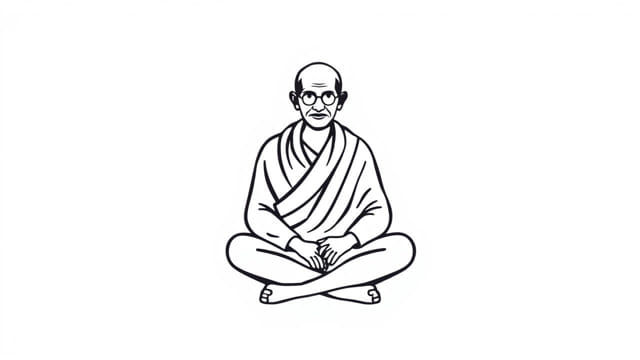
One of the most powerful non-violent tools used by Mahatma Gandhi in his fight for India’s independence was the ‘anÅhan,’ or fast. Gandhi Ji’s fasts were not merely personal acts of devotion or penance; they were political statements, moral appeals, and strategic acts of resistance. Through these voluntary fasts, Gandhi aimed to awaken the conscience of the oppressor and inspire collective responsibility among the people. Each anshan undertaken by Gandhi held deep symbolic and practical significance, shaping the course of Indian nationalism and earning global attention for the Indian independence movement.
Understanding Gandhi Ji’s Concept of Anshan
Spiritual and Political Dimensions
For Gandhi Ji, fasting was a deeply spiritual practice rooted in the ancient Indian tradition of self-purification. However, he transformed this personal vow into a form of political activism. By refusing to eat, he asserted a silent, non-violent form of protest that drew moral authority over those who used violence or coercion. His fasts were meant to be an act of self-suffering to appeal to the hearts of others.
Key Principles Behind Gandhi’s Fasts
- Ahimsa (Non-violence): Fasting symbolized resistance without harm.
- Satyagraha (Truth-force): It was a way of asserting truth in a non-violent manner.
- Self-discipline: Fasting served as a test of personal will and integrity.
- Moral pressure: The fasts were intended to awaken the moral conscience of others.
Important Fasts Undertaken by Mahatma Gandhi
Ahmedabad Mill Workers’ Strike (1918)
One of the earliest significant fasts took place during a labor dispute in Ahmedabad. The textile mill workers were on strike, demanding better wages. Gandhi supported them but when differences emerged, he undertook a fast to inspire unity and self-restraint. His anshan compelled both sides to resolve the issue, demonstrating the power of non-violent pressure.
Khilafat Movement and Non-Cooperation (1920s)
During the Khilafat and Non-Cooperation Movements, Gandhi Ji promoted Hindu-Muslim unity and peaceful resistance against British rule. Though he did not undertake major fasts during this time, the period laid the groundwork for later hunger strikes by emphasizing self-sacrifice for a larger cause.
Yerwada Jail Fast (1932) Poona Pact
Perhaps the most famous fast by Gandhi was during his imprisonment in Yerwada Jail. The British government’s ‘Communal Award’ proposed separate electorates for Dalits, which Gandhi opposed. He feared it would divide Hindu society. To resist this, he began an indefinite fast in jail. The nation responded with urgency, and after negotiations with Dr. B. R. Ambedkar, the Poona Pact was signed, which revised the proposal and ended Gandhi’s fast.
Fast for Communal Harmony (1947)
During the violent partition of India, communal riots between Hindus, Muslims, and Sikhs broke out. Gandhi Ji, heartbroken by the bloodshed, fasted in Calcutta and later in Delhi to restore peace and harmony. His 1948 fast in Delhi led to the assurance of safety for Muslims in the capital and was seen as a moral victory over sectarian hatred. Sadly, it was his last fast; days later, he was assassinated.
The Impact of Gandhi Ji’s Anshan
Political Influence
Each of Gandhi’s fasts drew wide attention and pressure. His anshans frequently forced British authorities, political leaders, and common citizens to reconsider their positions. They became a central tactic of the freedom struggle, shaping negotiations and political alliances.
Mobilization of the Masses
His fasts galvanized public opinion. People from all walks of life would gather in support, hold prayer meetings, and participate in peaceful protests. The moral weight of Gandhi’s action often inspired the masses to stay non-violent even in times of provocation.
International Recognition
World leaders, intellectuals, and media outlets took note of Gandhi’s fasts. His unique method of resistance was discussed and admired globally, helping the Indian independence movement gain worldwide sympathy and support. Leaders like Martin Luther King Jr. and Nelson Mandela would later be inspired by Gandhi’s tactics.
Criticism and Controversy
Manipulative Tool?
Some critics argued that Gandhi’s fasts were a form of emotional blackmail, pressuring others into agreeing with his viewpoint. Particularly during the Poona Pact, some leaders felt cornered into making concessions under public pressure caused by Gandhi’s health risk.
Health and Risk
Repeated fasting took a toll on Gandhi’s frail body. Many worried that his fasts might endanger his life. Despite this, Gandhi always stated that he fasted out of conviction, not coercion, and would stop only if his conscience was satisfied.
Legacy of Gandhi Ji’s Fasts
Modern Non-Violent Protests
Gandhi’s use of anshan influenced numerous civil rights movements around the world. Hunger strikes have since been used by political prisoners, activists, and protestors to draw attention to causes ranging from climate change to social justice.
Inspiration in Indian Politics
Even after independence, Indian leaders and movements have used fasting as a form of protest. Figures like Anna Hazare, Irom Sharmila, and others adopted hunger strikes as a Gandhian method of demanding reforms.
Gandhi Ji’s anshan was not just a personal vow of suffering; it was a revolutionary weapon wielded with profound discipline and purpose. It symbolized self-control, spiritual courage, and a powerful call to justice. By voluntarily embracing pain, Gandhi shifted the burden of violence back onto the oppressor and showed the world a path where truth and peace could defeat power and tyranny. His fasts remain timeless lessons in moral leadership and non-violent activism.