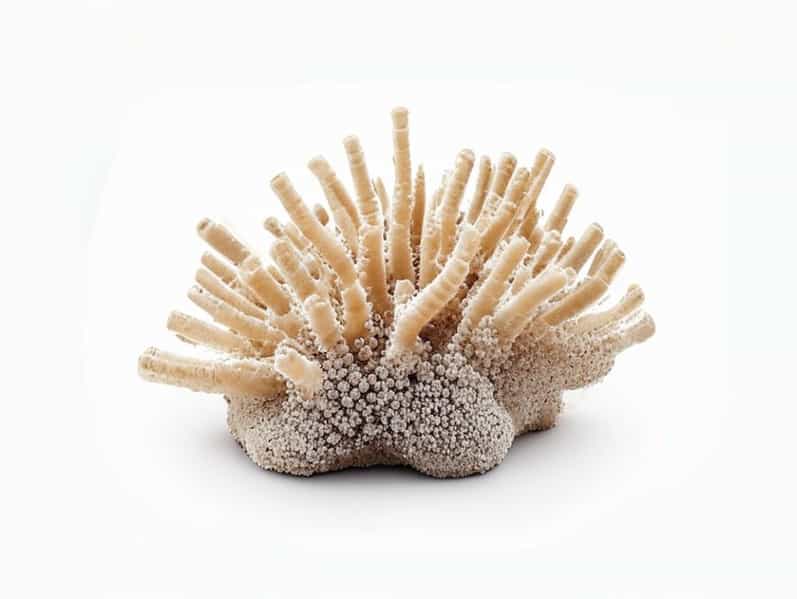
The genus Astraeospongia is a fascinating group of calcareous sponge fossils that provides unique insights into the evolution of early marine life. These fossils are significant for paleontologists because they reveal important details about the structure, habitat, and development of ancient sponges, which were among the earliest multicellular organisms on Earth. Fossils of Astraeospongia are often well-preserved, showing intricate skeletal structures made of calcium carbonate, and they help scientists understand how sponges contributed to the formation of ancient reef ecosystems and the overall biodiversity of prehistoric oceans.
Introduction to Astraeospongia
Astraeospongia is a genus of extinct calcareous sponges that thrived during the Paleozoic era, particularly in the Ordovician and Silurian periods. These sponges are known for their star-shaped or circular growth forms and complex skeletal structures. The calcareous skeletons of Astraeospongia are composed primarily of calcium carbonate, which allowed these organisms to fossilize exceptionally well. Because of their distinct morphology and durability, Astraeospongia fossils are frequently studied in paleontology and provide important clues about early marine ecosystems.
Physical Characteristics
Astraeospongia fossils are recognized by their distinctive shape and skeletal arrangement. The sponges typically exhibit radial symmetry with a central cavity surrounded by radiating structures that supported the organism. The calcareous skeletons are porous, allowing water to flow through the sponge’s body for filter feeding. Depending on the species and growth environment, these sponges could range from small, delicate specimens to larger, more robust structures. Their star-like appearance often makes them easily distinguishable from other fossilized sponges.
Calcareous Skeletons and Fossilization
The calcareous skeleton of Astraeospongia is a critical factor in its fossilization. Unlike sponges with siliceous spicules, calcareous sponges have skeletons that are more likely to endure long-term geological processes. Over millions of years, sedimentary deposits preserved the intricate skeletal frameworks, allowing paleontologists to study their internal and external structures. Fossil specimens often reveal detailed features, such as the arrangement of canals, chambers, and supporting spicules, which offer insights into their feeding mechanisms and overall biology.
Habitat and Distribution
Astraeospongia sponges were marine organisms that typically inhabited shallow, warm seas. They thrived in reef-like environments where they could anchor to substrates and filter nutrients from surrounding waters. Fossil evidence indicates that Astraeospongia had a widespread distribution, with specimens found in North America, Europe, and parts of Asia. Their presence in different paleoenvironments provides valuable information about the diversity and adaptation of ancient marine life.
Role in Ancient Ecosystems
As filter feeders, Astraeospongia played a vital role in the nutrient cycles of Paleozoic seas. They helped maintain water quality by filtering plankton and organic ptopics, supporting the overall health of reef ecosystems. Fossilized Astraeospongia often co-occur with corals, brachiopods, and trilobites, indicating their integration into complex food webs. By studying these associations, scientists can reconstruct ancient habitats and better understand the ecological interactions that shaped early marine biodiversity.
Scientific Importance
The genus Astraeospongia is particularly valuable to paleontologists for several reasons. First, their well-preserved calcareous skeletons serve as excellent markers for stratigraphic studies, helping researchers date rock formations and understand geological history. Second, these fossils provide insights into the evolutionary history of sponges, which are considered one of the earliest multicellular animal lineages. Lastly, studying Astraeospongia helps scientists trace changes in ocean chemistry, sedimentation patterns, and climate during the Paleozoic era.
Research and Discoveries
Over the years, numerous studies have focused on Astraeospongia fossils to explore their morphology, taxonomy, and paleoecology. Researchers use techniques like thin-section analysis, scanning electron microscopy, and 3D modeling to examine the skeletal structures in detail. These studies have revealed variations in growth patterns, spicule arrangements, and skeletal density, contributing to a better understanding of how environmental factors influenced the development of these sponges. Discoveries of new fossil sites continue to expand knowledge of their diversity and distribution.
Comparisons with Other Calcareous Sponges
Astraeospongia is often compared with other calcareous sponge genera to highlight evolutionary trends and functional adaptations. While similar in composition, Astraeospongia distinguishes itself through its radial symmetry and specific skeletal configurations. Comparisons with genera such as Clathrina or Leucosolenia provide insights into how early sponges diversified in form and function. Such studies shed light on the broader evolutionary context of Porifera and their ecological significance in Paleozoic seas.
Preservation and Collection
Fossils of Astraeospongia are prized by collectors and researchers for their intricate beauty and scientific value. Well-preserved specimens often display fine details of skeletal structure, making them useful for both educational purposes and display. Collecting these fossils requires careful excavation from sedimentary rock layers, usually limestone, and meticulous preparation to avoid damaging delicate structures. Museums and universities frequently house Astraeospongia fossils as part of paleontological collections to facilitate ongoing research and public education.
Educational and Recreational Uses
Beyond scientific research, Astraeospongia fossils serve as educational tools to teach students about paleontology, marine life, and evolutionary history. Fossil exhibits allow the public to appreciate the complexity of ancient ecosystems and the long history of life on Earth. Hobbyists and fossil enthusiasts also enjoy studying Astraeospongia, as their unique forms make them visually striking and intellectually engaging. Such fossils can inspire interest in geology, biology, and the history of life on our planet.
The genus Astraeospongia represents a remarkable chapter in the history of calcareous sponges and ancient marine ecosystems. Its well-preserved calcareous skeletons provide valuable insights into morphology, ecology, and evolution during the Paleozoic era. By studying Astraeospongia fossils, scientists can better understand early animal life, reconstruct ancient reef systems, and explore the environmental conditions that shaped biodiversity millions of years ago. Whether for research, education, or personal fascination, Astraeospongia continues to be a captivating subject for anyone interested in the history of life on Earth.