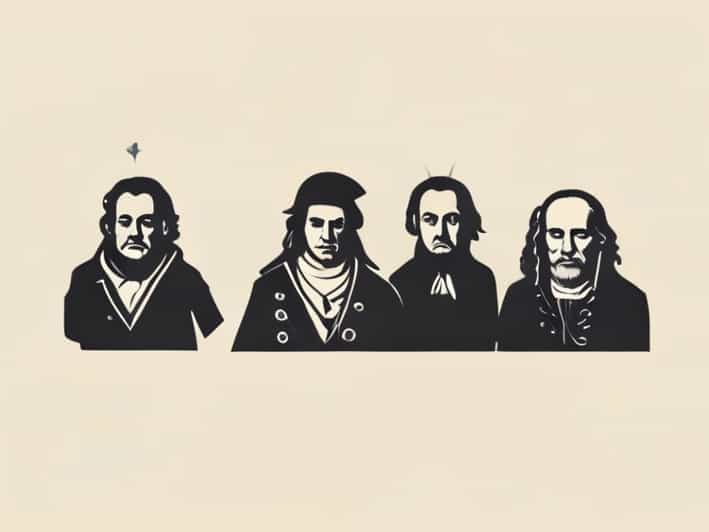
The development of modern political thought owes much to the writings of four influential philosophers Thomas Hobbes, John Locke, Montesquieu, and Jean-Jacques Rousseau. Each of these thinkers approached the concept of society, government, and human nature differently, shaping the way we understand politics, freedom, and law today. Their ideas emerged during periods of social change and political turmoil in Europe, reflecting concerns about authority, justice, and the rights of individuals. While Hobbes emphasized order and security, Locke focused on liberty and property rights, Montesquieu analyzed the separation of powers, and Rousseau highlighted the importance of collective will and equality.
Thomas Hobbes Security and Authority
Thomas Hobbes, an English philosopher of the 17th century, is best known for his workLeviathan. Hobbes had a rather pessimistic view of human nature. He believed that without a strong central authority, life would be solitary, poor, nasty, brutish, and short. In his view, humans are naturally selfish and driven by a desire for power. To avoid chaos and conflict, Hobbes argued, people willingly enter into a social contract, surrendering some of their freedoms to a sovereign who can ensure peace and security.
Key Ideas of Hobbes
- Human beings are naturally self-interested and aggressive.
- The state of nature is a state of war.
- A strong, centralized authority is necessary to maintain order.
- People consent to a social contract to ensure safety and protection.
Hobbes’ philosophy greatly influenced the development of modern political systems that emphasize law, order, and centralized government power. His ideas are often referenced in discussions about authoritarianism and the role of the state in regulating society.
John Locke Liberty and Natural Rights
In contrast to Hobbes, John Locke had a more optimistic view of human nature. Locke, another English philosopher of the 17th century, argued that people are capable of reason and morality. He emphasized that humans possess natural rights, including life, liberty, and property. According to Locke, the main purpose of government is to protect these rights. If a government fails to do so, citizens have the right to revolt and establish a new government. Locke’s ideas became foundational for liberal democracy and inspired documents such as the United States Declaration of Independence.
Key Ideas of Locke
- Humans are rational and capable of cooperation.
- Natural rights exist independently of government.
- The social contract binds the government to protect individual rights.
- Citizens have the right to revolt against unjust governments.
Locke’s emphasis on personal freedom and government accountability continues to influence modern democratic systems. His work highlights the balance between authority and individual liberty, a principle central to contemporary political philosophy.
Montesquieu Separation of Powers
Charles-Louis de Montesquieu, an 18th-century French philosopher, focused on the structure of government. Montesquieu believed that liberty could only be maintained if political power was divided among different branches. In his famous workThe Spirit of Laws, he introduced the concept of separation of powers, dividing government into legislative, executive, and judicial branches. This system prevents any single branch from becoming too powerful, ensuring a balance that protects citizens’ freedoms. Montesquieu’s ideas profoundly influenced the development of modern constitutions, including that of the United States.
Key Ideas of Montesquieu
- Political power should be divided into separate branches.
- Checks and balances prevent abuse of power.
- Different societies require different laws based on culture and climate.
- Liberty depends on the proper organization of government institutions.
Montesquieu’s analysis of government structures emphasizes that freedom is not only about rights but also about the mechanisms that prevent tyranny. His work remains relevant in discussions about constitutional law and the design of democratic institutions.
Jean-Jacques Rousseau General Will and Equality
Jean-Jacques Rousseau, a French philosopher of the 18th century, offered a radically different perspective on society and government. Rousseau believed that humans are naturally good but corrupted by society. InThe Social Contract, he argued that legitimate political authority comes from the collective will of the people, which he called the general will. According to Rousseau, individuals achieve true freedom by participating in the formation of laws that reflect the common good. His ideas about equality and popular sovereignty inspired revolutionary movements in France and beyond.
Key Ideas of Rousseau
- Humans are inherently good but corrupted by social institutions.
- The social contract should express the general will of the people.
- True freedom comes from participating in collective decision-making.
- Equality and civic responsibility are essential for a just society.
Rousseau’s emphasis on collective decision-making and equality influenced the development of modern democratic thought. His ideas challenge hierarchical structures and stress the moral responsibility of citizens within a political community.
Comparing Hobbes, Locke, Montesquieu, and Rousseau
While Hobbes, Locke, Montesquieu, and Rousseau each offer distinct perspectives, their ideas share a common goal understanding the relationship between humans and government. Hobbes focuses on order through authority, Locke on liberty and rights, Montesquieu on institutional design, and Rousseau on equality and collective participation. Together, their writings provide a comprehensive framework for modern political philosophy.
- Hobbes emphasizes security over freedom, while Locke emphasizes freedom over absolute security.
- Montesquieu introduces structural solutions to prevent abuse of power.
- Rousseau highlights moral and social dimensions of governance, emphasizing equality and collective responsibility.
- All four philosophers explore the social contract but interpret its implications differently.
Understanding these philosophers is crucial for grasping the foundations of modern democracy, constitutional law, and human rights. Their ideas continue to inform debates on government authority, civil liberties, and social justice, demonstrating the enduring relevance of classical political philosophy.
the works of Hobbes, Locke, Montesquieu, and Rousseau collectively shape our understanding of human nature, governance, and society. Each philosopher offers unique insights into how humans interact with authority and each other. By studying their writings, we gain a deeper appreciation of the principles underlying democracy, rule of law, and civic responsibility. These thinkers remind us that political philosophy is not just historical curiosity but a living dialogue about the best ways to organize society for freedom, security, and justice.